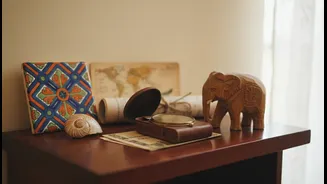









The Gentle Art of Cleaning
The first step in preserving your keepsakes is a proper clean. Dust and grime can cause long-term damage if left unattended. For most items, a soft, dry microfiber cloth or a soft-bristled paintbrush is your best tool for getting into tiny crevices without
causing harm. Avoid feather dusters, as their quills can snag on delicate surfaces. For things like seashells or coins, a simple rinse in lukewarm water and a gentle wipe-down can remove surface dirt. Textiles and fabrics require a more delicate approach; check for colourfastness in a small area before attempting any spot cleaning with a mild solution. The key is to ensure every item is completely dry before it's stored or displayed to prevent mold or mildew.
Essential Protection From the Elements
Your home's environment can be a threat to your treasures. The biggest culprits are sunlight, humidity, and extreme temperatures. Direct sunlight is particularly damaging to paper, textiles, and painted objects, as its UV rays can cause colours to fade and materials to weaken. Whenever possible, display these items in shaded areas or invest in frames with UV-filtering glass. Maintaining a stable temperature and humidity level is also crucial. Too much moisture can lead to mold and warping, while air that is too dry can cause wood and other organic materials to crack. Avoid storing or displaying items near radiators, vents, or in damp basements.
Create a Home for Your Memories
Instead of letting souvenirs clutter your drawers, turn them into meaningful decor. A designated gallery wall can showcase framed maps, prints, and textiles from your journeys. Open shelving allows you to create vignettes, grouping items by destination or theme for a cohesive look. For smaller, disparate objects like ticket stubs, foreign coins, and keychains, a shadow box is an elegant solution. You can create a 3D collage that tells the story of a specific trip. Another simple yet charming idea is a memory jar; fill a beautiful glass container with sand, shells, tickets, and other small mementos from a single trip.
The Art of the Archive
Not every souvenir can or should be on display. For items that you want to keep safe for the long term, thoughtful storage is key. Use acid-free archival boxes and tissue paper for delicate paper goods and textiles to prevent discoloration and deterioration. Clear plastic bins are great for bulkier items, allowing you to see what's inside without unpacking everything. Organize these containers by trip, country, or year, and be sure to label them clearly. For very fragile or valuable pieces, a climate-controlled storage unit can provide the ultimate protection from environmental damage.
Curating Your Collection
Part of giving your travel objects a proper home is knowing what to keep. Over time, our connection to certain items may fade. It's healthy to periodically review your collection and decide what still holds true sentimental value. You don't need to keep every single brochure or ticket. Consider digitizing paper items like maps or pamphlets by scanning them or taking a high-quality photo; this preserves the memory without the physical clutter. When you do purchase souvenirs, try to be intentional. Opt for useful items like jewelry or art, or even consumables like local coffee or spices that can be enjoyed upon your return. This prevents clutter before it even starts.