





More Than Just Sour
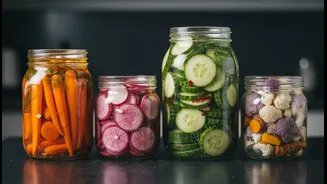
When you think of a pickle, you might picture a cucumber spear soaked in vinegar. But the trend taking hold in modern restaurants goes much deeper. This is about lacto-fermentation, an age-old process that uses salt, water, and the naturally present bacteria
on vegetables to preserve them. Unlike vinegar pickling, which essentially cooks the vegetable, fermentation is a living process. The star players are lactobacillus bacteria, which convert sugars into lactic acid. This acid acts as a natural preservative, creating an environment where harmful bacteria cannot survive, making it a very safe preservation method. The result isn't just a sour taste; it's a dynamic, complex, and evolving flavour profile that changes over time.
The Chef's Secret for Complex Flavour
So why are top chefs so captivated by this ancient technique? The answer is flavour, specifically the deep, savoury taste known as umami. During fermentation, microbes break down proteins into amino acids like glutamate, which our taste buds register as umami. This creates a rich, meaty depth that is hard to achieve otherwise, especially in vegetable-focused dishes. Chefs are using these fermented elements not just as a garnish, but as a core component to balance rich dishes, adding a bright acidity and crunch that cuts through fat. Think of it as a culinary cheat code for deliciousness—a way to add layers of funk, tang, and profound savouriness that excite the palate. From fermented chilli sauces to misos made from local grains, these ingredients provide a signature touch to a chef's creations.
A Nod to Sustainability and Health
This culinary trend also aligns perfectly with two major contemporary values: sustainability and wellness. In a professional kitchen, fermentation is a powerful tool against food waste. Vegetable off-cuts, stems, or produce nearing the end of its shelf life can be transformed into valuable, flavour-packed ingredients instead of being thrown away. This practice is not only economically smart but also environmentally responsible. At the same time, diners are increasingly aware of the importance of gut health. Fermented foods are a natural source of probiotics, the beneficial bacteria that support a healthy digestive system. These 'living' foods enhance the availability of nutrients and vitamins, making them easier for our bodies to absorb. This gives menus a 'healthy halo' that appeals to conscious consumers without compromising on flavour.
A Tradition Reimagined in India
While fermentation is a global trend, it resonates deeply within India, a country with a rich and ancient history of pickling (achar) and fermenting foods like dosa batter and kanji. Today's chefs in cities like Mumbai and Delhi are reinterpreting these traditions for modern fine dining. They are looking beyond common ferments and exploring indigenous ingredients—foraging for local vegetables, grains, and spices to create hyper-local misos, garums (fermented sauces), and pickles. Chef Vanika Choudhary of Mumbai's Noon, for example, uses over 150 different ferments made with native Indian ingredients, connecting diners with the country's culinary heritage in an innovative way. This movement bridges the gap between comforting, nostalgic flavours and a progressive, global dining experience.