
A Glimpse into the Sun's Secret
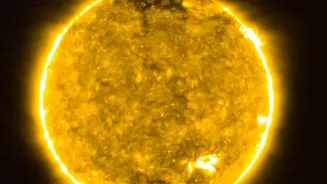
Under normal circumstances, studying the Sun’s outer atmosphere, known as the corona, is incredibly difficult. The Sun's main surface, the photosphere, is so blindingly bright that it completely washes out the much fainter light of the corona. It’s like
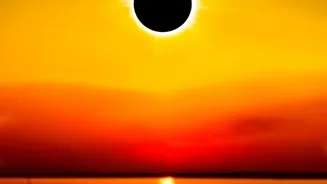
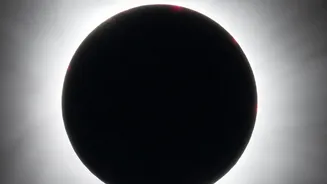
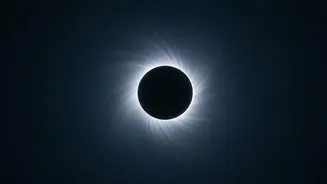
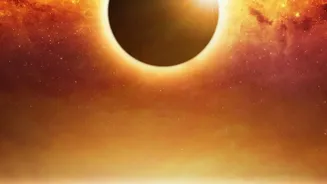
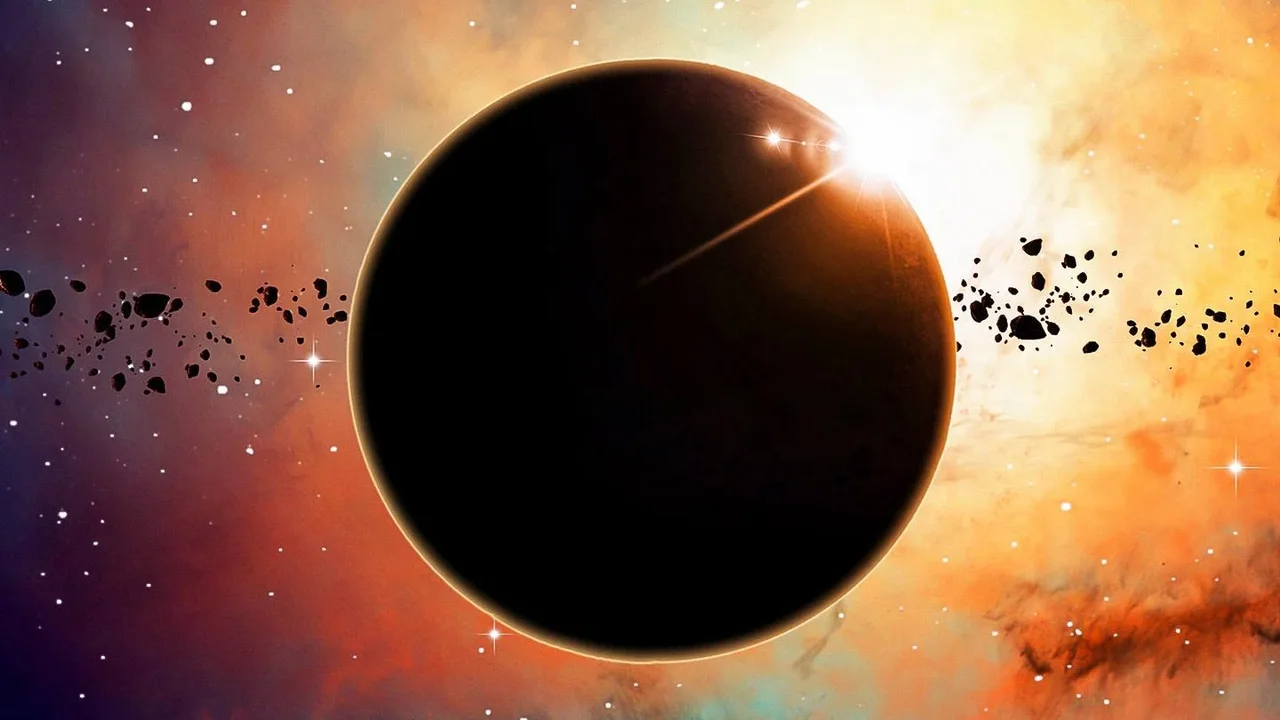
trying to spot a firefly next to a searchlight. While scientists have instruments called coronagraphs that create artificial eclipses by blocking the Sun's disk, they can't replicate the perfection of the real thing. The Moon’s passage during a total solar eclipse provides a unique and unparalleled opportunity to see the corona’s intricate structures close to the solar surface, offering precious data that is otherwise impossible to obtain. This is why eclipses are treated as natural laboratories for solar physicists.
Chasing the Shadow at 50,000 Feet
To maximize their precious few minutes of observation, some scientists don’t stay on the ground. For the August 12 eclipse, NASA deployed its WB-57 high-altitude research aircraft to fly along the path of totality over the Atlantic. By flying at 460 miles per hour, the jet extended its view of the eclipse from just over two minutes to nearly three. Soaring at 50,000 feet also placed its sensitive instruments far above any potential clouds or atmospheric haze that could spoil the view. The nose cone of the WB-57 was equipped with a suite of cameras capturing high-resolution images in different wavelengths of light, aiming to record the rapid changes and complex dynamics within the corona.
Solving the Great Solar Puzzle
One of the most enduring mysteries in solar physics is the coronal heating problem. The Sun's surface is about 6,000 degrees Celsius, yet the corona sizzles at over a million degrees. How the corona gets so incredibly hot is a question that has puzzled scientists for decades. Eclipse observations are crucial for finding an answer. By studying the structure and composition of the corona during totality, researchers hope to understand the mechanisms that transfer energy into the outer atmosphere. The data gathered on August 12 will also help scientists better understand the solar wind—the stream of charged particles flowing from the Sun—which is a key driver of space weather that can impact satellites and power grids on Earth.
From the Atmosphere to Einstein
The science wasn't limited to just looking at the Sun. In Iceland and Spain, student-led teams launched dozens of high-altitude balloons. These balloons carried instruments to measure how Earth's atmosphere responds to the sudden drop in sunlight. They specifically looked for changes in temperature, wind, and the thickness of the atmospheric boundary layer, providing insights into our own planet's weather systems. In another fascinating line of inquiry, some teams attempted to replicate one of the most famous experiments in physics: Sir Arthur Eddington’s 1919 observation that confirmed Einstein’s theory of general relativity. By measuring how the Sun’s immense gravity bends the light from distant stars—an effect only visible during an eclipse—scientists can continue to test the fundamental laws of our universe.