


A Day in 90 Minutes
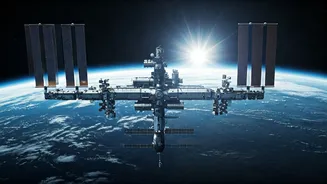
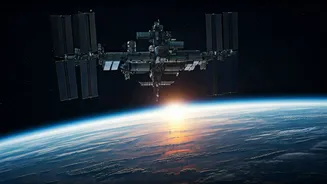
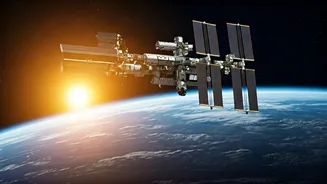
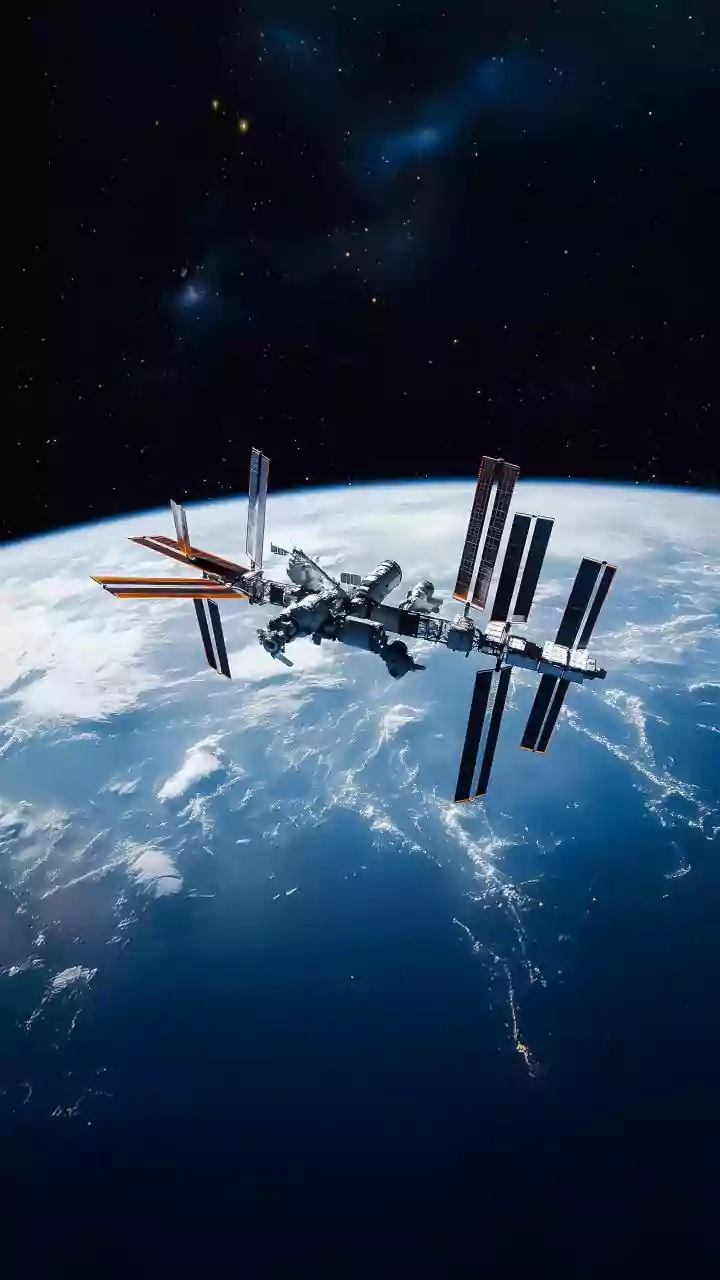
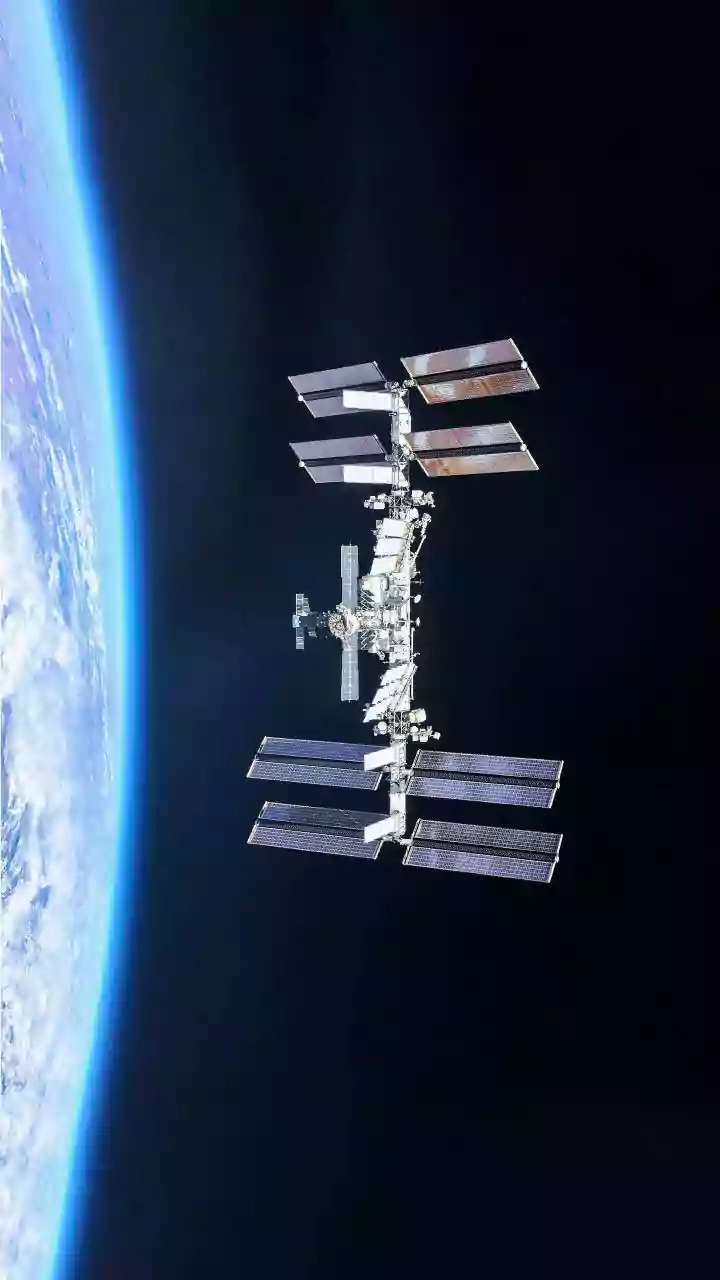
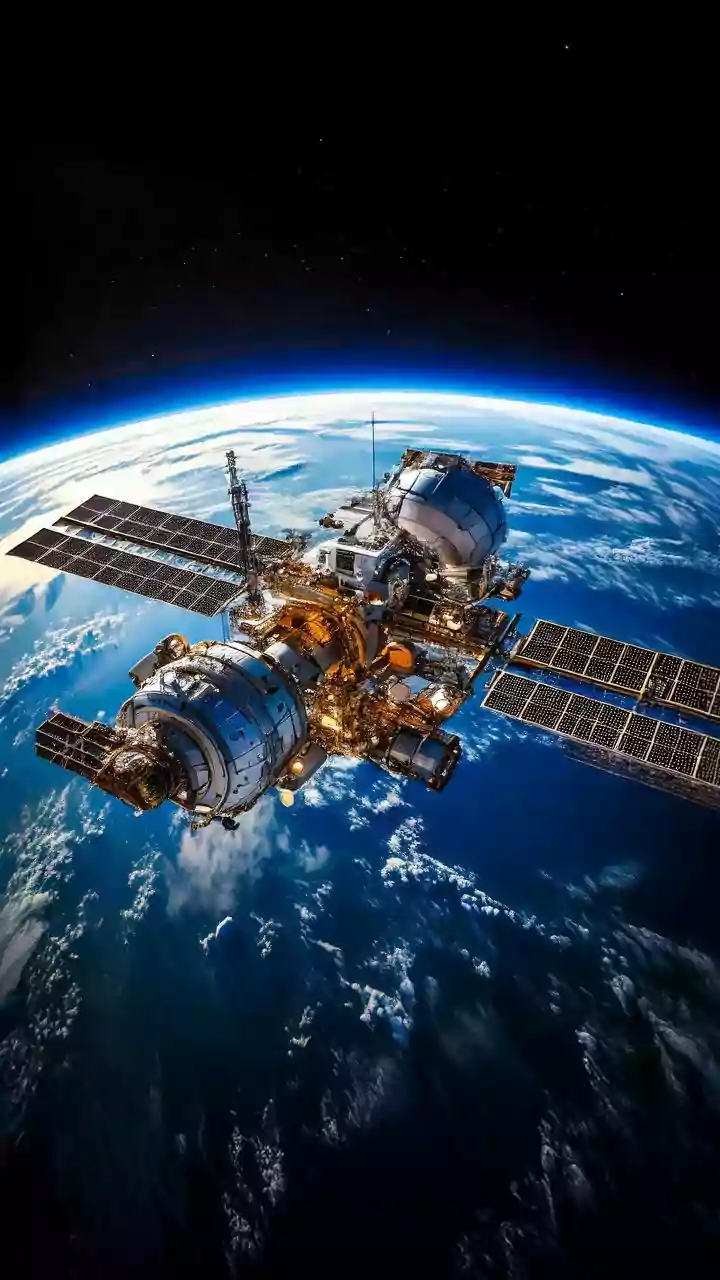
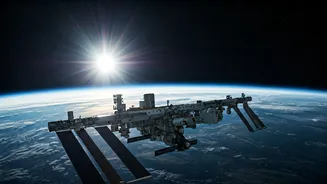
The International Space Station orbits Earth at an altitude of about 400 kilometres. It hurtles through the vacuum of space at a staggering speed of roughly 28,000 kilometres per hour. At this velocity, it completes a full circuit of our planet in approximately
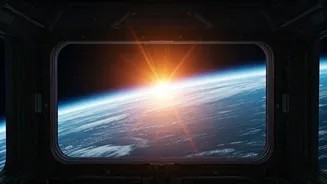
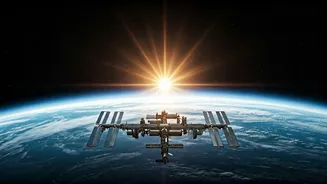
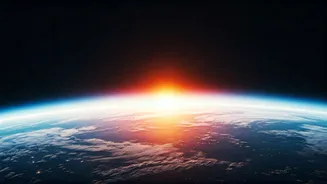
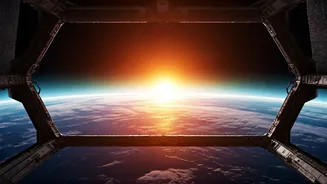
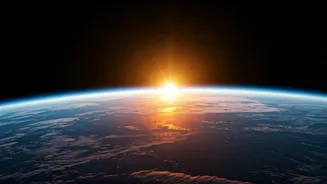
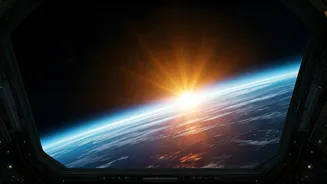
90-93 minutes. As a direct consequence of this rapid orbit, the crew aboard the station passes from daylight into Earth's shadow and back out again 16 times within a single Earth day, experiencing a rapid-fire sequence of dawns and dusks. Each sunrise or sunset, a spectacle that unfolds over many minutes on the ground, flashes by in a matter of seconds.
The Science of Speed
This phenomenon is a direct result of orbital mechanics. The ISS is in a constant state of freefall around the Earth. Its immense horizontal speed is perfectly balanced by the planet's gravitational pull, keeping it in a stable low Earth orbit. This speed means the station's occupants are essentially racing the Earth's rotation. While we on the surface experience one rotation relative to the sun every 24 hours, astronauts loop around the planet multiple times. The line separating day from night, known as the terminator, sweeps across the planet's surface, and from the ISS, astronauts see this line approaching and passing them over and over. This high-speed chase creates the mind-bending cycle of 16 sunrises and sunsets.
A Spectacular Show of Colour
Astronauts consistently describe the orbital sunset as one of the most breathtaking sights of spaceflight. From their vantage point, they see the atmosphere as distinct layers of colour. As the station moves into shadow, the sun's light is scattered through the thin veil of the atmosphere, creating a brilliant sequence of deep oranges and yellows in the lower atmosphere (the troposphere) and transitioning to pinks, whites, and blues in the upper layers before fading into the blackness of space. This 'limb view' provides a vivid, real-time cross-section of the very air that sustains life, often described as a paper-thin, fragile line protecting Earth from the void.
The Body's Confused Clock
While visually stunning, this rapid day-night cycle poses a significant biological challenge. The human body is governed by a 24-hour internal clock, or circadian rhythm, which is heavily influenced by natural light cues. The constant switching between light and dark on the ISS can severely disrupt this rhythm. To combat this, life on the station is rigidly scheduled. Astronauts adhere to a 24-hour work and sleep plan based on Greenwich Mean Time (GMT). The station’s lighting is controlled to simulate a normal day-night cycle, and crew members often use sleep masks and earplugs to create a consistent sleeping environment in their personal cubicles. Despite these measures, sleep deprivation is a common challenge for astronauts.
A New Perspective on Home
Beyond the science and the physical challenges, seeing the Earth in this way has a profound psychological effect, often referred to as the 'overview effect'. This term, coined by author Frank White, describes the cognitive shift that astronauts report from seeing Earth from space. Viewing the planet as a single, interconnected whole, without visible borders or divisions, often instills a deep sense of connection to humanity and an appreciation for Earth's fragility. Many astronauts return with a powerful sense of stewardship and a desire to protect our shared home. The experience of seeing 16 sunsets a day is not just about the light show; it's about seeing our world in a completely new light.