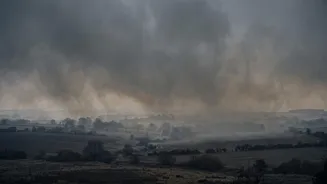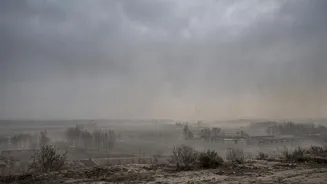





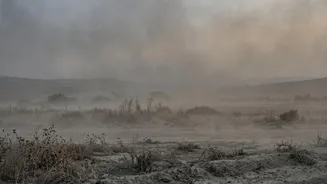
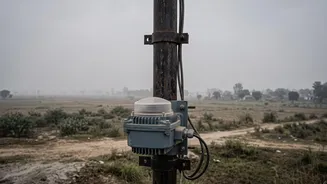
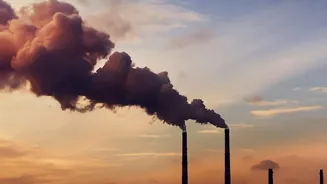
As north India grapples with its annual battle against smog, recent air quality readings from Bikaner and Bathinda have set off alarms, with numbers soaring to hazardous levels. A closer look reveals a complex crisis driven by tiny, potent particles.
Decoding the Alarming Data
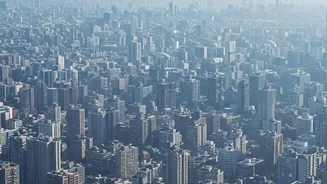
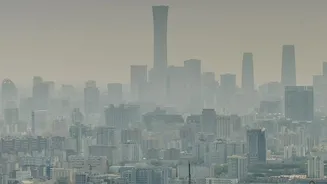
In the first week of November, routine checks of the Air Quality Index (AQI) turned into a source of public health concern. On November 4, Bikaner in Rajasthan reported an AQI that soared past 1,000, with some reports citing a staggering 1,357. On the same day, Bathinda in Punjab was not far behind, with its AQI recorded at 883, placing both cities in the 'Hazardous' or 'Severe' category. To put these numbers in perspective, an AQI between 0 and 50 is considered 'Good'. Readings above 401 are classified as 'Severe', a level that can affect even healthy people and seriously impact those with existing diseases. These figures indicate an atmospheric concentration of pollutants far beyond safe limits, posing an immediate threat to residents.
The Invisible Intruder: PM2.5
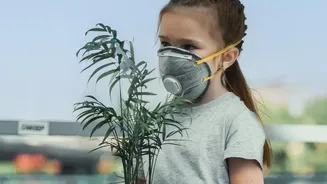
The primary culprit behind these extreme pollution events is fine particulate matter, or PM2.5. These are microscopic particles with a diameter of less than 2.5 micrometres, which is about 30 times smaller than the width of a single human hair. Unlike larger dust particles (PM10) that are often filtered out by the nose and throat, PM2.5 can bypass these natural defences. They travel deep into the lungs, lodging in the alveoli—tiny air sacs where oxygen enters the blood. From there, they can even enter the bloodstream, circulating throughout the body and causing widespread inflammation. The air in Bikaner and Bathinda has been thick with these fine particles, turning a simple breath into a health risk.
From Coughs to Chronic Conditions
The 'possible respiratory irritation' mentioned in headlines is just the tip of the iceberg. Short-term exposure to such high levels of PM2.5 causes immediate symptoms like coughing, shortness of breath, throat and eye irritation, and aggravated asthma. For vulnerable populations—children, the elderly, and people with pre-existing heart or lung conditions—the effects can be immediate and severe, potentially requiring hospitalisation. Medical experts warn that prolonged exposure to AQI levels above 500 is comparable to heavy smoking. Over the long term, chronic exposure to PM2.5 is linked to a host of serious health issues, including reduced lung function, chronic bronchitis, heart attacks, strokes, and even premature death.
A Perfect Storm of Pollutants
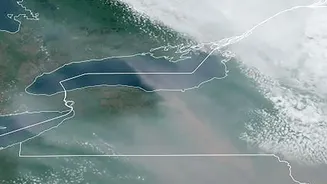
The hazardous air quality in northwest India is not a result of a single factor but a dangerous combination of sources and weather. Agricultural stubble burning in Punjab and Haryana is a major seasonal contributor. Following the paddy harvest, farmers burn crop residue, releasing massive plumes of smoke and PM2.5 into the atmosphere. These emissions are then compounded by other persistent sources like industrial pollution, vehicular exhaust, and construction dust. The situation is exacerbated by meteorological conditions typical of early winter. Low wind speeds prevent the dispersal of pollutants, while temperature inversions act like a lid, trapping the toxic smog close to the ground.
Two Cities, One Regional Crisis
While both Bikaner and Bathinda are choking on polluted air, their geographic locations highlight the widespread nature of the crisis. Bathinda, situated in the heart of Punjab's agricultural belt, is directly impacted by extensive stubble burning in the region. Political leaders have cited data showing hundreds of farm fire incidents in Punjab in early November, directly correlating with the spike in pollution. Bikaner, on the periphery of the Thar Desert in Rajasthan, shows how far these pollutants can travel. A combination of stubble-burning emissions transported by regional winds and trapped by local weather conditions contributes to its alarmingly high AQI, demonstrating that this is not just a localized problem but a regional air_shed crisis that affects millions across state lines.