




A Sweet Discovery in the Stars
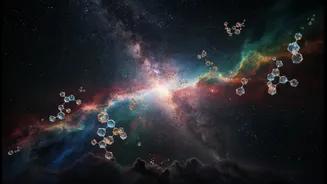
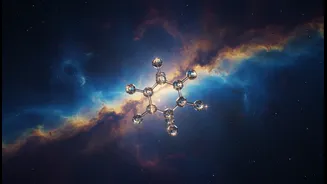
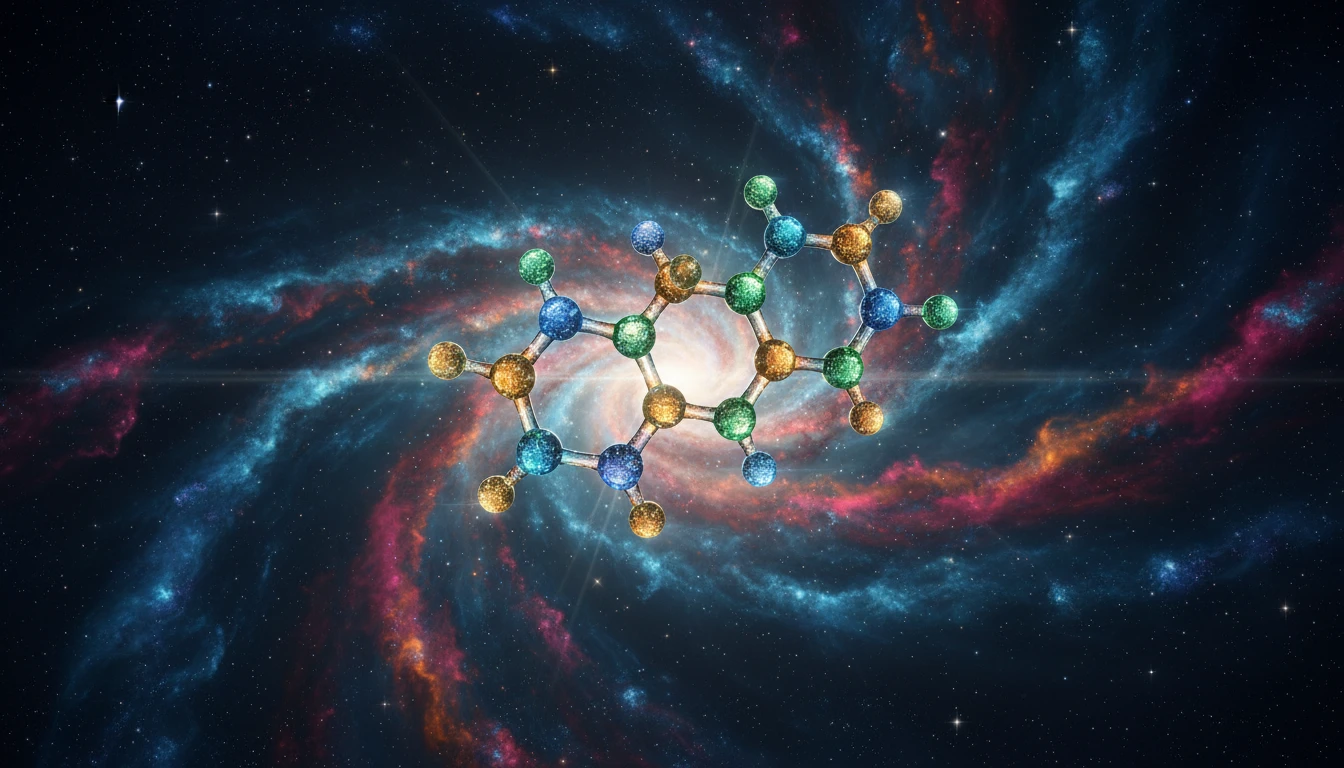
Astronomers have detected a molecule called erythrulose, a four-carbon sugar, floating in a vast cloud of gas and dust some 27,000 light-years away. This isn't just any molecule; it's the first time a true sugar has been found in interstellar space. While
simpler, related compounds like glycolaldehyde were seen before, scientists have debated whether they technically counted as sugars. Erythrulose, however, fits the formal definition, containing a backbone of at least three carbon atoms. Found in a chemically rich region known as G+0.693-0.027, the discovery was made by an international team using powerful radio telescopes in Spain. By analyzing the faint radio signals emitted by molecules, they identified the specific 'fingerprint' of erythrulose, confirming its presence in this stellar nursery. This particular sugar is even found on Earth in fruits like raspberries.
Cosmic Chemistry on Dust Grains
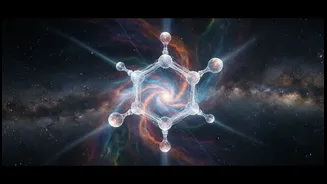
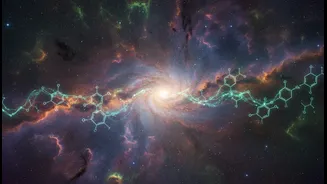
So how does a relatively complex molecule like sugar form in the harsh, cold vacuum of space? The leading theory suggests it's a step-by-step process happening on the icy surfaces of tiny dust grains. Scientists believe simpler molecules, such as glycolaldehyde and ethylene glycol (a compound used in antifreeze), stick to these grains. In the frigid conditions of the molecular cloud, these ingredients can react and combine to build more complex structures like erythrulose. This process is a bit like a cosmic chemical factory, assembling larger molecules from smaller, readily available parts. The detection of erythrulose, which is more complex than some other nearby molecules, suggests this method of building on dust grains is an efficient way to create the ingredients for life.
An Essential Ingredient for Life
The excitement around this discovery stems from the central role sugars play in biology. They are fundamental to life as we know it, serving as an energy source for cells and, most importantly, forming the structural backbone of RNA and DNA—the molecules that carry our genetic code. One of the biggest puzzles in origin-of-life research is figuring out where these essential sugars came from on early Earth. Experiments trying to recreate the conditions of primitive Earth have struggled to produce sugars in sufficient quantities. Finding them already formed in space adds significant weight to a compelling theory: panspermia, or at least the delivery of prebiotic ingredients from space.
Special Delivery via Asteroid and Comet
This discovery strongly suggests that the building blocks of life aren't unique to planets; they can form in the giant clouds where stars and planets are born. The theory goes that as our solar system formed, these cosmic sugars, locked in ice and dust, would have been incorporated into asteroids and comets. For millions of years, early Earth was pummeled by these space rocks in an event known as the Late Heavy Bombardment. This constant rain of material could have delivered a vast inventory of prebiotic molecules, including sugars like erythrulose, to the young, sterile planet, effectively seeding it with the raw materials needed for life to emerge. Researchers even calculated that millions of tons of this sugar could have reached Earth this way.
Are We Made of Stardust?
Detecting sugar in a distant gas cloud doesn't mean we've found aliens. What it does mean is that the chemical conditions that led to life on Earth might be common throughout the Milky Way. If these essential ingredients are being manufactured in stellar nurseries across the galaxy, it raises the tantalizing possibility that the potential for life exists on countless other worlds. This discovery reinforces the idea that life isn't necessarily a miraculous accident, but perhaps a natural outcome of cosmic chemistry. The journey from non-living matter to a living cell is still a profound mystery, but finding a key ingredient floating among the stars tells us that the recipe for life might be written in the cosmos itself.