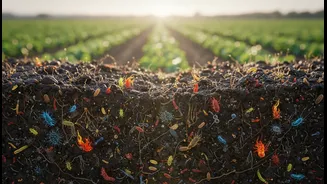








The Challenge We Can See
Farmers across India are on the front lines of a changing climate. Erratic rainfall, prolonged dry spells, and nutrient-depleted soils are making it harder than ever to secure a stable harvest. For decades, the solution often involved more chemical fertilisers
and intensive irrigation, but these practices can be costly and have led to long-term soil degradation. In fact, it's estimated that nearly 30% of India's total land area is already degraded, a crisis that directly threatens food security and the livelihoods of millions. This visible struggle on the surface, however, is often a symptom of a deeper, invisible problem.
A Thriving Universe in the Soil
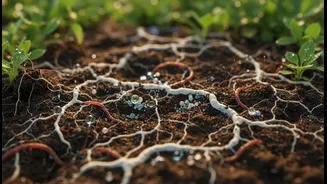
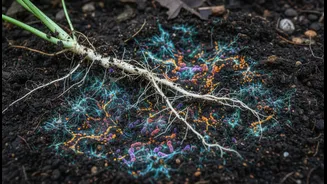
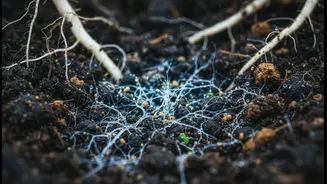
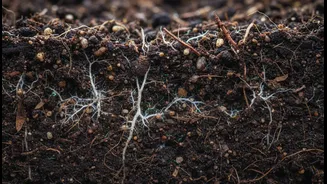
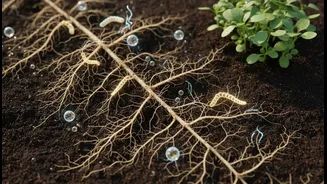
The real action is happening below ground. Healthy soil is not just dirt; it's a bustling ecosystem teeming with billions of microorganisms. A single teaspoon can contain more microbes than there are people on Earth. This vast community, known as the soil microbiome, includes bacteria, fungi, and other organisms that form a powerful, symbiotic relationship with plant roots. Among the most important are arbuscular mycorrhizal fungi (AMF), which create a vast network of fine threads, called hyphae, extending far beyond the plant's own roots. This network acts as a superhighway for nutrients and water, fundamentally changing how a plant interacts with its environment.
How Healthy Soil Builds a Resilient Plant
This underground alliance is what gives crops true resilience. The fungal networks created by AMF dramatically increase the root's surface area, allowing plants to absorb water and crucial nutrients like phosphorus and zinc from a much larger volume of soil. This makes plants significantly more tolerant to drought. Furthermore, these beneficial microbes can help protect plants from diseases by outcompeting harmful pathogens for resources and space. A healthy soil structure, rich in organic matter and held together by microbial secretions like glomalin, also improves water infiltration and retention. This means during heavy rains, water is absorbed rather than running off and causing erosion, and during dry spells, that moisture is available to the plant for longer.
Feeding the Soil, Not Just the Plant
The focus is shifting from feeding the plant with chemical inputs to feeding the soil that supports it. This approach, often called regenerative agriculture, involves a set of practices designed to restore soil health. Key techniques include minimal tillage (no-till farming), which prevents the disruption of the delicate soil structure and microbial networks. Planting cover crops, such as legumes or grasses between cash crop cycles, protects the soil from erosion, suppresses weeds, and adds valuable organic matter when it decomposes. Diversifying crop rotations and integrating organic compost further enhances soil fertility and biodiversity, reducing the dependence on synthetic fertilisers. These practices work together to build a robust, self-sustaining system.
The Way Forward for India
In India, where a significant portion of the soil suffers from nutrient deficiencies and low organic carbon, these principles are especially critical. Over-irrigation has led to salinity in states like Punjab and Haryana, while monocropping has degraded soil structure elsewhere. Initiatives promoting regenerative practices are gaining traction, showing promise in restoring degraded land and improving farmer livelihoods. By shifting focus to building soil health, Indian agriculture can move towards a more sustainable model—one that not only produces healthier food but also sequesters carbon, conserves water, and builds true resilience against the challenges of tomorrow.