






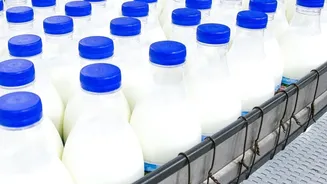


The daily budget for millions of Indian households is set for a revision as major dairy brands have once again increased milk prices this November. This detailed breakdown explores which brands are affected, how much more you will pay, and why.
Which Brands Have Increased Prices?
Leading
dairy cooperatives Amul and Mother Dairy announced price revisions effective from November 12, 2026. Amul, managed by the Gujarat Cooperative Milk Marketing Federation (GCMMF), implemented a hike of ₹2 to ₹4 per litre on its fresh pouch milk across India. Mother Dairy, a major supplier in the Delhi-NCR region, mirrored this with a similar increase on its liquid milk variants. These hikes follow earlier increases in May, making this the second significant price adjustment in 2026. Other regional players have also adjusted their rates. Punjab's Verka brand increased prices by ₹1 to ₹8 on various pouches from November 13. In Guwahati, the local dairy farmers' association raised prices by ₹2.60 per litre starting November 16. Meanwhile, dairies in Maharashtra are also reportedly considering a price hike from mid-November.
The New Rates: A Detailed Breakdown
The price adjustments vary by the type of milk and the region. For Amul, the popular Amul Taaza (toned milk) is now dearer by ₹2 per litre, while the full-cream Amul Gold has seen an increase of ₹4 per litre. In the Delhi-NCR market, Mother Dairy's full-cream milk now costs ₹76 per litre, up from ₹72. Its pouched toned milk has risen by ₹2 to ₹62 per litre, and its cow milk is up by ₹3 to ₹65 per litre. Even bulk-vended toned milk from Mother Dairy has seen a ₹2 increase, now costing ₹60 per litre. The impact is significant for families; a household buying two litres of full-cream milk daily will spend approximately ₹240 more per month.
Why Are Prices Going Up Again?
The primary reason cited by all dairy companies is the sharp rise in input costs. This is a multi-faceted issue. The cost of cattle feed and fodder, which accounts for up to 75% of milk production costs, has surged. Companies report that fodder prices have increased by as much as 20% over the last year, with cattle feed ingredients like maize and oil cakes also becoming more expensive. Uneven monsoon rainfall in key dairy states like Gujarat has further strained the availability of affordable fodder. Beyond the farm, operational expenses have also climbed. Costs for packaging, refrigerated transportation, and fuel have all seen significant increases, which companies are now passing on to consumers.
Supporting Farmers Through Price Hikes
Both Amul and Mother Dairy have emphasized that a major portion of the revenue from these price hikes is transferred back to the dairy farmers. Amul states that around 80% of the money collected from consumers goes to its 3.6 million milk producers. The company noted that its member unions have already increased procurement prices paid to farmers by 4-5% over the past year to help them cope with rising production costs. Mother Dairy similarly passes on 75-80% of its sales realisation to farmers. The cooperatives argue that these retail price revisions are essential to ensure that dairy farming remains economically viable for the millions of farmers who form the backbone of India's milk supply chain, especially during challenging environmental and economic conditions.
Regional Differences and Future Outlook
The price of milk in India is not uniform and is influenced by local factors. States with strong, well-managed cooperatives like Gujarat (Amul) and Karnataka (Nandini) often have different pricing structures compared to others. Government subsidies in certain states can also play a role in the final retail price. The current round of hikes has been most prominent in major urban markets. Interestingly, these price increases are occurring during the 'flush season' (typically October to February), a period when milk production naturally increases and prices tend to stabilize. However, due to the weak monsoon and high input costs, experts do not expect any price relief this winter. Consumers should likely anticipate prices to remain firm as dairies continue to balance high procurement costs with sustained consumer demand.