






The Invisible Engine of the Internet
Every time you stream a movie, join a video call, or rely on an AI assistant, you are using a data centre. These vast, power-hungry facilities are the physical backbone of the digital world. They house the servers, storage, and networking equipment that
process and store humanity's ever-growing mountain of data. For years, their environmental impact was a nebulous concept, but a landmark study published in 'Nature Sustainability' has brought a new level of clarity. Researchers from Harvard University conducted a detailed analysis of 403 'hyperscale' data centres across the United States, providing one of the first facility-level estimates of their true energy and carbon cost in the age of AI.
A Carbon Footprint Rivaling a Country
The study, which analyzed data from May 2024 to April 2025, found that these 403 facilities produced approximately 25.7 million metric tons of carbon dioxide. To put that into perspective, this figure is roughly equivalent to the entire annual carbon emissions of Denmark. This impact is two to three times higher than previous peer-reviewed estimates from 2018, highlighting the explosive growth in the sector even before the most recent AI boom took full hold. The lead author of the study, Gianluca Guidi, cautioned that these findings are likely a conservative lower bound, as the industry has expanded significantly since the study period ended. 'The data stops in April 2025, which in AI time is basically ancient history,' Guidi noted.
A Thirst for Power
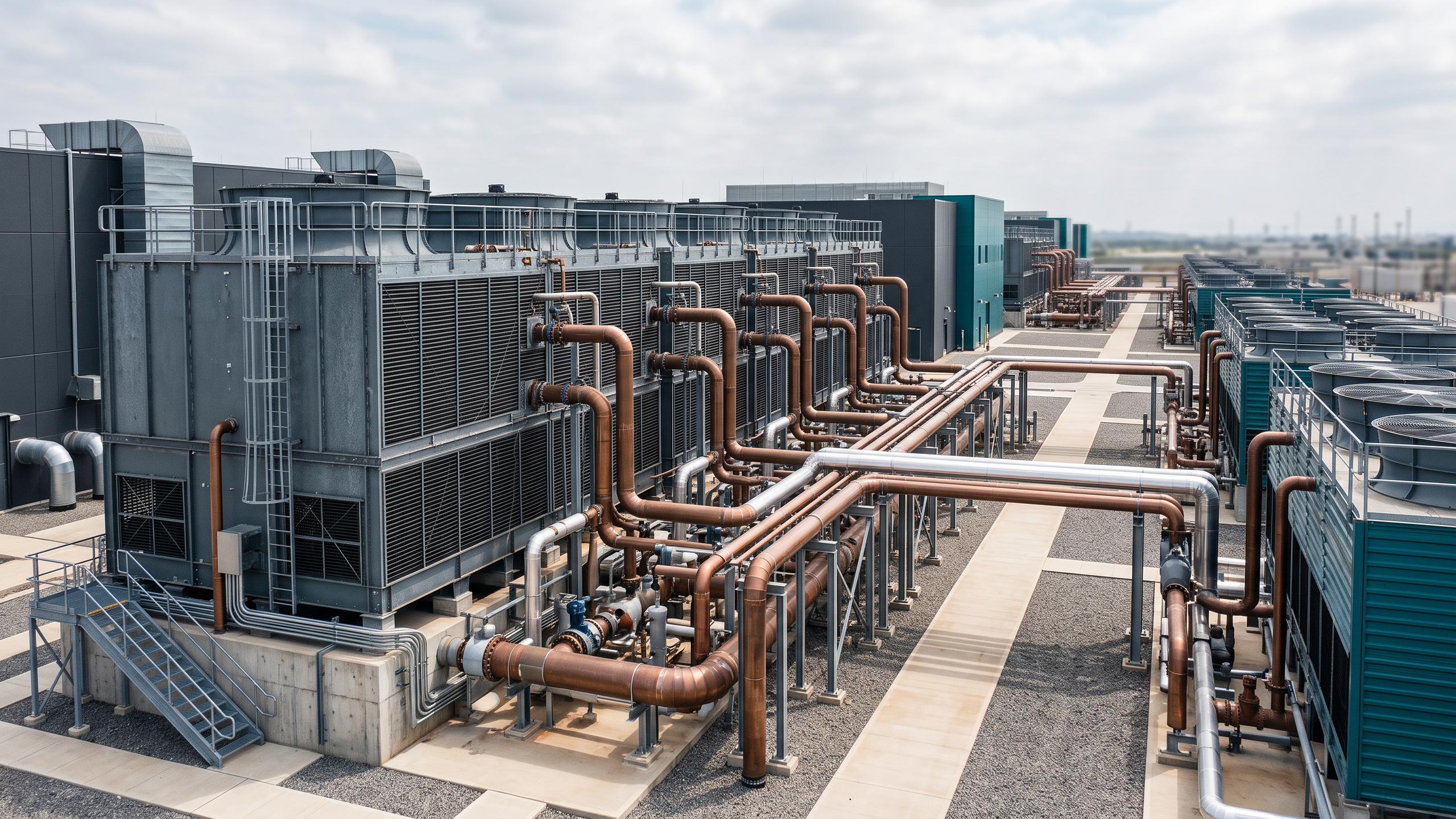
The carbon emissions are a direct result of the immense electricity required to run and cool these server farms. The research estimated the total electricity consumption of the 403 centres at around 82 terawatt-hours (TWh) for the year. That's enough electricity to power nearly 7 million American homes and is comparable to the annual electricity usage of entire states like Michigan or Tennessee. Critically, the study found that over half (54%) of this electricity was generated from fossil fuels, primarily natural gas and coal. This reliance on carbon-intensive energy sources is a key driver of the industry's significant environmental footprint, despite the public climate commitments made by major tech operators like Amazon, Microsoft, and Google, who dominate the hyperscale market.
Location, Location, Location
Where a data centre is built matters immensely. The study revealed that the environmental impact is not evenly distributed across the country. Just four states—Virginia, Oregon, Ohio, and Iowa—accounted for more than half of the total electricity consumption studied. However, the carbon emissions are a different story. Virginia, Ohio, and Iowa had the highest attributable CO2 emissions. Oregon, despite its significant number of data centres, had a much smaller carbon footprint due to its access to cleaner energy sources like hydropower. This shows that the local energy grid's makeup is a crucial factor. Building a data centre in a region heavily reliant on coal will result in far higher emissions than in an area with abundant renewable energy. This geographical concentration of impact is raising concerns about public health and environmental justice in affected communities.
The AI Boom and the Path Forward
The demand for data processing is not slowing down; it's accelerating, largely driven by the computational demands of artificial intelligence. This reality is forcing a conversation about sustainability within the tech industry and among policymakers. The UN climate talks have recently introduced a voluntary pledge for companies to power data centres with clean energy and increase transparency. Solutions to mitigate the carbon impact are available, including capturing waste heat for local use, investing in more efficient cooling technologies, and, most importantly, accelerating the transition to renewable energy sources to power these digital factories. As our world becomes more intertwined with digital services, the findings from this research underscore a critical challenge: balancing technological progress with environmental responsibility.