







The Policy That Opened The Skies
For decades, the Indian Space Research Organisation (ISRO) was the sole custodian of India's space ambitions. Private companies were largely limited to being component suppliers. This paradigm shifted dramatically in June 2020. The government announced
a series of reforms designed to open the final frontier to private enterprise. This culminated in the Indian Space Policy of 2023, which laid out a clear roadmap for non-government entities to participate in end-to-end space activities. The centrepiece of this reform was the creation of the Indian National Space Promotion and Authorisation Centre (IN-SPACe). Functioning as an autonomous single-window agency, IN-SPACe was tasked with promoting, authorising, and supervising the work of private players, effectively creating a level playing field and bridging the gap between private industry and ISRO's vast resources.
From Handful to Hundreds
The impact of these reforms has been nothing short of explosive. Before 2020, you could count the number of space startups on your fingers. By mid-2026, that number had surged to over 450. This boom is not just in numbers but also in investment. Venture capital, once hesitant, began to flow freely into the sector. Since the liberalisation, Indian space-tech startups have attracted hundreds of millions of dollars in funding, with a notable acceleration in recent years. In 2025 alone, startups raised around USD 170 million, a 143% increase from the previous year. This influx of capital has validated the government's strategy and equipped a new generation of entrepreneurs with the resources to dream big.
Meet the New Space Pioneers
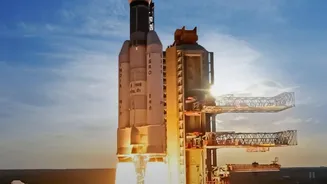
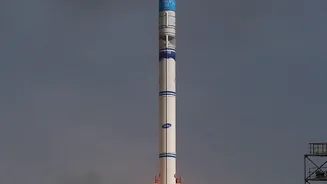
Several startups have emerged as trailblazers in this new ecosystem. Skyroot Aerospace, founded by former ISRO engineers, made history in July 2026 with the successful orbital launch of its Vikram-1 rocket, India's first from a private company. This demonstrated a crucial domestic capability for launching small satellites. Another key player, Agnikul Cosmos, has pioneered the use of 3D-printed rocket engines, drastically cutting manufacturing time and costs. Meanwhile, in the satellite domain, Pixxel is building one of the world's most advanced constellations of hyperspectral imaging satellites, capable of seeing the Earth in unprecedented detail. These companies, along with others like Dhruva Space, which works on satellite platforms, represent the diverse ambitions of the sector.
ISRO’s New Role: From Player to Coach
The rise of private players hasn't made ISRO redundant; it has simply changed its role. Under the new policy, ISRO is transitioning away from routine manufacturing and operational tasks. Instead, it is focusing its immense talent and resources on core research and development, deep space exploration, and strategic national missions like the Gaganyaan human spaceflight program. It now acts as a mentor and enabler, transferring mature technologies and sharing its world-class testing facilities with startups, often on a subsidised basis. This collaborative model prevents a duplication of efforts and ensures that the entire ecosystem benefits from ISRO's decades of expertise.
The Next Frontier and Its Challenges
The future looks bright, with projections suggesting India's space economy could grow from around $8.4 billion today to over $40 billion by 2033. The government is backing this growth with initiatives like a dedicated venture capital fund for the sector. However, challenges remain. The space industry is capital-intensive, and startups will require continuous access to large-scale funding to compete globally. While the policy framework is in place, a comprehensive Space Activities Act to govern aspects like liability and insurance is still awaited. Furthermore, as the sector grows, so does the demand for a highly skilled workforce, creating a need for a new pipeline of talent in aerospace engineering, data science, and advanced manufacturing.