

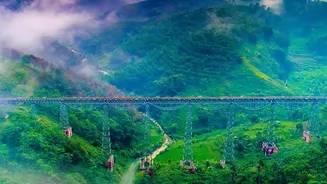

A World Away from the Crowds
For years, Indian travelers have flocked to familiar hill stations, often contributing to overcrowding and environmental strain. Today, a growing number are choosing a different path, venturing into the eight states of Northeast India. This region offers
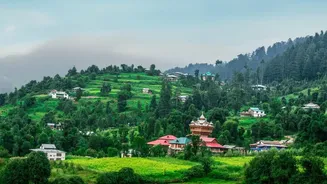
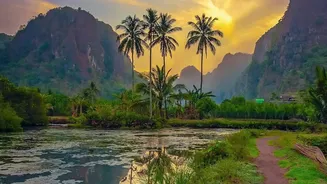
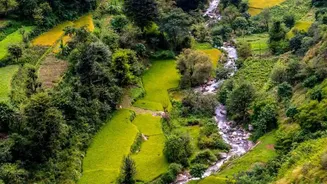
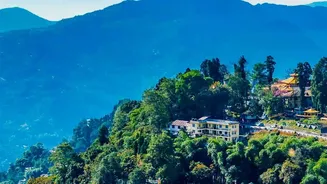
an authentic escape, where tourism has developed more gradually and in closer harmony with nature. Unlike many commercialized destinations, the Northeast provides a chance to explore largely intact landscapes, from the rolling hills of Assam to the alpine peaks of Arunachal Pradesh. This shift reflects a broader trend towards experiences that feel personal, purposeful, and rooted in discovering India's incredible diversity.
Where Biodiversity Is the Main Attraction
The Northeast is one of the world's biodiversity hotspots, and this natural wealth is the cornerstone of its appeal. The region is a treasure trove of national parks and wildlife sanctuaries. Kaziranga National Park in Assam is world-famous for protecting the one-horned rhinoceros, while Namdapha National Park in Arunachal Pradesh is a haven for elusive species like the clouded leopard. In Meghalaya, travelers can marvel at centuries-old living root bridges, a testament to natural architecture. Eco-tourism here isn't just about sightseeing; it's an immersive education in conservation, with activities like birdwatching in Nameri National Park or guided jungle treks that emphasize minimal impact.
Tourism Powered by Communities
What truly sets the Northeast apart is its emphasis on community-based tourism. In states like Sikkim, Nagaland, and Meghalaya, tourism is not just an industry but a lifeline that empowers local and indigenous communities. Villages like Mawlynnong in Meghalaya, famed for its cleanliness, and Khonoma in Nagaland, known for its conservation efforts, are pioneering models of sustainable tourism. Travelers are welcomed into family-run homestays, offering a genuine cultural exchange and ensuring that tourism revenue directly supports local livelihoods. This approach allows visitors to understand the unique customs and lifestyles of the region's many tribes, from the Monpas in Arunachal Pradesh to the Khasis in Meghalaya.
States Leading the Green Charge
The commitment to sustainability is also driven by strong state-level policies. Sikkim, for instance, has gained a reputation as one of India's cleanest states, with long-standing bans on plastics and a focus on becoming fully organic. Its tourism strategy is built around community-led initiatives and preserving its immense biodiversity. Similarly, states like Arunachal Pradesh and Meghalaya are developing tourism policies that prioritize sustainability and community involvement. These efforts, combined with improving infrastructure and connectivity, are making the region more accessible while safeguarding its unique character. Recent agreements between states like Arunachal Pradesh and Sikkim to share best practices in sustainable tourism further highlight this regional commitment.
The New Face of Adventure
For the modern adventurer, the Northeast offers a playground of low-impact, high-thrill activities. The region's diverse geography is perfect for trekking in Nagaland's Dzukou Valley, white-water rafting on the Brahmaputra, caving in Meghalaya, and paragliding in Sikkim. Festivals like Nagaland's Hornbill Festival and Arunachal's Ziro Festival of Music are major draws, showcasing vibrant cultural traditions in stunning natural settings. This blend of adventure, culture, and nature is redefining what a holiday can be—transforming it from a simple break into a rich, rewarding experience.