









The Annual Rhythm of Hope
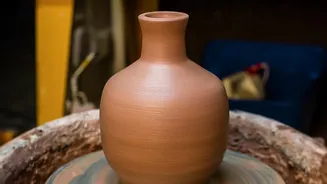
For generations of potters, life is dictated by a cyclical rhythm. While pottery is a year-round craft, the months leading up to major festivals like Diwali, Navratri, and Ganesh Chaturthi mark a seismic shift in pace. Entire families, from grandparents
to children, are drawn into the whirlwind of production, their days and nights consumed by the spinning wheel. The demand for traditional clay items—especially diyas, the small earthen lamps central to Diwali celebrations—surges, turning quiet workshops into bustling hubs of activity. This period is seen as a boom time, an opportunity to earn a significant portion of their annual income and keep the ancestral craft alive. The work often begins months in advance, as a single diya can take several days to process from shaping and drying to baking and painting.
A Race Against Time and Elements
This festive rush is a double-edged sword. Artisans work around the clock, often up to 15 hours a day, to meet the soaring demand from local markets and bulk buyers. However, they face numerous hurdles. Unpredictable weather, like a heavy monsoon season, can severely hamper production, as many workshops are partially or fully outdoors, and the clay items need to be dried in the sun before they can be fired in the kiln. Access to the primary raw material, quality clay, is becoming another major challenge. Due to rapid urbanisation and environmental depletion, potters are forced to travel hundreds of kilometres or pay exorbitant prices for truckloads of suitable soil, a resource that was once free and abundant.
The Economic Equation
Despite the increased sales, the financial reality for many artisans remains precarious. Profit margins are often razor-thin, sometimes as low as 5%. Potters speak of the rising costs of raw materials, transportation, and fuel for their kilns. Many find themselves at the mercy of middlemen and wholesalers, who buy their products in bulk at meagre rates and sell them for significantly higher prices in urban markets and online. A potter might sell a simple diya for a pittance, while the final retail price is many times that amount. This struggle for fair pricing is a constant source of frustration and makes it difficult for families to earn a sustainable livelihood from their craft alone.
Modern Pressures and New Hopes
Traditional potters also face stiff competition from cheaper, mass-produced alternatives, such as plastic or plaster-of-paris idols and electric lights. Yet, a counter-movement is gaining traction. There is a growing appreciation for handmade, eco-friendly products among urban consumers, boosted by initiatives like 'vocal for local'. This has led to a steady demand for traditional clay items, moving beyond just diyas to include decorative pieces, idols, and planters. Some artisans are adapting by embracing new designs and digital payment methods, while others are finding new income streams by offering pottery workshops to tourists and city dwellers, creating a unique cultural experience that helps sustain their craft.