
The New Reigning Moon King
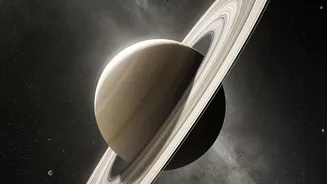
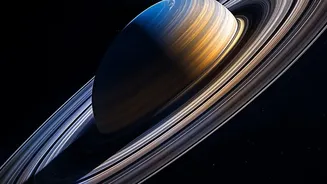
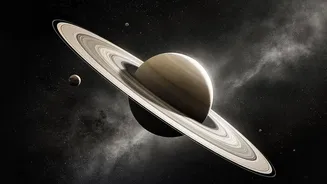
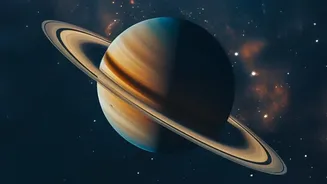
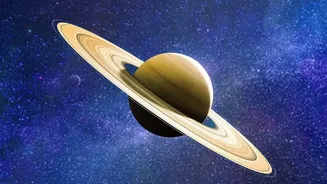
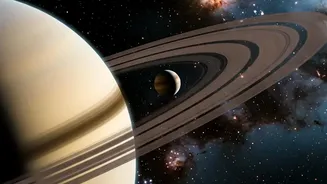
For decades, Jupiter held the title of the planet with the most moons. But in recent years, Saturn has decisively claimed the crown. As of mid-2026, astronomers have confirmed a staggering 293 moons orbiting the gas giant, the most of any planet in our
solar system. This number has grown dramatically, with massive announcements of new discoveries, including a batch of 128 confirmed in March 2025. These revelations have not just changed a line in a science book; they've reshaped our view of Saturn's system as a bustling, crowded neighborhood of celestial bodies, far more complex than previously imagined.
The Hunt for Ghostly Signals
So, how are scientists finding these new, often tiny, worlds? The answer lies in powerful new technology and clever techniques. Most of the recent discoveries have been made using advanced ground-based telescopes, like the Canada-France-Hawaii Telescope. Astronomers use a method called "shift and stack," where they take multiple images of a slice of the sky over several hours. Since a potential moon moves against the background of distant stars, they shift each image to align with the moon's predicted path and then 'stack' them. This process combines the faint light from the object, making a previously invisible speck bright enough to be detected. It's a meticulous process of tracking these faint signals over months or even years to confirm they are indeed in a stable orbit around Saturn.
Meet the Irregular Family
The vast majority of these newfound moons are not like our own familiar, spherical Moon. They are classified as "irregular moons." These are typically small, potato-shaped objects, often only a few kilometres across, with large, tilted, and eccentric orbits. Unlike Saturn's larger "regular" moons, which formed from the same disc of gas and dust as the planet itself, these irregulars are thought to be captured objects. They were likely asteroids or comets that strayed too close to the gas giant and were snared by its immense gravitational pull long ago. Many of them are grouped into orbital clusters, suggesting they may be the shattered remnants of a larger moon that was destroyed in a collision millions of years ago.
A Window into the Past
Studying these far-flung satellites offers more than just a numbers game. These irregular moons are like cosmic fossils, providing invaluable clues about the chaotic early history of our solar system. Their orbits and composition help scientists model the conditions when the planets were still forming. For example, the fact that many of Saturn's irregulars orbit in a retrograde direction—opposite to the planet's rotation—supports the theory that they were captured rather than formed in place. Some scientists believe these moons tell a story of a recent cosmic collision, perhaps within the last 100 million years, which would be a blink of an eye in astronomical terms.
What Exactly Is a Moon?
The explosion in Saturn's satellite count raises a fascinating question: what officially counts as a moon? While Earth's satellite is called the Moon (with a capital M), the general term "moon" refers to any natural satellite orbiting a planet or other celestial body. Unlike the term "planet," which has a strict definition from the International Astronomical Union (IAU), the definition of a "moon" is more general. Currently, it's largely a matter of being a natural object in a stable orbit that can be consistently tracked. As our telescopes get more powerful and we discover even smaller objects—sometimes called moonlets—orbiting within Saturn's rings, the scientific community may eventually need to refine this definition.