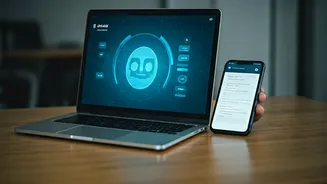









The Private Practice Partner
For a generation that grew up with screens, the prospect of difficult face-to-face conversations can be daunting. A global survey from Deloitte shows that Gen Z and millennials are intensely focused on skill development. More than half of young adult
workers are reportedly using AI to help strategise their communications with superiors and colleagues. Whether it's drafting a request for a raise, figuring out how to deliver negative feedback, or simply overcoming the anxiety of a blank page, ChatGPT offers a non-judgmental space to practice. It allows users to role-play challenging conversations virtually before they ever happen in the real world, providing a sense of preparation that can significantly boost confidence.
Mastering the Modern Workplace
By 2026, Gen Z is expected to make up nearly 27% of India's workforce. This generation brings different expectations to the office, favouring instant feedback and clear, efficient communication, often over platforms like Slack or Teams rather than lengthy email chains. AI tools are becoming a key part of their professional toolkit. Young professionals use AI to draft professional emails, prepare for meetings, understand unfamiliar industry jargon, and even refine their LinkedIn profiles. One of the most popular uses is for interview preparation. Aspiring candidates can ask ChatGPT to act as an interviewer for a specific role, generate common questions, and even provide feedback on their answers, helping them structure responses and feel more prepared.
A Tool, Not a Replacement
Despite its benefits, relying too heavily on AI for communication carries significant risks. Experts caution that AI lacks genuine emotional intelligence; a response that is technically correct might be emotionally tone-deaf. This can be particularly problematic in sensitive situations where empathy and nuance are critical. There's also the risk of developing a dependency, where the user's own communication skills can atrophy from lack of use. If every difficult email or conversation is outsourced to a bot, the fundamental human skills of negotiation, empathy, and spontaneous dialogue may not get the practice they need to develop. The output can also be generic, stripping away the user's unique voice and personality.
The Risk of 'Social Offloading'
Beyond the professional sphere, there are growing concerns about a phenomenon researchers call “social offloading.” This is where individuals use AI to handle difficult or delicate personal interactions, such as ending a relationship via a bot-generated text. While this may seem like an easy way to avoid discomfort, it outsources the communicative act itself. This can prevent young people from learning how to navigate the complex, and sometimes awkward, realities of human relationships. Furthermore, there are significant privacy issues to consider. AI tools learn from the data they are fed, raising questions about where personal and sensitive information goes and how it's used.