





Start with a Sprinkle
The easiest way to begin is by using sprouts as a garnish. Think of them as a healthier, crunchier replacement for sev or boondi. A small handful of raw moong sprouts sprinkled over dal, sabzi, or even poha before serving adds a refreshing texture and a dose
of nutrients without altering the dish's core flavour. It’s a low-effort, high-reward hack that makes your plate instantly more vibrant and nutritious. This works especially well with moong, moth bean, and alfalfa sprouts.
Master the Quick Kachumber
The humble kachumber—a simple mix of chopped cucumber, tomato, and onion—is a thali's best friend. You can prepare the base ingredients in the morning and keep them in the fridge. Just before a meal, take out a portion and dress it with a squeeze of lemon juice, a pinch of salt, and some chaat masala. To boost the fibre further, add grated carrots, beetroot, or finely chopped radish. This instant salad not only balances the richness of curries but also ensures you get a serving of raw vegetables with every meal.
Make a Sprout Chaat Side
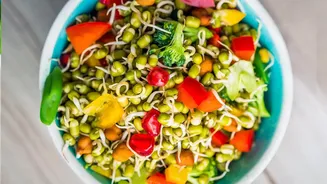
Transform sprouts from a mere ingredient into a star side dish. A simple sprout chaat can be a permanent, delicious fixture in your thali. Take a cup of boiled or raw moong sprouts and mix with finely chopped onion, tomato, green chillies, and fresh coriander. Season with rock salt, roasted cumin powder, and a generous squeeze of lemon. It’s a protein-packed, tangy salad that perfectly complements any Indian meal. For a more elaborate version, you can add tamarind chutney for a sweet and sour kick.
Blend Sprouts into Dals and Gravies
This is a fantastic hack for picky eaters or if you dislike the raw taste of sprouts. When your dal or any gravy-based sabzi is almost cooked, add a handful of moong or lentil sprouts and let it simmer for the last five minutes. The sprouts soften and blend into the texture of the dish, becoming virtually undetectable while adding their nutritional benefits. This method works well for enriching dishes like sambar, masoor dal, or mixed vegetable curries without any extra effort.
Prep Sprouts for the Week
The biggest barrier to using sprouts is often the lack of preparation. Dedicate a small amount of time on the weekend to sprouting. Soak moong, chickpeas, or moth beans overnight. The next day, drain the water, tie them in a muslin cloth, and leave them in a warm place. Within a day or two, you'll have a batch of fresh sprouts. Store them in an airtight container in the refrigerator, and they'll be ready to be tossed into salads, stir-fries, or curries all week long.
Upgrade Your Raita
Raita is another thali staple that can be a vehicle for more fibre. Instead of a plain boondi raita, opt for a vegetable-based one. Grated cucumber, bottle gourd (lauki), or beetroot mixed into whisked yogurt adds fibre, vitamins, and a refreshing coolness to the meal. For a crunchier, more nutrient-dense option, try adding finely chopped onions, tomatoes, and even a tablespoon of sprouts to your dahi. It’s a simple swap that enhances both taste and health.
The 2-Minute Sprout Stir-Fry
If the idea of raw sprouts doesn’t appeal to you, a quick stir-fry is the answer. Heat a teaspoon of oil in a pan, add mustard seeds, a pinch of asafoetida (hing), and a chopped green chilli. Toss in a cup of sprouts (moong or mixed sprouts work well) and sauté for just two to three minutes. You want them to be slightly cooked but still crunchy. Finish with a pinch of turmeric, salt, and a squeeze of lemon. This 'subzi' comes together in minutes and serves as a warm, flavourful, and fibrous addition to your thali.