




The Power of Roasting: Flavour Unleashed
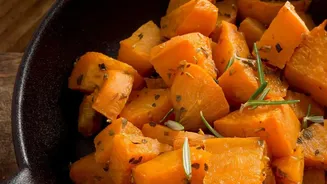
Roasting is all about dry, high heat, and this environment is where the magic of flavour development happens. When you place cubed sweet potato or butternut squash in a hot oven, two key processes occur: caramelization and the Maillard reaction. Caramelization
is the browning of the natural sugars present in the vegetables, which concentrates them and creates a deeper, sweeter taste. The Maillard reaction is a more complex chemical process between amino acids and sugars, responsible for creating hundreds of new aromatic compounds. This is what gives roasted vegetables their nutty, savoury, and complex notes that simply cannot be replicated by boiling. The result for both sweet potato and butternut squash is a gloriously browned exterior, a creamy and tender interior, and a much more intense, concentrated flavour.
The Simplicity of Boiling: Texture Transformed
Boiling, on the other hand, is a moist-heat cooking method. Submerging vegetables in hot water quickly and efficiently softens their tough cellular structures, resulting in a uniformly tender texture. For butternut squash, boiling is a speedy way to get tender cubes, often in as little as 5 to 10 minutes, making it ideal for purees, soups, or mashes where a smooth consistency is the goal. However, this method comes with a trade-off. Because there's no dry heat, the Maillard reaction and caramelization do not occur, meaning the flavour remains much milder and more vegetal. Furthermore, some water-soluble nutrients, like Vitamin C and B vitamins, can leach out into the cooking water, although minerals and fibre remain largely stable.
Sweet Potato: The Glycemic Index Question
When it comes to sweet potatoes, the cooking method has a significant and well-documented impact on its glycemic index (GI), which measures how quickly a food raises blood sugar. Studies have shown that roasting can dramatically increase the GI of a sweet potato, sometimes from a medium score into a high one. Boiling, in contrast, helps keep the glycemic impact lower. Some research suggests boiling helps gelatinize the starches in a way that slows digestion. Letting a boiled sweet potato cool can further help by forming resistant starch, a type of fibre that acts more slowly in your system. So, from a blood sugar management perspective, boiling is the recommended method for sweet potatoes.
Butternut Squash: A Matter of Use
For butternut squash, the 'best' method is less about nutrition and more about your final goal. Roasting brings out its best qualities for a side dish, where you want those caramelized, nutty notes to shine. It's perfect for adding to salads, grain bowls, or serving on its own. Boiling, however, is the faster and more practical choice when the squash is an ingredient in a larger dish. If you're making a creamy soup, a filling for lasagna, or a smooth puree, boiling will give you the soft, easy-to-blend texture you need in about half the time of roasting. The flavour difference is notable, with boiled squash being much milder, which allows it to absorb the other flavours in your recipe.
The Final Verdict: When to Roast and When to Boil
Ultimately, your choice depends on balancing flavour, texture, and your specific health considerations. Choose roasting when: - Flavour is your top priority. You want deep, sweet, caramelized notes. - You're making a standalone side dish, adding texture to a salad, or want a slightly crispy exterior. - You are cooking butternut squash and want to maximize its nutty, sweet character. Choose boiling when: - Speed and convenience are key. Boiling is significantly faster than roasting. - You need a soft, uniform texture for soups, mashes, or purees. - You are preparing sweet potatoes and want to minimize their impact on your blood sugar. - The vegetable is an ingredient that will be blended with other strong flavours.