
The Magnificent Moon Illusion
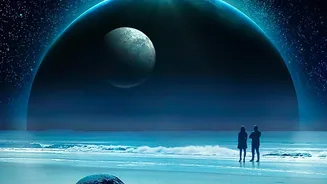
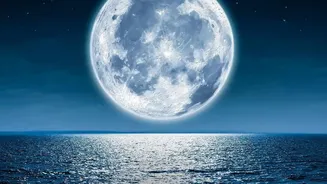
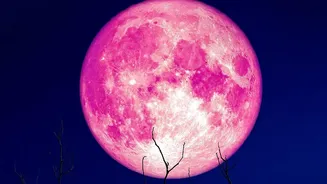
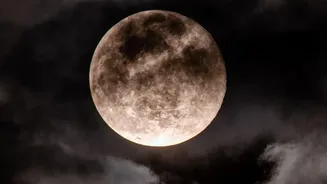
The phenomenon of the moon appearing enormous when it's near the horizon is known as the Moon Illusion. It's not a physical change in the moon's size or distance; it’s a powerful trick played by your brain. For thousands of years, sky-watchers have been
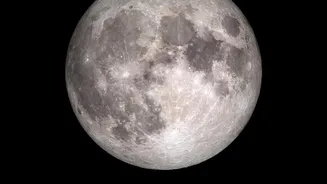
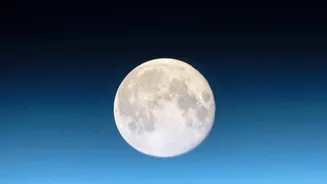
captivated by this effect. While your eyes perceive a giant orb hanging just above the trees or city skyline, a camera captures the objective reality: the moon's angular size in the sky remains consistent, at about half a degree, whether it is rising, setting, or high overhead. This discrepancy is why your smartphone photo of a stunning moonrise often looks so underwhelming—the camera doesn't experience the illusion.
Why Your Brain Perceives a Giant Moon
So, what's happening inside our heads? The leading explanation is the Ponzo illusion, a concept that's over a century old. This illusion suggests that our brains judge an object's size based on its surrounding context and perceived distance. When the moon is on the horizon, it’s framed by familiar objects like trees, buildings, and hills. Our brain knows these objects are far away and large, so it interprets the moon, which is behind them, as being even farther and therefore physically massive to appear as it does. Conversely, when the moon is high in a vacant sky, there are no reference points. With nothing to compare it to, our brain perceives it as a smaller, isolated object.
The Camera's Cold, Honest Perspective
A standard camera lens, like a 35mm or 50mm, captures a wide field of view, much like our peripheral vision. However, it doesn't apply the brain's interpretive, size-adjusting logic. It simply records the light as it is. In a wide-angle shot, the moon, with its tiny 0.5-degree angular size, occupies only a small fraction of the frame. The result is a photo that accurately reflects the moon's actual angular size but fails completely to capture the majestic feeling of the moment. This is the technical problem photographers must solve: how to make the camera 'see' the moon the way the brain does.
Using Focal Length to Recreate the Illusion
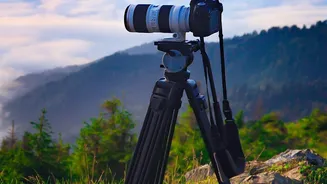
The secret to photographing a 'big' moon is not about zooming in on the moon itself, but about using a long telephoto lens to manipulate perspective. By using a focal length of 200mm, 400mm, 600mm, or even longer, you can achieve an effect called 'lens compression'. This doesn't mean the lens is physically squashing anything; rather, by standing very far away from your foreground subject (a building, a mountain, a person), the long lens makes the distant background (the moon) appear much larger and closer relative to that foreground subject. You are essentially forcing the camera to create a visual relationship that mimics the brain's own Ponzo illusion, making the moon dominate the scene as it did to your eyes.
Practical Steps for a Breathtaking Moon Shot
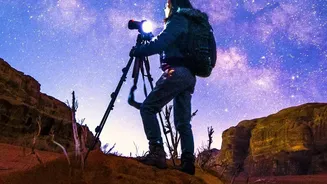
To capture your own stunning horizon moon photo, planning is essential. First, acquire a lens with the longest focal length you can—at least 200mm is recommended, but 400mm and above is ideal. You may also use a teleconverter to extend your lens's reach. Next, use an app to plan your location and timing, finding a spot where the rising or setting moon will align with a compelling distant foreground. Remember, you'll need to be several kilometres away from your foreground subject to achieve maximum compression. Always use a sturdy tripod to prevent blur, especially with long lenses. For camera settings, switch to manual mode. A good starting point is an aperture of f/8 to f/11 for sharpness, a shutter speed around 1/125s, and a low ISO of 100 or 200. Meter your exposure for the moon itself to avoid it becoming a featureless white blob.