
A Parade of Planets and the Moon
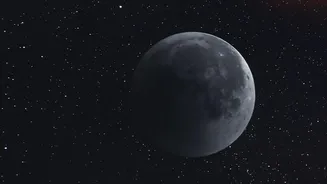
September is a fantastic month for planet-spotting, with several close encounters between the Moon and our celestial neighbours. In the pre-dawn hours of September 6 and 7, look to the eastern sky to see a waning crescent Moon cozy up to Mars. Just a day
later, on the morning of September 8, the Moon will sit beside the giant planet Jupiter. In some parts of North America, the Moon will actually pass in front of Jupiter in an event called an occultation, though this will occur during daylight hours, making it a challenge to see without a telescope. Later in the month, Saturn makes its presence known. The ringed planet will rise in the evening and can be seen following the full moon across the sky on September 26.
Venus Shines at Its Brightest
The star of the evening sky this month is undoubtedly Venus. Often called the "Evening Star," Venus will reach its peak brilliance for the entire year on or around September 18-22, depending on the source. It will be an unmissable, dazzling beacon low in the western sky just after sunset. Its extreme brightness is due to a combination of its relative closeness to Earth and its thick, reflective cloud cover. On September 14, a very thin crescent Moon will appear near Venus shortly after the sun goes down, creating a beautiful sight. For observers in parts of Europe, Africa, and Asia, the Moon will even pass in front of Venus that day.
The Autumnal Equinox Arrives
The official start of autumn in the Northern Hemisphere, the autumnal equinox, arrives on September 22 or 23, depending on your time zone. In 2026, the precise moment occurs at 00:05 UTC on September 23, which falls on the evening of September 22 for observers in the Americas. This is the point in Earth's orbit when the Sun shines directly on the equator, and day and night are of nearly equal length. This celestial event also has a bonus for skywatchers: the weeks around the equinoxes are often associated with an increase in aurora activity, so those at higher latitudes should be on alert for the Northern Lights.
The Full Harvest Moon
September's full moon, which peaks on September 26, is the famous Harvest Moon. It earns this name because it is the full moon that falls closest to the autumnal equinox. Historically, the bright moonlight for several successive evenings around this time helped farmers harvest their crops late into the night. This happens because the time between moonrise on consecutive nights is shorter than usual around the fall equinox, giving the impression of several full-mooned nights in a row. Look for the moon to rise around sunset on the evenings of September 26 and 27; it will appear especially large and golden-hued when it is near the horizon.
Dark Skies and Faint Meteors
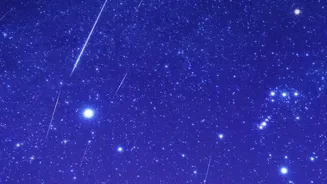
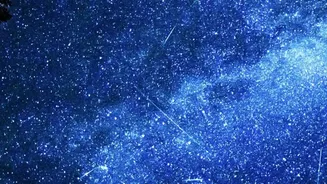
While there are no major meteor showers this month, the New Moon on September 11-12 provides the perfect opportunity for some deep-sky stargazing. With no moonlight to wash out the sky, it’s an ideal time to head to a dark-sky location and try to spot the faint glow of the Milky Way's core, which will only be visible for a couple more months in the Northern Hemisphere. For dedicated meteor fans, the September Epsilon Perseids will peak around September 9 under these ideal dark sky conditions, though it is a minor shower producing only about five to eight meteors per hour.