






A New Era of Cosmic Competition
The 21st-century space race looks vastly different from its Cold War predecessor. Where it was once a two-horse race between the United States and the Soviet Union, today's contest features a multitude of players. National agencies from the US, China,
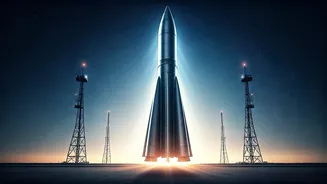
and India are being joined—and often challenged—by a new force: ambitious private companies like SpaceX and Blue Origin. The goals have also evolved. Beyond planting flags, the focus is now on establishing a sustainable presence on the Moon, probing for valuable resources like water ice, and using our celestial neighbour as a stepping stone for the ultimate prize: sending humans to Mars. [17] This has turned 2026 into a flurry of activity, with numerous missions planned to push the boundaries of exploration.
America's Renewed Lunar Push
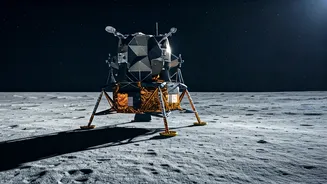
At the forefront of the American effort is NASA's Artemis program, a monumental undertaking to return humans to the lunar surface. While the historic Artemis II mission successfully sent four astronauts on a lunar flyby in April 2026, the next steps are even more ambitious. [11, 18] The upcoming Artemis III mission in 2027 will serve as a crucial dress rehearsal in Earth orbit, testing the docking capabilities of new lunar landers being developed by commercial partners SpaceX and Blue Origin. [29] All eyes are now on Artemis IV, slated for early 2028, which aims to be the first crewed lunar landing since Apollo 17 in 1972. [10, 11] These missions are underpinned by the Artemis Accords, a growing international coalition of 67 nations committed to principles of peaceful civil space exploration, strategically positioning the US and its allies in this new era. [17]
China’s Unwavering Ambition
China has firmly established itself as a top-tier space power with a methodical, long-term vision. In 2026, the nation is planning several key missions. The China National Space Administration (CNSA) is scheduled to launch the Chang'e-7 probe to the Moon's south pole, a region of intense interest for its potential water ice deposits. [3, 8] This mission will deploy a lander, rover, and even a small flying probe to search for resources. [6] Simultaneously, China is advancing its Tiangong space station operations with multiple crewed and cargo missions planned for the year. [2, 5] These efforts are critical steps toward its goal of landing Chinese astronauts on the Moon by 2030 and building the International Lunar Research Station (ILRS) in collaboration with Russia and other partners. [13, 16]
India's Ascent as a Space Power
Following the historic success of Chandrayaan-3, the Indian Space Research Organisation (ISRO) is continuing its impressive trajectory. A major focus for 2026 is the Gaganyaan program, India's quest to send its own astronauts into orbit. The first uncrewed orbital test flight, Gaganyaan-1 (G1), is now targeted for the second half of 2026. [9, 25] This critical mission, carrying the humanoid robot Vyommitra, will validate all systems before a crewed flight, which would make India only the fourth nation to achieve independent human spaceflight capability. [9, 14] While the Venus orbiter mission, Shukrayaan-1, has been pushed to 2028, ISRO's packed schedule underscores India's growing prominence and its role as a key player in the modern space race. [9]
The Commercial Frontline and Other Players
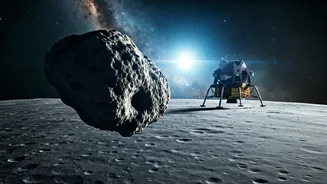
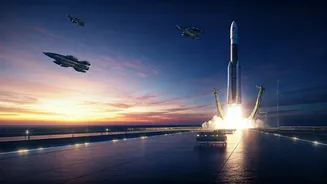
The landscape of space exploration is being reshaped by the private sector. Companies like SpaceX and Blue Origin are not just contractors; they are developers of groundbreaking technology. Blue Origin is planning a robotic demonstration of its Blue Moon lander in early 2026, targeting the lunar south pole. [8] SpaceX continues to test its revolutionary Starship system, essential for NASA's Artemis landing plans and its own Mars ambitions. [20] Beyond the main contenders, other nations are also making their mark. The Japanese Aerospace Exploration Agency (JAXA) will launch its Martian Moons Exploration (MMX) mission in November 2026 to land on Mars's moon Phobos and return a sample. [3] The European Space Agency's Hera mission will also arrive at the Didymos asteroid system to study the aftermath of NASA's DART impact test. [3]