







From Function to Lifestyle
For decades, the Indian man’s grooming kit was sparse, typically limited to shaving cream, a razor, and perhaps a deodorant. [2, 12] It was a market driven by basic hygiene and function, not aspiration. Barbershops were the primary grooming destinations,
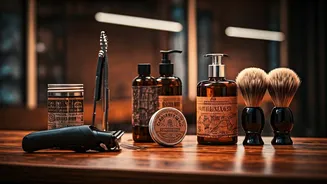
and at-home routines were minimal. [2] However, the landscape has transformed dramatically. Today, men’s grooming has evolved into a lifestyle-driven market, with products like face washes, moisturisers, beard oils, and even serums becoming mainstream. [2, 8] This shift reflects changing social norms, rising disposable incomes, and greater exposure to global trends. [2, 11]
The Digital Revolution Reaches the Heartland
The primary catalyst for this expansion beyond metros is the potent combination of internet penetration and e-commerce. [3, 4] Platforms like Amazon, Flipkart, and Nykaa have made a vast array of grooming products accessible to men in smaller cities and towns, areas previously underserved by offline retail. [3] Social media and OTT platforms have also played a crucial role, exposing men in cities like Lucknow, Indore, and Coimbatore to global grooming trends and normalising conversations around self-care. [2, 3] This digital access has empowered a new demographic to explore and experiment with personal care, moving beyond the basics. [4]
Meet the New Aspirational Consumer
The consumer in Tier 2 and 3 cities is aspirational, digitally savvy, and increasingly conscious of personal appearance. [4, 11] Unlike the early metro adopters, this new consumer may be more price-sensitive but is equally interested in quality and results. [3] Their purchasing decisions are heavily influenced by a desire for confidence and self-expression. [2] Interestingly, some reports suggest that men in smaller cities are often less self-conscious about purchasing skincare products than their metro counterparts, leading to more open experimentation. [13] This group represents a massive, largely untapped market that brands are now eagerly targeting. [3]
How Brands Are Tapping In
This trend has not gone unnoticed by brands, both legacy players and new-age D2C (Direct-to-Consumer) companies. Digital-first brands like The Man Company and Bombay Shaving Company have built their businesses by reaching these consumers online, often using education-led marketing to explain routines and ingredients in a simple way. [2, 14] They offer specialised products for concerns like beard care and skincare, which are among the fastest-growing segments. [2] Recognising the potential, even large FMCG companies are expanding their portfolios and distribution networks to cater to this growing demand, sometimes by acquiring successful D2C brands. [17, 18]
The Road Ahead: Deeper Penetration and Innovation
The Indian male grooming market, valued at over USD 2 billion, is projected to grow significantly, with much of that growth expected to come from non-metro areas. [2, 4, 5] The future will likely see deeper market penetration into these regions, driven by continued digital enablement and rising incomes. [2, 3] Brands that succeed will be those that can strike a balance between aspiration, affordability, and education. [2] The focus will shift towards product innovation, including multi-functional items, wellness-oriented products, and solutions tailored specifically for Indian skin and hair needs. [2] This expansion is more than a market trend; it’s a reflection of a changing India, where self-care is becoming a universal language of confidence.