
A Dazzling Welcome from Venus
The month begins with the planet Venus making a statement. On September 1, our neighbouring planet will have a close conjunction with Spica, the brightest star in the constellation Virgo. Look for this pair low in the west-southwest sky just after sunset.
Later in the month, on September 22, Venus reaches its peak brightness for the year, shining as a brilliant 'Evening Star'. Even from light-polluted cities, its glow will be unmistakable, though finding a clear western horizon will be key to catching the spectacle.
The Moon's Dance with the Planets
Throughout the month, the Moon will act as a guide to several planets. In the early hours of September 6 and 7, you can spot the waning crescent Moon cosy up to a faint Mars in the eastern sky. A few days later, on September 14, a slender crescent Moon will meet the brilliantly shining Venus, creating a stunning photo opportunity in the evening sky. This parade of planetary encounters offers a wonderful chance for even naked-eye observers to track the movements of our solar system neighbours from night to night.
The Autumnal Equinox Arrives
On September 23, at 5:35 AM IST, the Sun will cross the celestial equator, marking the Autumnal Equinox in the Northern Hemisphere. While you can't 'see' this event, it is a significant astronomical moment signifying the official start of autumn. On this day, day and night are of nearly equal length across the globe. For observers in India, this signals that the nights will begin to grow longer than the days, providing more precious hours for stargazing as we head into the clearer, cooler months.
A Double Feature: Neptune and the Harvest Moon
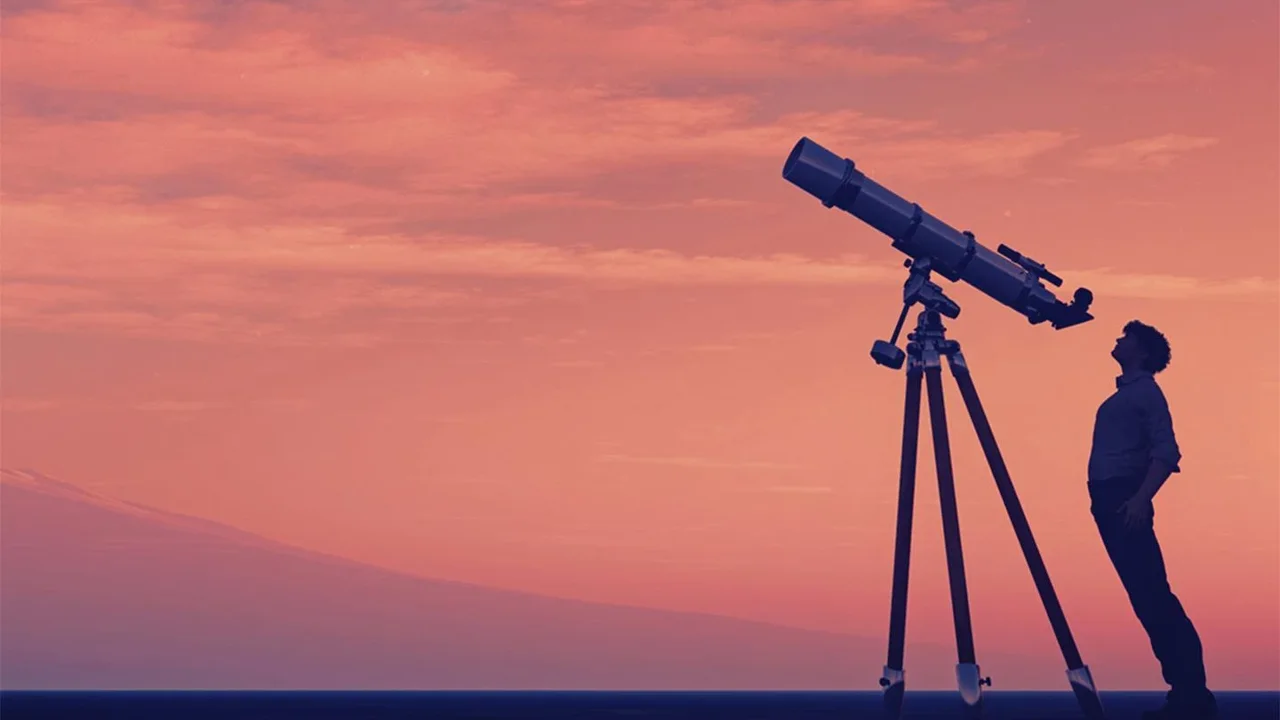
September 26 offers a treat for dedicated sky-watchers with a double celestial event. The distant ice giant Neptune will be at opposition, meaning Earth is positioned directly between it and the Sun. This makes it one of the best times to view the planet, although you will need a telescope to spot its tiny, blue-green disc. On the same night, the full moon will grace the sky. This particular full moon is known as the Harvest Moon, as it is the closest full moon to the Autumnal Equinox. Traditionally, its bright light helped farmers gather their crops late into the evening.
Tips for the Best Viewing Experience
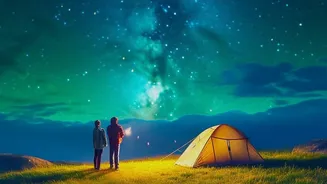
To make the most of these celestial sights, preparation is key. The most important step is to move away from city lights. Light pollution washes out all but the brightest objects. Head to a rural area, a park, or a designated dark-sky spot for the best views. Give your eyes at least 15-20 minutes to adapt to the darkness. Avoid looking at your phone screen, as its white light can ruin your night vision. While many of September's events are visible to the naked eye, a pair of binoculars or a basic telescope will dramatically enhance your view, revealing craters on the Moon and the moons of Jupiter. Finally, as we move into autumn, remember to bring a light jacket for those cooler nights under the stars.