









A Perfect Mismatch
At first glance, the two styles seem worlds apart. Indian furniture, often crafted from robust woods like Sheesham or Teak, celebrates rich grains, intricate carvings, and a sense of earthy, handcrafted history. Art Deco, born in the machine age of the 1920s
and 30s, is all about polished glamour, sharp geometric patterns, and the sparkle of warm metals like gold and brass. Yet, it is this very contrast that creates a compelling visual dialogue. The sleek, clean lines of a gold-toned lamp or a sunburst mirror provide a structured counterpoint to the organic, rustic character of a wooden cabinet. This balance—between the ornate and the streamlined, the natural and the manufactured—is what stops a room from feeling one-dimensional, giving it depth and personality.
A Shared History in India
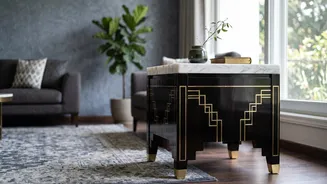
This combination is more than just a modern trend; it has roots in Indian history. During the 1930s and 40s, Art Deco became a prominent architectural style in cosmopolitan Indian cities, especially Mumbai. In fact, Mumbai has the second-largest collection of Art Deco buildings in the world after Miami. Architects blended the global Deco language of stepped forms and bold curves with local motifs, creating a unique 'Indo-Deco' style. Inside these modern apartments, life continued alongside traditional carved furniture and handwoven textiles. So, pairing a geometric brass-inlaid console with a richly textured Sheesham wood armchair isn’t just a stylish choice; it’s a nod to a glamorous chapter of India’s design past.
The Power of a Warm Palette
The success of this pairing lies in a shared warmth. The defining metals of the Art Deco period were not cool silvers or chromes, but sunny golds, brass, and bronze. These warm metallic tones beautifully amplify the rich, reddish-brown hues found in popular Indian woods like Sheesham, often called Indian Rosewood. Similarly, they bring out the golden-brown calm of classic Teak. Think of how a brushed gold floor lamp illuminates the deep grain of a nearby bookshelf, or how brass handles can make the dark stripes in a Sheesham cabinet pop. The reflective quality of the metal adds a touch of light and luxury, preventing heavy wooden furniture from making a space feel too dark.
Bringing the Look Home
You don’t need to transform your entire home to embrace this style. The key is to introduce Art Deco elements in deliberate, thoughtful doses. Start with accessories, which are low-commitment but high-impact. A single statement piece is often more effective than a room full of competing items. Place an arched or sunburst mirror with a gold frame above a simple wooden console table. Introduce a table lamp with a geometric base or a scalloped shade onto a side table. Even smaller items, like a brass tray for keys, coasters with a chevron pattern, or cushion covers with fan-arch prints, can carry the Art Deco idea. The goal is to let one 'hero' piece shine, keeping the surrounding elements relatively simple to avoid visual noise.
Key Pieces to Get Started
If you’re ready to invest in larger items, certain combinations work particularly well. A glamorous bar cart with gold detailing placed near a traditional wooden 'jhoola' or swing creates a beautiful fusion of old and new. In the living room, flank a solid wood sofa with a pair of elegant wall sconces featuring geometric patterns. In the dining area, hang a showstopping tiered chandelier above a sturdy Sheesham dining table. Even hardware can make a difference; swapping out the plain knobs on a wooden chest of drawers for Art Deco-style brass pulls is a simple DIY project that can instantly elevate the piece. The trick is to ensure one style dominates while the other serves as a compelling accent, creating a room that feels curated and personal.