




The Power Trio: A Full-Body Workout
You don’t need a room full of equipment to build functional strength. Squats, push-ups, and planks are three of the most effective bodyweight exercises you can do. Together, they form a balanced routine that targets all your major muscle groups. Squats build lower
body and core strength, push-ups focus on the chest, shoulders, and arms, and planks challenge your entire core, including your abs and lower back. This combination enhances muscle tone, improves posture, and even boosts your metabolism, all without taking up more than a few square feet of space.
Master the Squat for Lower Body Strength
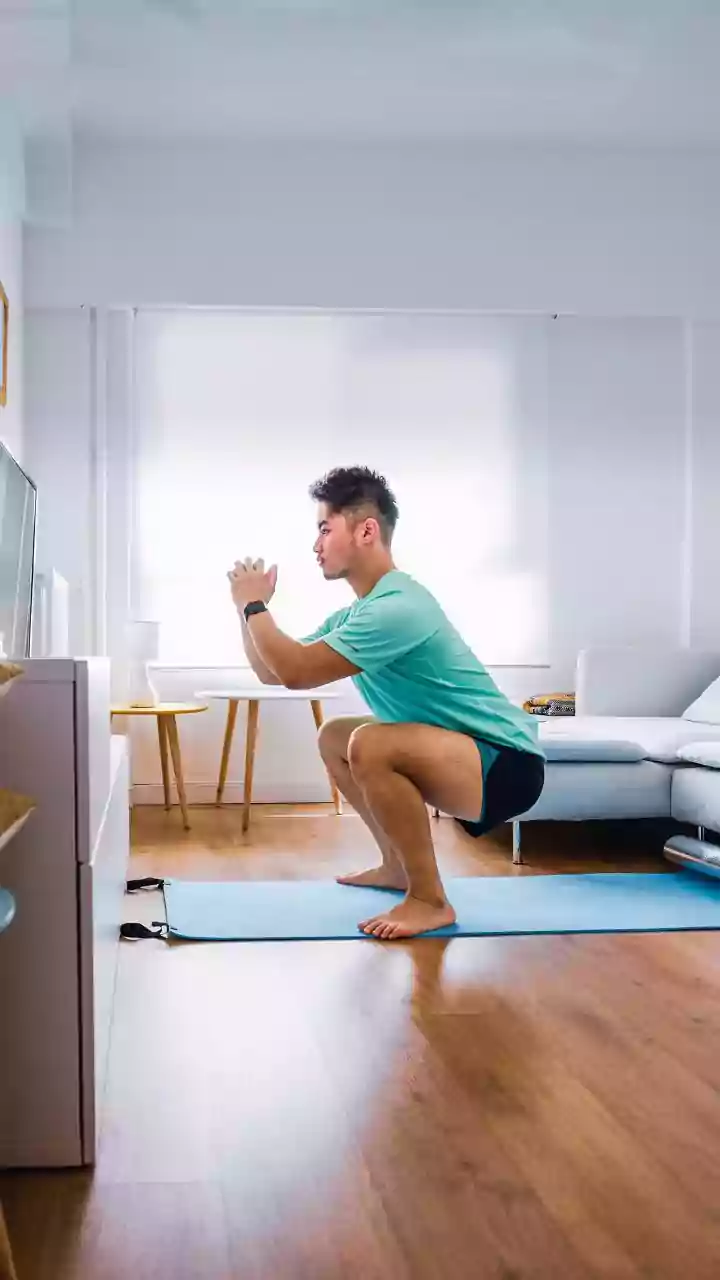
The squat is a foundational movement that mimics everyday actions like sitting down and picking things up. It primarily strengthens your quadriceps, hamstrings, and glutes. To perform a correct bodyweight squat, stand with your feet about shoulder-width apart and your toes pointed slightly outwards. Begin by pushing your hips back as if you're about to sit in a chair, keeping your chest up and your back straight. Lower yourself until your thighs are at least parallel to the floor, ensuring your knees track in line with your feet and don't cave inward. Keep your heels planted firmly on the ground. Push through your heels to return to the starting position. A common mistake is letting your knees travel too far forward; focus on the hip-hinge movement to prevent this.
Perfect the Push-Up for Upper Body Power
Push-ups are a fantastic exercise for building strength in the chest, shoulders, and triceps, while also engaging your core for stability. Start in a high plank position with your hands placed slightly wider than your shoulders. Your body should form a straight line from your head to your heels. Lower your body by bending your elbows, keeping them tucked at a 45-degree angle to your body rather than flaring them out to the sides. Go down until your chest is close to the floor, then press back up to the starting position. Avoid letting your hips sag or your head drop. If a standard push-up is too difficult, start with an incline version by placing your hands on a sturdy chair or wall, or perform them on your knees.
Hold the Plank for a Rock-Solid Core
The plank is an isometric exercise that strengthens your entire core, which is crucial for stability and posture. To perform a forearm plank, place your forearms on the floor with your elbows stacked directly underneath your shoulders. Extend your legs straight behind you, resting on your toes. Your body should create a straight line from your head to your heels. Actively engage your core by pulling your belly button towards your spine and squeeze your glutes to prevent your hips from sagging or rising too high. Keep your neck in a neutral position by looking at the floor just ahead of your hands. Hold this position for a set amount of time, focusing on maintaining perfect form rather than just lasting longer.
Putting It All Together: Your Simple Routine
Consistency is more important than intensity when you're starting out. A simple and effective way to combine these exercises is to perform them in a circuit. Try this routine three to four times a week. Perform each exercise for a set number of repetitions or a specific duration, with a short rest in between. - Bodyweight Squats: 3 sets of 10-15 repetitions. - Push-Ups: 3 sets of as many reps as you can manage with good form. - Plank: 3 sets, holding for 20-45 seconds. Rest for 60 seconds between each set. As you get stronger, you can increase the number of reps, hold the plank for longer, or decrease your rest time. This simple structure provides a comprehensive workout that can be done anytime, anywhere.