

What Exactly Is a Lunar Eclipse?
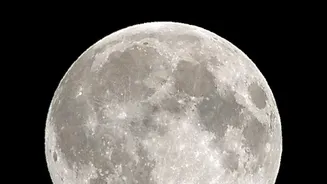
A lunar eclipse happens when the Earth positions itself directly between the sun and the moon, casting its shadow onto the lunar surface. This alignment can only occur during a full moon. There are three main types. A total lunar eclipse is the most dramatic,
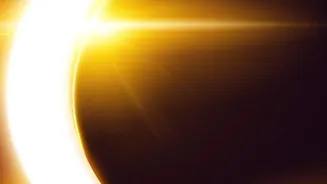
where the entire moon passes through Earth’s darkest shadow, the umbra. A partial eclipse happens when only a part of the moon enters the umbra. The third type, a penumbral eclipse, is very subtle. It occurs when the moon passes only through Earth's faint outer shadow, the penumbra, causing a slight dimming that can be difficult to notice with the naked eye.
The Two Eclipses of 2026
In 2026, skywatchers will have two opportunities to see a lunar eclipse. First, a total lunar eclipse will occur on March 3, 2026. However, its visibility in India will be limited; most of the country will miss it as the event happens after the moon has set. Only some areas in the far northeast might catch the very end of the eclipse at moonrise. The main event for India comes on the night of September 7-8, 2026. This will be a deep partial lunar eclipse that is nearly total and will be beautifully visible across the entire country, offering a fantastic viewing opportunity for everyone.
When and Where to Watch in India
Mark your calendars for the night of September 7, 2026. This impressive partial lunar eclipse will be visible from every corner of India, from Kashmir to Kanyakumari. The show begins in the late evening and continues past midnight. Here are the key timings in Indian Standard Time (IST): The subtle penumbral phase starts around 9:20 PM. The more obvious partial eclipse, where Earth's dark shadow begins to 'bite' into the moon, begins at 10:42 PM. The eclipse reaches its maximum point at 11:43 PM, when nearly the entire lunar surface will be covered by Earth's shadow. The partial phase ends at 12:44 AM on September 8. The entire event is a slow, unfolding drama that lasts for several hours.
The 'Blood Moon' Effect
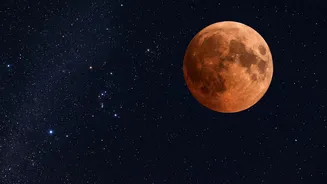
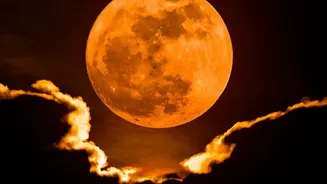
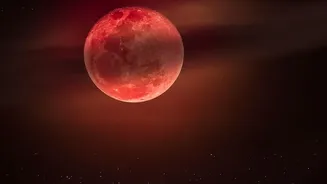
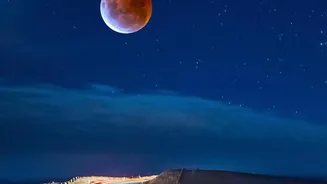
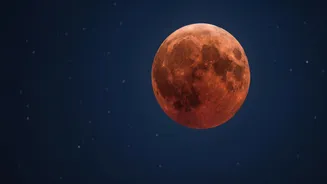
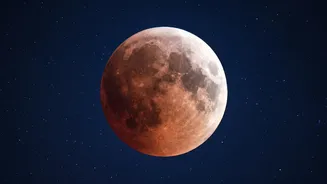
During a total or near-total lunar eclipse, the moon often takes on a reddish or coppery hue, earning it the nickname "Blood Moon." This isn't something to be alarmed about; it's a beautiful effect of our own planet's atmosphere. While Earth's shadow covers the moon, some sunlight still filters through our atmosphere. This light is bent, or refracted, and as it passes through the air, the blue and green lightwaves are scattered, while the red and orange lightwaves pass through. This reddish light is then projected onto the lunar surface, giving it a dramatic, glowing appearance. The September 2026 eclipse will be so close to total that you can expect to see this impressive coloration.
What You'll Need (and What You Won't)
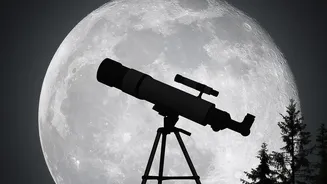
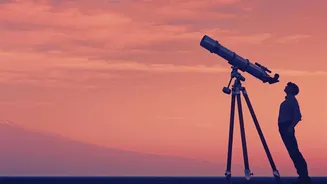
One of the best things about a lunar eclipse is its accessibility. Unlike a solar eclipse, you do not need any special eye protection to view it safely. A lunar eclipse is perfectly safe to watch with your naked eyes. You don't need a telescope or any fancy equipment. However, if you have a pair of binoculars, they will provide a magnificent, magnified view, bringing out the colours and details on the moon's surface. The only other things you'll want are a comfortable chair, maybe a blanket if it gets cool, and some patience to watch the celestial event unfold.
Tips for the Best Experience
To make the most of the eclipse, try to find a viewing spot away from bright city lights. Light pollution can wash out the finer details, especially the subtle colour changes. Give your eyes about 15-20 minutes to fully adapt to the darkness; this will help you see more detail and colour on the eclipsed moon. Also, plan to spend some time watching. The eclipse is not a fleeting moment but a gradual process. Watching the Earth's curved shadow slowly creep across the lunar landscape is part of the magic of the event. Dress comfortably for the weather and simply enjoy the rare opportunity to witness the mechanics of our solar system in real-time.