





The Magic of a Moonless Night
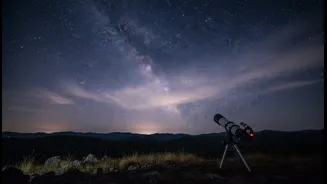
A stargazer’s greatest foe, besides city lights, is the Moon itself. Its bright glare washes out the sky, obscuring all but the most brilliant stars and planets. This is why the new moon phase is so treasured. With the Moon's illuminated side turned away
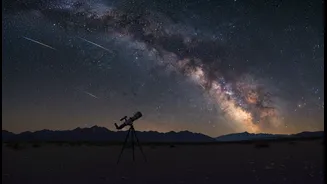
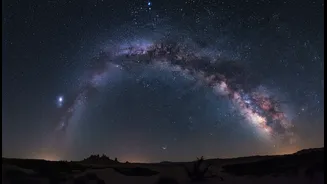
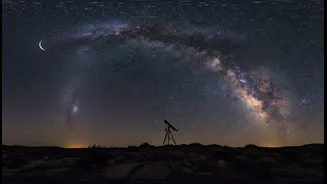
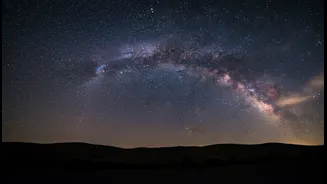
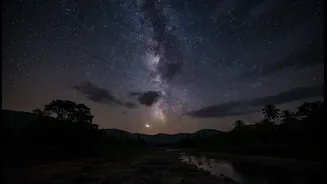
from Earth, the sky becomes a deep, dark canvas. This darkness is essential for viewing the month's main event: the Milky Way. In July, the galaxy's dense, glowing core arches high across the southern sky, a breathtaking sight that is utterly invisible during other lunar phases or from light-polluted areas. The new moon period, from a few days before to a few days after the peak on July 14, provides the ideal window to witness this spectacle.
The Great Monsoon Obstacle
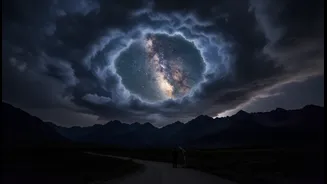
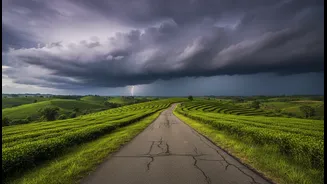
Unfortunately, this celestial alignment coincides with the peak of India’s southwest monsoon. By early July, heavy cloud cover and high humidity are the norm across most of the country, from the Western Ghats to the northern plains. Clouds physically block the view, while atmospheric moisture scatters ambient light, reducing the clarity and contrast needed for good stargazing. This makes planning an observation session a game of chance. While winter and summer are typically the best seasons for astronomy in India, the determined monsoon stargazer must become a master of patience and weather-watching.
Celestial Sights on Offer This July
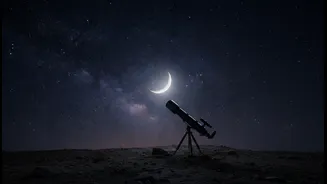
For those who find a precious patch of clear sky, the rewards are plentiful. Besides the Milky Way, the constellations of Scorpius and Sagittarius are prominent. Skywatchers can also enjoy several planetary alignments. Throughout the month, Venus will be a brilliant “Evening Star” in the west after sunset, appearing close to a slender crescent moon around July 17. In the early morning hours, Saturn will be visible, sharing the sky with the Moon around July 7-8. Mars also makes an appearance, forming a celestial triangle with the crescent moon and the Pleiades star cluster on the morning of July 11.
Tips for the Monsoon Stargazer
Success during this season relies on strategy. First, become a diligent weather watcher. Use reliable satellite imagery and weather apps like Clear Outside to identify short-term breaks in the cloud cover. These windows can be brief, often opening up for just a few hours after a spell of rain has cleared the atmospheric dust. Second, be prepared to travel. A short drive away from city lights can make a huge difference. Third, manage your equipment. A good pair of binoculars is often more practical than a large telescope for quickly scanning the skies during a fleeting clear patch. Finally, use stargazing apps like Stellarium or SkySafari to know exactly where to look, so you don’t waste precious time hunting for targets.
Where to Find Clearer Skies?
While much of India is drenched, some regions offer a better chance of clear skies. The best bet is a rain-shadow region. Spiti Valley in Himachal Pradesh and the high-altitude desert of Ladakh remain largely dry during the monsoon, offering some of the darkest and clearest skies in the country. These locations are remote but provide a world-class stargazing experience. For those unable to travel that far, other potential spots include areas in the lee of the Western Ghats, such as parts of Tamil Nadu. Even in places with heavy rain like Malshej Ghat in Maharashtra or Coorg in Karnataka, clearings can occur between downpours, offering opportunistic views for those who are patient.