


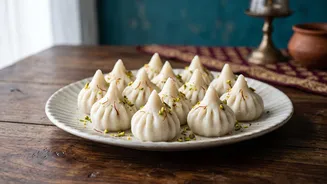

The Undisputed Star: Modak
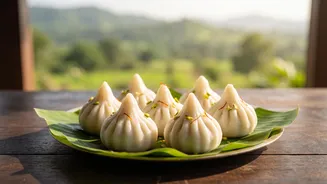
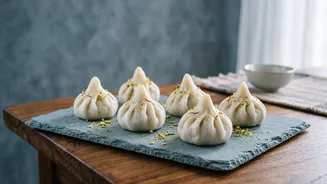
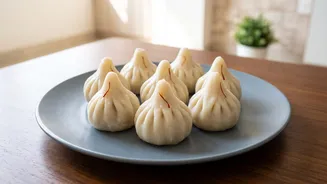
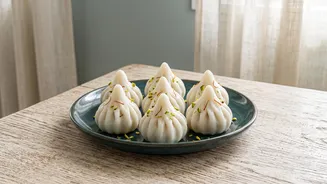
No Ganesh Chaturthi celebration is complete without the modak, the sweet dumpling believed to be Lord Ganesha’s favourite food. Mythology tells of its power to bestow wisdom, and tradition dictates that an offering often consists of 21 modaks. The most
revered version is the 'ukadiche modak' from Maharashtra, a delicate creation made from steamed rice flour dough encasing a warm, fragrant filling of grated coconut and jaggery, scented with cardamom. The process is an art form, with skilled hands pleating the dough into its iconic pointed shape. This steamed delicacy represents the pure, or sattvic, nature of festive offerings.
Modak's Many Avatars
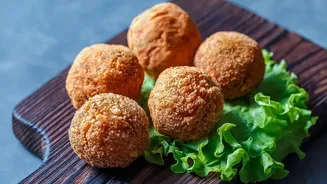
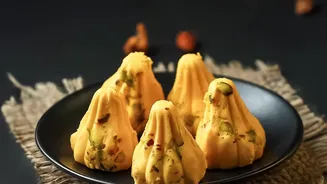
The beauty of the modak lies in its adaptability, a trait that reflects India’s culinary creativity. While the steamed version holds a special place, the 'talniche modak', or fried modak, offers a delightful contrast. Here, a whole wheat flour shell is filled with a similar coconut-jaggery mixture and deep-fried until golden and crisp. This version has a longer shelf life and a crunch that many find irresistible. In recent years, modern confectioners and home cooks have expanded the repertoire even further. You can now find chocolate modaks, modaks filled with gulkand or nuts, and even savoury versions, each adding a new chapter to the story of this ancient sweet.
The Sweetness Spreads: Puran Poli
While the modak is central, it shares the festive platter with other significant sweets, most notably the puran poli. A staple in Maharashtrian and Gujarati homes, this soft, sweet flatbread is a labour of love. A dough of whole wheat flour is stuffed with 'puran'—a rich, dense filling made by cooking chana dal (split Bengal gram) with jaggery until it becomes a thick, smooth paste. Flavoured with cardamom and nutmeg, the poli is rolled thin and cooked on a griddle with a generous amount of ghee until it puffs up. In Karnataka, a similar preparation is known as 'obbattu' or 'holige'. Served warm, often with a spoonful of ghee or a bowl of milk, it’s a comforting and wholesome part of the festive meal.
The Savoury Side of the Feast
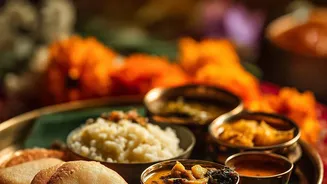
The festival meal is a carefully balanced affair, with savoury dishes providing a perfect counterpoint to the sweets. In Maharashtra, the Naivedya thali, or sacred food platter, is often anchored by 'varan bhaat'—a simple yet profound dish of plain dal made from pigeon peas, served over steamed rice with a dollop of ghee. Accompanying this are vegetable preparations, or 'bhajis'. 'Batata bhaji', a simple potato dish tempered with curry leaves and green chillies, is a common feature. Another popular savoury snack is 'kothimbir vadi', made from gram flour and fresh coriander, which is steamed and then fried into delicious, crispy squares.
Coastal and Southern Delicacies
Travel down the Konkan coast to Goa, and the festive menu takes on a distinct local flavour. Here, a star dish is 'khatkhate', a unique mixed vegetable stew. Made with a bounty of seasonal vegetables like corn, pumpkin, and yam, it is simmered in a coconut-based gravy and uniquely flavoured with 'teppal' or Sichuan pepper. Remarkably, it contains no oil, onions, or garlic. Further south, in states like Tamil Nadu and Andhra Pradesh, 'sundal' is an essential offering. This is a simple and healthy stir-fry made from boiled legumes like black chickpeas ('kala chana') or white chickpeas ('kondakadalai'), tempered with mustard seeds, curry leaves, and finished with a generous garnish of fresh coconut.