








Understanding Uneven Shoulders
Before we dive into the solution, it's helpful to understand the cause. For most people, uneven shoulders are a result of functional issues, not structural problems. This means they are caused by muscle imbalances rather than skeletal abnormalities like
scoliosis (which requires a doctor's diagnosis). These imbalances are often a product of modern life. Think about it: carrying a heavy bag consistently on one side, leaning on the same armrest while driving, or having a dominant hand for tasks from sports to using a mouse all day. Over time, these habits cause muscles on one side of your body—particularly the upper trapezius—to become overactive and tight, pulling that shoulder upward. Meanwhile, the muscles on the other side can become weak and lengthened, causing the other shoulder to droop.
Why Single-Arm Pulls Work
This is where the magic of unilateral (single-limb) training comes in. When you perform an exercise with both arms simultaneously, your stronger side can easily compensate for the weaker one, hiding and even reinforcing the imbalance. By working one arm at a time with a slow, controlled pull, you force the weaker side to do its fair share. This exercise specifically targets the mid and lower trapezius and the rhomboids—key muscles responsible for pulling your shoulder blades down and back, counteracting the upward pull of the tight upper traps. The 'slow' part is crucial. It eliminates momentum and enhances the mind-muscle connection, allowing you to consciously engage the correct muscles and build stability where you need it most.
Choosing Your Resistance Band
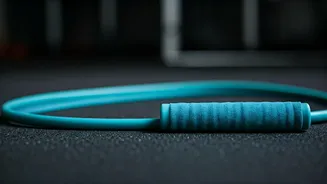
You don't need a heavy-duty band for this. The goal is muscle activation and control, not heavy lifting. Choose a light to medium resistance band, often colour-coded yellow or red. The right band is one that allows you to complete 12–15 repetitions with perfect form, feeling the target muscles work without straining your neck or shrugging your shoulder. You should feel a gentle burn in your mid-back, not your bicep or neck. If you find yourself using your body weight to pull, the resistance is too high. Start lighter than you think you need; you can always increase the challenge later by moving further from the anchor point or using a thicker band.
Step-by-Step: The Perfect Pull
Proper form is everything. Find a sturdy anchor point at chest height, like a doorknob or a pole. Secure the band.
1. Stance: Stand facing the anchor point. If you are working your right arm, step your left foot forward in a slight lunge for stability. Keep your core engaged and your spine neutral.
2. Starting Position: Grab the band with your right hand, palm facing inward. Extend your arm straight without locking the elbow. Your shoulder should be relaxed, not shrugged up to your ear.
3. The Pull: Initiate the movement by pulling your shoulder blade back towards your spine, as if you're trying to tuck it into your back pocket. Then, follow through by pulling the band towards your torso, keeping your elbow close to your side.
4. The Squeeze: At the peak of the movement, your hand should be next to your ribs. Pause for a second and consciously squeeze your back muscles. Imagine you're holding a pencil between your shoulder blades.
5. The Slow Return: This is the most important part. Resist the pull of the band as you slowly return your arm to the starting position. Take a full three to four seconds for this 'negative' phase. This control is what builds stability and corrects imbalances.
How Many Reps and When?
Consistency is more important than intensity. Aim to perform this exercise 2-3 times per week on non-consecutive days to allow for muscle recovery. A good starting point is 2-3 sets of 12-15 repetitions on each side. Pay close attention to which side feels weaker or less coordinated. To specifically target the imbalance, you can add an extra set on your weaker or lower side. For example, if your left shoulder is lower, perform 3 sets on your left side and only 2 sets on your right. This gives the weaker side a little extra volume to help it catch up over time. Always listen to your body and never push through sharp pain.