






Demystifying Airline Jargon: What Is 'Reprotection'?
In the world of aviation, 'reprotection' is the term for an airline’s duty to get you to your destination when your original flight is cancelled or severely delayed. It means they must rebook you onto a subsequent flight. This isn’t a favour; it’s a core
part of their responsibility once you have a ticket. Using the phrase, "I need to be reprotected due to a cancellation," when speaking with airline staff can signal that you understand their obligations. Many airlines have systems for this, like IndiGo's 'Plan B' or Air India's 'Self-Service Re-accommodation', but the principle is the same across the industry. It’s the airline’s job to find you a new seat, and your job to ask for it clearly and firmly.
Your Rights Under the DGCA Passenger Charter
In India, your rights are not just airline policy; they are enshrined in law by the Directorate General of Civil Aviation (DGCA). The Passenger Charter outlines what airlines must provide. If your flight is cancelled, the airline is obligated to offer you a choice: a full refund or an alternate flight. The choice is yours, not the airline's. The rules vary based on how much notice you were given. If the airline informs you of a cancellation less than two weeks but more than 24 hours before departure, they must offer an alternate flight or a refund. If the notice is less than 24 hours, or you learn about it at the airport, you are entitled to care and potentially compensation in addition to a new flight or refund. Crucially, these rules apply to all airlines operating in, to, and from India.
How to Ask for Reprotection: A Step-by-Step Guide
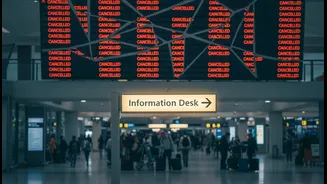
When your flight is disrupted, time is of the essence. First, head straight to the airline's service desk at the airport; in-person agents typically have the most power to rebook you. While waiting, you can also check the airline’s mobile app, as some allow self-rebooking. When you speak to an agent, stay calm but be direct. Start by stating your flight number and the fact that it was cancelled. Then, use the key phrase: "I need you to reprotect me on the next available flight to my destination." Have your booking reference (PNR) ready. If the first option they offer doesn't work for you (for example, a flight the next day), you are within your rights to ask about other possibilities. Document the name of the agent you speak with and the time of the conversation, which can be useful if you need to escalate the issue.
The Power of 'Endorsement' to Another Airline
What if your airline's next flight isn't for another 12 hours, but a competing airline has one leaving in two? This is where you can ask the airline to “endorse” your ticket over to the other carrier. While not all airlines have agreements to do this, many major carriers do. The original airline is responsible for arranging this and covering the cost. They may be hesitant because it means losing revenue to a competitor, so you may need to be persistent. A good way to frame it is, "Since you are unable to provide a timely alternative on your own service, I request that you endorse my ticket to [Competitor Airline]'s flight departing at [Time]." This demonstrates you are aware of all available remedies and puts the onus on them to solve your travel problem promptly.
Beyond the Flight: Meals, Hotels, and Compensation
Reprotection is about getting a new flight, but the DGCA also mandates care for stranded passengers. If your flight is delayed by several hours, the airline must provide you with free meals and refreshments. If a cancellation or significant delay results in an overnight wait (specifically for flights scheduled between 8 p.m. and 3 a.m.), the airline must provide hotel accommodation and transport to and from the airport. Furthermore, if the airline cancels your flight with less than 24 hours' notice and fails to arrange an alternate flight arriving within an hour of your original time, you may be entitled to financial compensation up to ₹10,000, depending on the flight length. These provisions do not apply if the disruption is caused by "extraordinary circumstances" beyond the airline's control, such as severe weather or air traffic control restrictions.