

The Science of a Study Break
The pressure of exams and long hours spent sitting can take a toll on both mind and body. Studies show that yoga can directly counteract this by reducing levels of cortisol, the body's primary stress hormone. This hormonal shift promotes a feeling of calm
and can improve focus during study sessions. Physically, the practice enhances what experts call proprioception, which is your body's ability to sense its position in space. By holding poses, you are actively training the small stabiliser muscles in your feet and ankles, strengthening your core, and improving overall physical balance. This creates a feeling of being more grounded and steady, both on and off the yoga mat.
Your 15-Minute De-Stress Routine
You don’t need a full hour to reap the benefits. A short, 15-minute routine can serve as the perfect study break, helping to reset your brain and release physical tension. The key is consistency. Find a quiet space, put on some comfortable clothes, and try to focus on your breath as you move through these poses. This short sequence is designed to be beginner-friendly and requires no special equipment, making it easy to do at home whenever you need a moment of calm.
Mountain Pose (Tadasana): Find Your Foundation
This pose may look simple, but it's the foundation for all other standing poses and an excellent way to check in with your posture. Stand with your feet together or hip-width apart. Ground down through all four corners of your feet. Engage your leg muscles without locking your knees. Keep your spine long, relax your shoulders down and away from your ears, and let your arms rest by your sides with palms facing forward. Hold for five deep breaths. This pose builds awareness of your body's alignment and encourages a state of active stillness, calming a racing mind.
Tree Pose (Vrikshasana): Cultivate Focus and Stability
Balancing poses are fantastic for improving both physical stability and mental concentration. Start in Mountain Pose, then shift your weight onto your left foot. Place the sole of your right foot on your left ankle, calf, or inner thigh (avoiding the knee joint). Bring your hands to your heart. Find a fixed point to gaze at to help you balance. Hold for 30 seconds, breathing steadily, then switch sides. The act of focusing on a single point quiets mental chatter, while the physical effort strengthens the standing leg and core.
Cat-Cow Stretch (Marjaryasana-Bitilasana): Release Spinal Tension
Hours spent hunched over books or screens can lead to a stiff back and neck. The Cat-Cow stretch is a gentle, dynamic movement that helps release this tension. Start on your hands and knees. As you inhale, drop your belly and look up, arching your back (Cow Pose). As you exhale, round your spine, press the mat away, and tuck your chin to your chest (Cat Pose). Flow between these two poses for about a minute, linking your breath to the movement. This simple flow increases spinal flexibility and calms the nervous system.
Child’s Pose (Balasana): A Moment of Restorative Calm
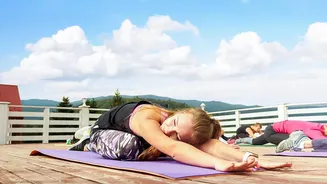
Child's Pose is a deeply restorative posture that signals to your nervous system that it's time to rest. From your hands and knees, bring your big toes to touch, spread your knees wide, and sit back on your heels. Fold forward, resting your forehead on the floor. You can stretch your arms out long in front of you or rest them alongside your body. Breathe deeply into your back. This pose gently stretches the hips and back while calming the brain, making it an ideal way to end your short practice and ease stress.