

Why Form Is Everything
Proper form is the foundation of any effective and safe workout routine. When performing lower-body exercises, focusing on technique ensures you are targeting the intended muscle groups—your quadriceps, hamstrings, and glutes. Poor form can cause other,
weaker muscles to compensate, which not only reduces the effectiveness of the exercise but also significantly increases the risk of strain or injury, particularly to the lower back and knees. Mastering the correct movement patterns first allows you to build a solid base. This means you'll see better, faster results and develop long-term strength and mobility, allowing for consistent training without unnecessary setbacks. In short, controlled, quality repetitions will always be more beneficial than sloppy, heavy ones.
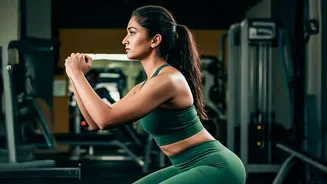
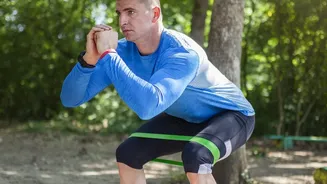
1. Bodyweight Squats
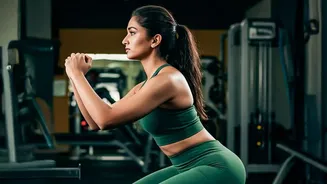
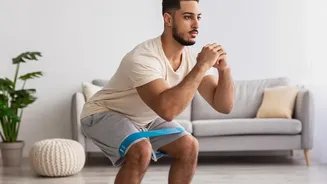
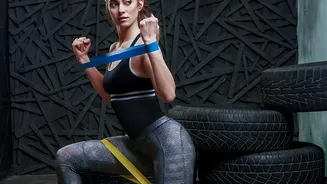
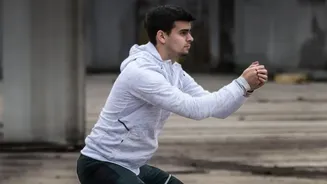
The squat is a foundational movement that targets nearly every muscle in your lower body, including the quadriceps, hamstrings, and glutes. To perform it correctly, stand with your feet shoulder-width apart, toes pointing slightly outward. Hinge at your hips and push your buttocks back as if you're sitting in a chair. Keep your chest up and your back straight, lowering yourself until your thighs are at least parallel to the floor. Ensure your knees track over your feet and do not cave inward. Push through your heels to return to the starting position.
2. Alternating Lunges
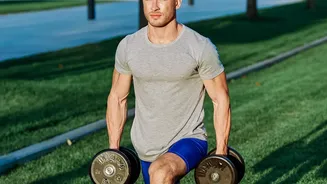
Lunges are excellent for challenging your balance and working each leg independently, which helps address muscle imbalances. Stand tall, then take a big step forward with one foot. Lower your hips until both knees are bent at a 90-degree angle. Your front knee should be directly above your ankle, not pushed out over your toes, and your back knee should hover just above the ground. Keep your torso upright. Push off your front foot to return to the start and alternate legs.
3. Romanian Deadlifts (RDLs)
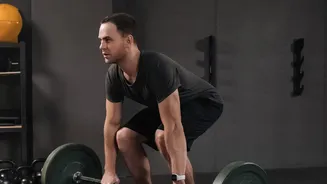
Romanian Deadlifts are fantastic for targeting the hamstrings and glutes. Stand with your feet hip-width apart, holding a light weight (or just using bodyweight) with a slight bend in your knees. Hinge at your hips, keeping your back perfectly straight, and lower the weight towards the floor. Go as low as you can without rounding your back. You should feel a deep stretch in your hamstrings. Squeeze your glutes to pull your torso back up to the starting position.
4. Glute Bridges
This exercise isolates the glutes and hamstrings while also engaging your core. Lie on your back with your knees bent, feet flat on the floor hip-width apart, and your heels a few inches from your buttocks. Press your arms into the floor for stability. Brace your core and lift your hips off the floor until your body forms a straight line from your shoulders to your knees. Squeeze your glutes at the top, hold for a moment, and then slowly lower back down.
5. Sumo Squats
Also known as a plié squat, this variation places greater emphasis on the inner thighs (adductors) and glutes. Stand with your feet much wider than shoulder-width, with your toes pointed out at about a 45-degree angle. Keeping your torso upright and your back straight, lower your hips down as if sitting in a chair. Go as low as your flexibility allows while keeping your knees aligned with your feet. Push through your heels to return to the top.
6. Lateral Lunges
Lateral (or side) lunges work your thighs in a different plane of motion, targeting the inner and outer thighs as well as improving hip mobility. Start with your feet together. Take a wide step out to one side, keeping your toes pointed forward. Bend the knee of your stepping leg and sit your hips back, keeping the other leg straight. Your chest should stay up. Push off the bent leg to return to the center and repeat on the other side.
7. Step-Ups
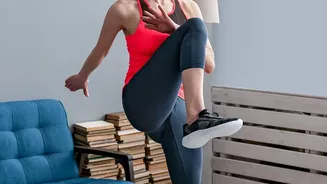
Step-ups are a simple yet powerful exercise for your quads and glutes that also improves balance. Find a sturdy bench, box, or stair. Place your entire right foot onto the platform. Press through your right heel to lift your body up, bringing your left foot to meet your right. Step back down with the left foot, then the right. Complete all reps on one side before switching to the other to maximize muscle engagement.
8. Wall Sits
A great finishing exercise, the wall sit builds isometric strength and endurance in your quadriceps. Stand with your back against a wall. Walk your feet out about two feet in front of you, shoulder-width apart. Slide your back down the wall until your thighs are parallel to the floor, as if you are sitting in a chair. Ensure your knees are directly above your ankles. Hold this position, keeping your core engaged, for your desired time.