



The Soulful Starter: Khar
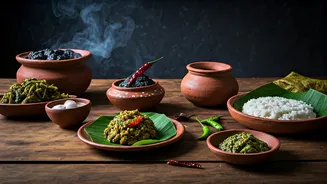
A traditional Assamese meal often begins with khar, a unique class of dishes that is quintessentially Assamese. In fact, the people of Assam are often affectionately called "Khar Khuwa Asomiya" (Khar-eating Assamese). Khar is both an ingredient and a dish.
The core ingredient is an alkaline liquid, traditionally prepared by filtering water through the ashes of sun-dried banana peels. This liquid, with its distinct, astringent taste, is then used to cook vegetables like raw papaya, bottle gourd, or lentils. The resulting dish is subtle, believed to cleanse the palate and aid digestion, serving as the perfect, soulful opening to a meal. While the traditional method is prized, baking soda is sometimes used as a modern substitute.
A Tangy Love Affair: Tenga
If khar opens the meal, tenga often concludes it. 'Tenga' simply means sour, and this category of dishes is a beloved hallmark of Assamese cooking. The most famous of these is Maasor Tenga, a light and refreshing sour fish curry. Unlike heavy, spice-laden fish preparations elsewhere, Maasor Tenga is defined by its tangy broth, which is perfect for the warm climate. The sourness is achieved using a variety of local ingredients, from tomatoes and lemon to more exotic options like Ou Tenga (elephant apple), Thekera (dried mangosteen), and Roselle leaves. The result is a vibrant, soupy curry that beautifully complements steamed rice and is believed to aid digestion after a hearty meal.
The Embrace of Smoke and Fire
Assamese cuisine has a deep connection with rustic, primal cooking techniques, especially those involving smoke and fire. This is a nod to the cooking habits of the region's diverse hill tribes. Meats and fish are often grilled, roasted over open flames, or cooked inside hollow bamboo stalks, a method called 'sunga'. Pork cooked in bamboo (Sunga Gahori) is a delicacy where marinated meat is stuffed into a bamboo tube and slow-cooked over a fire. This technique infuses the meat with a delicate, smoky aroma from the bamboo. Another tradition is smoking meat, particularly pork, by suspending it over the kitchen fire ('chulha') for long periods. This was originally a method of preservation but has become a prized culinary technique for the incredible flavour it imparts.
The Comfort of Pitika
At its heart, Assamese food is about comfort and soul, and no dish embodies this more than Pitika. Pitika is the Assamese art of the mash, a simple yet profoundly flavourful preparation. The most common version is Aloo Pitika, made with boiled or roasted potatoes mashed with raw chopped onions, green chillies, fresh coriander, and a generous drizzle of pungent mustard oil. It's this assertive, raw mustard oil that elevates the dish from a simple mash to a regional icon. But Pitika is a versatile concept; it can be made with roasted eggplant (Bengena Pitika), pumpkin, or even fish, creating a wholesome, comforting side dish for any meal.