



Gaganyaan's Ultimate Goal
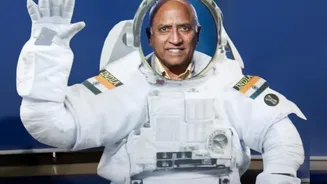
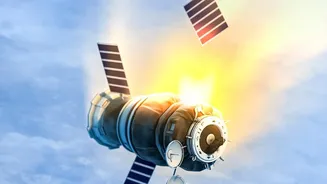
The Gaganyaan programme is ISRO's ambitious endeavor to demonstrate human spaceflight capability by launching a crew of three into a 400 km orbit for a three-day mission and bringing them safely back to Earth. Success will make India the fourth country
in the world, after the US, Russia, and China, to independently send humans to space. But before any astronaut boards the spacecraft, ISRO must prove that every system is not just functional but relentlessly safe. This involves developing critical technologies like a human-rated launch vehicle, a life support system to provide an Earth-like environment in space, and, most importantly, a robust crew escape provision. This has led to a meticulous series of precursor missions designed to test every component to its limit.
The Priority: Human-Rating the Rocket
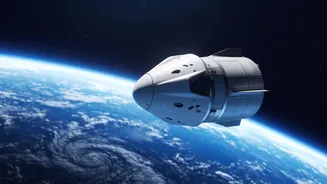
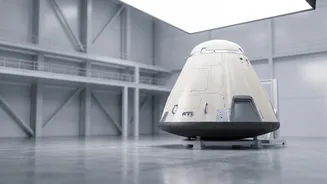
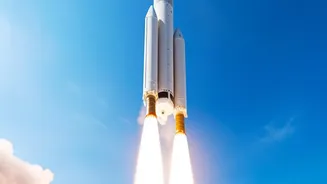
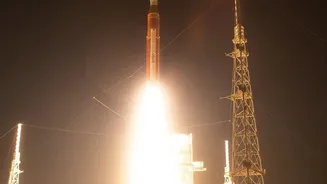
The workhorse for the mission is the Launch Vehicle Mark-3 (LVM3), ISRO's most powerful and reliable rocket. However, launching cargo is vastly different from launching humans. To earn a "human-rated" certification, the LVM3 is being re-engineered with higher safety margins, redundancies, and system upgrades to ensure it is exceptionally reliable. The safety of the crew is the absolute top priority, and this requires the launch vehicle to meet the highest standards of reliability. This human-rating process is one of the most significant challenges, ensuring the rocket can safely carry the Orbital Module, which consists of the Crew Module and the Service Module.
The All-Important Crew Escape System
What happens if the rocket fails on the launchpad or during ascent? The answer lies in the Crew Escape System (CES). This is a critical safety measure designed to quickly pull the Crew Module, with the astronauts inside, to a safe distance from the launch vehicle in an emergency. Think of it as a highly advanced ejection seat, not for a single pilot, but for the entire capsule. The system uses a set of quick-acting, high-burn solid motors to achieve this rapid separation. ISRO has planned a series of abort tests to validate the CES under different scenarios, as this system is fundamental to crew safety.
Testing for Every Contingency
The validation process involves multiple test flights and demonstrations. ISRO previously conducted a successful Pad Abort Test (PAT) in 2018, which demonstrated the recovery of the module in case of an emergency right at the launch pad. Following this, an in-flight abort test (TV-D1) was successfully conducted in late 2023, testing the escape system at a high altitude. More recently, in mid-2026, ISRO completed three crucial qualification tests for the Crew Module. These validated the Crew Module Up-righting System (CMUS), which uses inflatable bags to ensure the capsule stays upright after splashing down in the ocean. Other tests confirmed the clean separation of the module from its service unit and the structural integrity of the capsule when its parachute cover is jettisoned.
The Path Forward: Uncrewed Missions
With many ground tests complete, the next major steps are the uncrewed test flights. ISRO has planned three such missions before the first crewed launch. The first, the G1 mission, is targeted for late 2026, though timelines are flexible to ensure all safety checks are passed. This mission will be a full dress rehearsal, carrying the humanoid robot 'Vyommitra' to simulate human presence and validate the performance of life-support systems, re-entry procedures, and recovery operations. These uncrewed flights will test the integrated performance of the human-rated LVM3 rocket, the Orbital Module, and the ground control systems, paving the way for the crewed mission now anticipated in 2027.