




For too long, curly hair was seen as something to be tamed rather than celebrated. Embracing your natural texture is a journey of self-acceptance. It starts with understanding that working with your curls is easier and healthier than fighting them.
1. Rethink Your Cleansing Routine
The
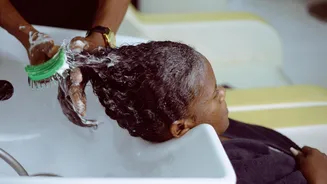
foundation of great curls starts in the shower. Curly hair is naturally drier than straight hair because the scalp's natural oils struggle to travel down the spiral shape of the hair strand. This makes frequent washing with harsh, sulfate-heavy shampoos a primary cause of frizz and dryness. Instead, consider reducing wash days to two or three times a week. When you do wash, opt for a sulfate-free moisturising shampoo or try 'co-washing'—washing your hair only with conditioner. Focus the shampoo on your scalp to remove buildup and let the lather gently run through the lengths. Always follow with a generous amount of hydrating conditioner, applying it from the mid-lengths to the ends to replenish moisture without weighing down your roots.
2. Master Soaking-Wet Styling
One of the most significant shifts in any curly hair routine is learning to apply styling products to soaking wet hair, not just damp hair. This is a non-negotiable step for achieving frizz-free definition. When hair is saturated with water, the cuticles are smooth and open, allowing products to distribute evenly and lock in moisture. Curls begin to form clumps around this moisture. After conditioning, do not towel-dry your hair with a standard cotton towel, which causes friction and frizz. Instead, while your hair is still dripping wet, apply your leave-in conditioner and then a curl cream or gel. Use techniques like 'praying hands' (smoothing product between flat palms) or 'raking' to ensure every strand is coated.
3. Learn to Scrunch and Plop
Once your products are applied, it's time to encourage your natural curl pattern. The most effective way is by scrunching. Cup sections of your hair in your palm and gently squeeze upwards toward the scalp. You should hear a 'squishy' sound, which indicates the hair is well-moisturised. After scrunching, you can 'plop' your hair to remove excess water without creating frizz. Lay a microfiber towel or an old cotton t-shirt on a flat surface, flip your hair forward onto it, then wrap the fabric around your head like a turban. Plopping absorbs excess water, enhances curl formation, and drastically cuts down on drying time. Leave it on for 15-20 minutes before air-drying or diffusing.
4. Dry Without Disturbing the Curls
Patience is a virtue during the drying process. The golden rule is to touch your hair as little as possible while it dries. Touching can break up your carefully formed curl clumps, leading to frizz and undefined results. Air-drying is the gentlest method. If you're short on time, use a diffuser attachment on your blow dryer. Keep the heat and speed settings on low and gently cup sections of your hair in the diffuser, holding it still for a minute before moving to the next section. Once your hair is 100% dry, you may notice a slight 'cast' or crunch from your styling gel. This is normal and desirable, as it means the style is set. Gently scrunch your hair again to 'break the cast', releasing soft, defined curls.
5. Protect Your Hair While You Sleep
Maintaining your curls overnight is key to extending your wash day. Cotton pillowcases can absorb moisture and cause friction, leading to frizz, tangles, and breakage. To protect your style, switch to a silk or satin pillowcase. Alternatively, you can wear your hair in a protective style. The 'pineapple' method involves gathering your hair into a very loose, high ponytail on top of your head, which protects the curls from being crushed while you sleep. You can also protect your hair by wrapping it in a satin scarf or bonnet. In the morning, you can refresh your curls by lightly misting them with water, with a small amount of leavein conditioner mixed in, and gently scrunching to revive their shape.