



India's Leap into Orbit
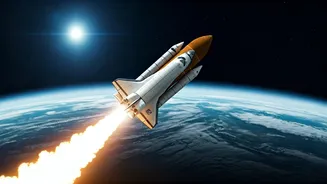
At its core, Gaganyaan is the Indian Space Research Organisation's (ISRO) monumental endeavor to send a crew of three Indian astronauts into space. The objective is to launch them into a Low Earth Orbit, about 400 kilometres above the planet, for a three-day
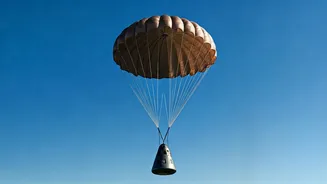
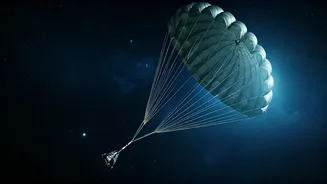
mission before bringing them safely back to Earth with a splashdown in Indian sea waters. If successful, India will join the elite club of nations—currently comprising only the United States, Russia, and China—that have independently sent humans to space. This isn't just another satellite launch; it's a demonstration of India's capability to undertake complex, crewed missions, marking a new chapter in its sixty-year space journey.
The Anatomy of the Mission
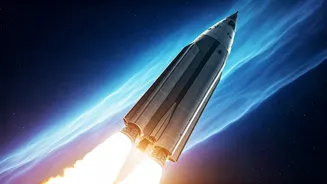
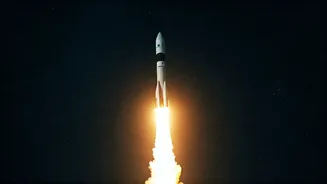
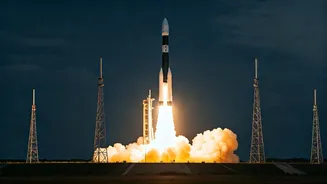
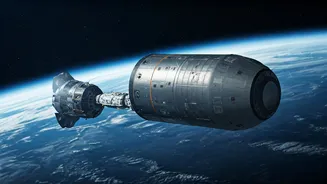
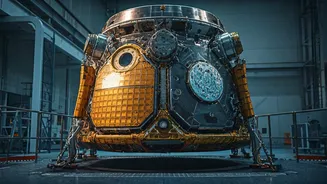
Several key pieces of technology make Gaganyaan possible. The powerhouse is the human-rated LVM3 rocket (Launch Vehicle Mark 3), a modified version of ISRO's most reliable heavy-lift launcher, often nicknamed the 'Bahubali' rocket. This vehicle will carry the Orbital Module, which consists of two main parts. The first is the Crew Module, a double-walled, pressurized capsule where the astronauts will live and work. This is the only part that will return to Earth. The second is the Service Module, which provides the necessary power, propulsion, and life support. A crucial component is the Crew Escape System, designed to jettison the crew to safety in case of an emergency during launch.
Meet the Vyomanauts
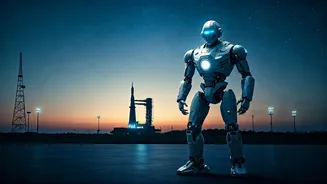
The heart of the mission is its human crew. Four Indian Air Force test pilots have been selected as the nation’s first astronaut-designates, or 'Vyomanauts' ('Vyom' is Sanskrit for space). Group Captains Prasanth Balakrishnan Nair, Ajit Krishnan, Angad Pratap, and Shubhanshu Shukla have undergone extensive training, including a rigorous 13-month program in Russia and further mission-specific training in Bengaluru. This training covers everything from spacecraft operation and survival techniques to performing scientific experiments in microgravity. To ensure every system is ready for humans, ISRO will first conduct a series of uncrewed test flights, some featuring a humanoid robot named Vyommitra to simulate human functions and test life support systems.
Why the Buzz Is Building Now
The reason Gaganyaan is dominating conversations in mid-2026 is that the program has entered its final, most intense phase of testing and validation. After years of development, ISRO is now conducting a barrage of critical tests to ensure astronaut safety, which is the absolute top priority. According to ISRO Chairman V. Narayanan, over 8,000 ground and structural tests have already been successfully completed, with more than 60 major demonstrations in the last fiscal year alone. The mission is now approaching its uncrewed test flights, which are precursors to the main event. While the timeline for the first crewed launch has been adjusted to ensure absolute reliability—currently targeting 2027 or 2028—the sheer volume of recent testing activity has brought the mission from a distant dream into a tangible, near-term reality.
More Than Just a Flight
Gaganyaan's significance extends far beyond the launchpad. It is a catalyst for national development, expected to create thousands of jobs and drive growth in the private aerospace sector, with nearly 60% of its components sourced from Indian industry. The mission will inspire a new generation to pursue careers in science, technology, engineering, and mathematics (STEM). Furthermore, it lays the groundwork for even more ambitious future projects, including the Bharatiya Antariksha Station, India's own planned space station set to be operational by 2035, and a crewed lunar mission by 2040. Gaganyaan is not just a mission; it's a statement of India’s ambition and a stepping stone to its future in the cosmos.