


Saturn Takes Center Stage
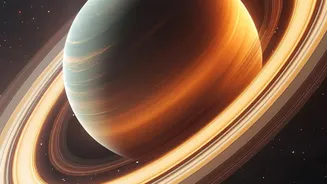
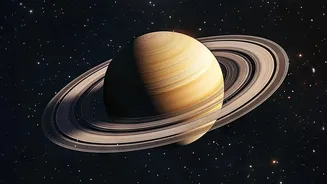
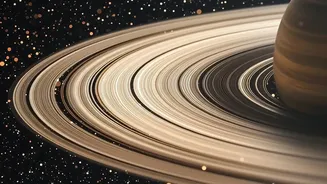
While Saturn will not reach its official opposition until October, August is when the planet truly begins to command the night sky. Throughout the month, the yellowish-hued planet rises earlier in the evening, growing brighter as it gets. By mid-August,
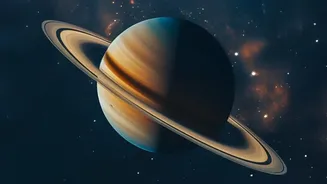
Saturn will be rising in the mid-evening and will be high in the southern sky before dawn, making it a fantastic target. This period offers an excellent opportunity for observation as Earth begins to move between the sun and Saturn. For those with a telescope, even a small one, this is a special time. After being nearly edge-on in previous years, Saturn's famous rings are now tilted toward us at a welcoming angle, making them clearly visible as a distinct feature from the planet itself. It's a view that turns casual observers into lifelong astronomers.
How to Find the Ringed Planet
Finding Saturn is easier than you might think. The planet will be visible in the evening, rising in the east and climbing high in the sky through the night. It will appear as a bright, steady, yellowish point of light. Unlike stars, planets don't typically twinkle. During August, look for it in the pre-dawn sky in the constellation Cetus. On the nights of August 4 and August 31, the Moon will pass near Saturn, making for a beautiful pairing and acting as a convenient guidepost to help you locate the planet. While you can spot Saturn with just your eyes, binoculars will give you a steadier, clearer view of its golden color, and a small telescope will begin to reveal its magnificent rings.
Don't Miss the Perseid Meteor Shower
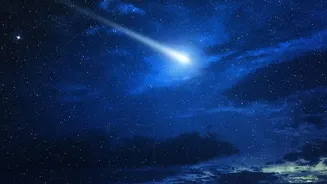
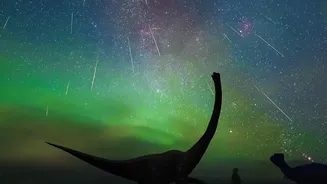
August's other headline act is the annual Perseid meteor shower, one of the most reliable and beloved celestial events. In 2026, conditions are just about perfect. The shower is set to peak on the night of August 12 and into the early morning of August 13. Crucially, this peak coincides with a new Moon, meaning the sky will be dark and free of moonlight, which would otherwise wash out fainter meteors. Caused by debris left behind by Comet Swift-Tuttle, the Perseids are known for producing bright, fast meteors, including the occasional spectacular fireball. For the best show, find a spot away from city lights, let your eyes adjust to the dark for about 20-30 minutes, and look towards the northeast. You could see up to 90 meteors per hour under ideal conditions.
A Parade of Planets
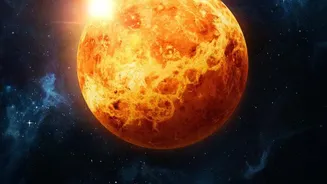
Saturn isn't the only planet gracing our skies. August 2026 features a spectacular pre-dawn lineup of planets. For early risers, reddish Mars will be visible in the east before sunrise, marching through the constellation Gemini. Venus will be a brilliant beacon in the western evening sky after sunset all month long. A challenge for dedicated observers occurs around August 12, when a six-planet alignment will be spread across the morning sky. While Mars and Saturn will be easy naked-eye targets, Jupiter and Mercury will be very low on the eastern horizon just before sunrise. Uranus and Neptune will also be in the lineup but will require at least binoculars or a small telescope to spot.
Gaze Upon the Summer Triangle
After you've ticked off the planets and meteors, take a moment to appreciate the dominant star pattern of the season: the Summer Triangle. This is not a constellation, but an asterism—a simple shape made from three bright stars from three different constellations. Look high overhead for the brightest star you can see, which is likely Vega in the constellation Lyra. From there, you can trace a large triangle to the other two corners: Deneb (in Cygnus, the Swan) and Altair (in Aquila, the Eagle). On a dark, moonless night in August, you will see the hazy, star-filled band of the Milky Way running right through the triangle, a breathtaking sight that connects you to the grand scale of our galaxy.