







Why Humidity Changes the Game
To understand why your skincare needs a seasonal shift, we need to talk about how humidity affects your skin. Your skin has a natural protective barrier that helps retain moisture. A key process is transepidermal water loss (TEWL), where water evaporates
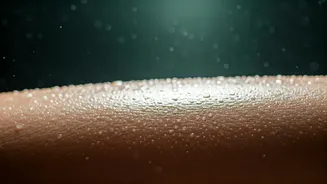
from the skin's surface. In dry climates, TEWL is high, and your skin needs help locking in moisture. But in high humidity (above 60-70%), the air is already saturated with water. This slows down TEWL, meaning your skin naturally loses less moisture. [4] This sounds great, but it also means the environment on your skin's surface changes dramatically. High humidity can also increase sebum production, making your skin feel oilier than usual. [14, 22]
The Heavy Cream 'Bad Decision'
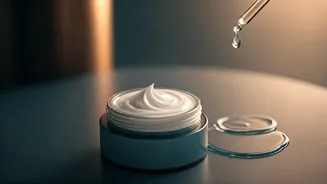
This is where heavy creams become a problem. Most rich moisturisers are formulated with occlusive ingredients, like petrolatum, mineral oils, or thick butters. [14, 10] In dry weather, these are heroes, forming a physical barrier to prevent moisture from escaping. But in high humidity, that same occlusive layer becomes counterproductive. Instead of just sealing in hydration, it traps excess sweat, oil, and bacteria against your skin. [3, 10] Your skin can't breathe properly, creating a perfect storm for clogged pores, congestion, and breakouts. [5] For some, it can even lead to miliaria, or heat rash. This is why a moisturiser that feels comforting in an air-conditioned room can feel like a greasy mask the moment you walk into the humid outdoors. [19]
The Smart Swap: Lightweight Alternatives
The solution isn’t to skip moisturiser altogether—a common mistake that can actually trigger more oil production as your skin tries to compensate. [10, 11] Instead, the key is to switch to a lighter formulation. Think of it like changing your wardrobe from a heavy winter coat to a light jacket. Your skin needs the same adjustment. Look for products labelled as gel, water cream, or lotion. [3, 8] These formulas are designed to provide hydration without the heavy, pore-clogging film of occlusive-rich creams. They absorb quickly, leaving your skin feeling fresh and balanced, not suffocated. [12, 13]
Embrace Humidity-Friendly Ingredients
When shopping for a humidity-friendly moisturiser, certain ingredients are your best friends. Humectants are particularly effective, as they draw moisture from the air and bind it to your skin. Hyaluronic acid is a famous example, known for holding up to 1,000 times its weight in water, providing intense hydration without any heaviness. [10, 15] Glycerin is another excellent and common humectant. Niacinamide (a form of Vitamin B3) is another superstar for humid climates; it helps regulate oil production, improve skin texture, and minimise the appearance of pores, all while supporting the skin barrier. [7, 9] Lightweight emollients like squalane can also be beneficial, helping to moisturise without feeling greasy. [18]
Your New Humidity-Proof Routine
Building a routine for humid weather is about smart, breathable layers. Start with a gentle cleanser to remove excess oil and sweat without stripping the skin. Follow with a hydrating toner or essence. Then, apply any treatment serums—this is a great place for ingredients like niacinamide to control shine or vitamin C for antioxidant protection. [9, 19] The crucial next step is your moisturiser. Choose a lightweight gel or water-based cream that provides hydration without the weight. [19] And finally, never skip sunscreen. The sun’s rays are damaging regardless of the humidity. [3] Look for oil-free or gel-based sunscreens with at least SPF 30, which will protect your skin without contributing to that heavy, greasy feeling.