








What is the PJ.2.1 Variant?
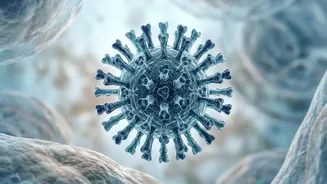
PJ.2.1 is a new lineage of the SARS-CoV-2 virus, first identified in Ontario, Canada, in May 2026. It is a descendant of the JN.1 lineage, which was a part of the Omicron family. Scientists have noted that PJ.2.1 has a large number of genetic changes,
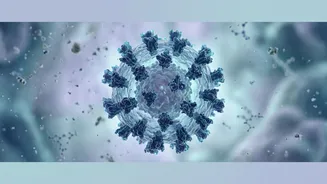
particularly on its spike protein, which is the part of the virus that attaches to human cells. This characteristic has led researchers to classify it as a 'saltation variant', meaning it emerged with many mutations at once rather than accumulating them slowly over time. Since its initial detection, cases have been reported in the United States, Europe, and several countries in Asia, including Singapore and Israel, indicating it has spread internationally.
Why Is It Being Monitored Closely?
The significant number of mutations in PJ.2.1 is what has prompted close monitoring by organisations like the World Health Organization (WHO). Laboratory research published in October 2026 suggests that these changes might allow the variant to bind more efficiently to the ACE2 receptor, which is the virus's gateway into our cells. This increased binding efficiency could potentially explain why the variant is spreading. In Ontario, for example, surveillance data from October 2026 showed that PJ.2.1 accounted for over 25% of sequenced cases, making it the most frequently identified lineage in that period. However, it is important to note that observations in a lab do not always translate directly to real-world transmissibility or severity.
Is It More Dangerous Than Other Variants?
Currently, there is no evidence to suggest that PJ.2.1 causes more severe illness, a higher rate of hospitalisation, or more deaths compared to other circulating variants. Health officials monitor hospital data closely, and so far, increases in hospital admissions appear to be in line with general COVID-19 activity rather than a sharp spike caused by a single, more dangerous variant. The symptoms associated with PJ.2.1 are similar to those of other COVID-19 strains and other respiratory illnesses like the flu or common cold. These can include fever, cough, sore throat, fatigue, and muscle aches. The WHO has emphasised that because the symptoms overlap so much, diagnostic testing is the only reliable way to confirm a COVID-19 infection.
What About Immunity from Vaccines and Prior Infection?
Early laboratory findings provide some reassurance regarding existing immunity. One study found that PJ.2.1 does not seem to be significantly better at evading antibodies generated by updated vaccines. Specifically, antibodies from an adapted LP.8.1 vaccine were shown to be effective at neutralizing PJ.2.1 in a lab setting. While the variant has many mutations, it is not thought to be better at evading the human immune system overall. This is a crucial point: a variant can become more common without necessarily being better at bypassing our immune defences or causing more severe disease. However, health experts continue to study its behaviour in real-world conditions.
A Reason for Vigilance, Not Panic
The emergence of PJ.2.1 serves as a reminder that the SARS-CoV-2 virus is still evolving. However, the global response system is far more advanced than it was in the early years of the pandemic. Robust surveillance systems, like the Indian SARS-CoV-2 Genomics Consortium (INSACOG) in India, continuously monitor for new variants by sequencing the virus's genome. Experts are urging calm, stating that new variants will continue to emerge, but there is no reason for unnecessary alarm at this stage. The focus is on careful monitoring and data collection. This approach allows public health bodies to stay ahead of the virus, updating guidance as needed without resorting to the drastic measures seen in the past. It reflects a shift towards managing COVID-19 as an ongoing, albeit fluctuating, public health issue.