


A Critical Link Goes Silent
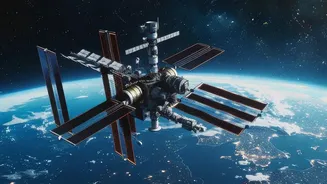
The International Space Station is more than just a home for astronauts; it's a sophisticated orbiting laboratory conducting thousands of experiments. This science, along with daily operations and the crew's connection to their families, relies on a constant,
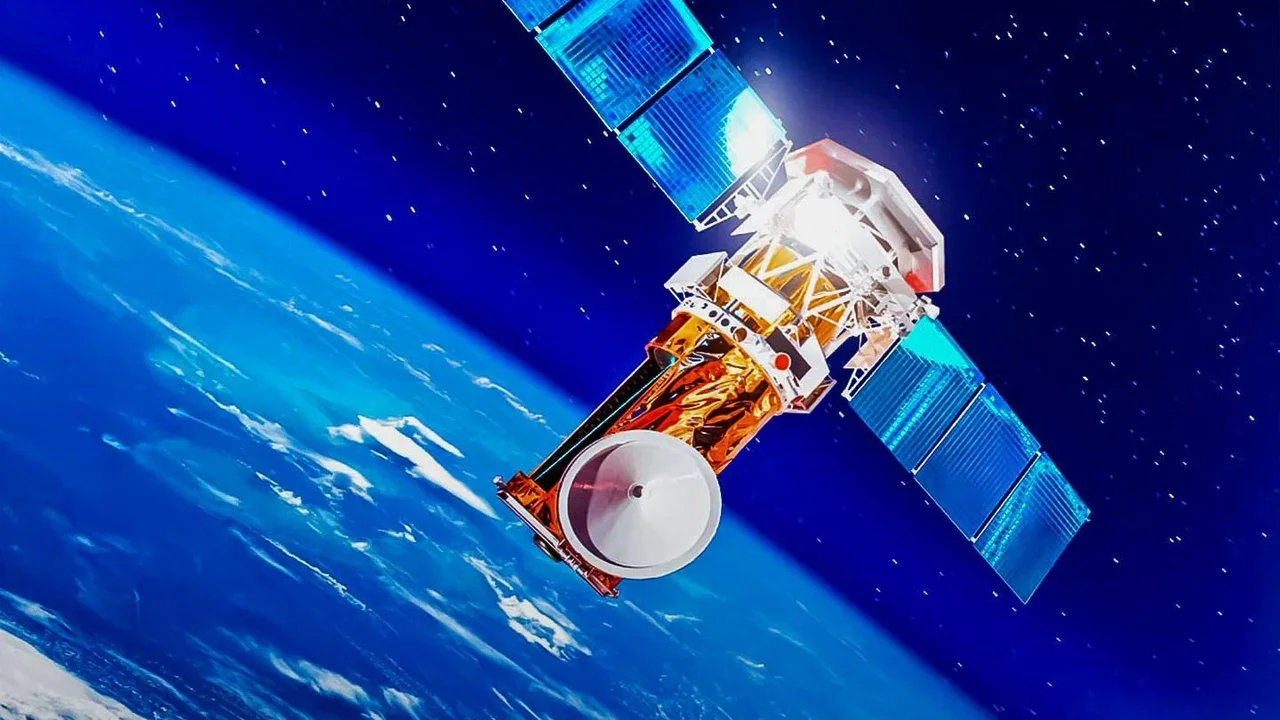
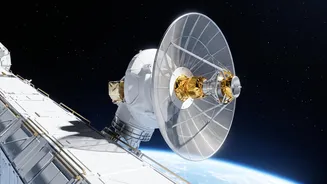
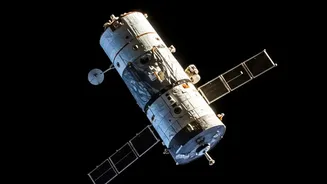
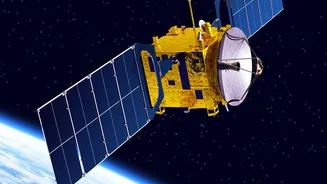
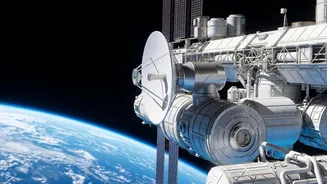
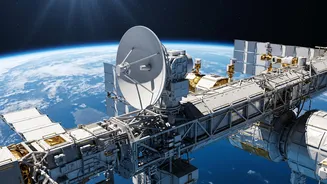
high-speed stream of data to and from Earth. This link is handled by a pair of powerful Space-to-Ground Antennas (SGANTs). Last November, one of these critical antennas malfunctioned. It lost its ability to track the relay satellites that bounce signals to Mission Control, rendering it useless. While the station continued to operate on its second antenna, it was flying without a safety net. A single point of failure could have severely hampered the flow of information, impacting everything from scientific research to crew safety.
A Tale of Two Spacewalks
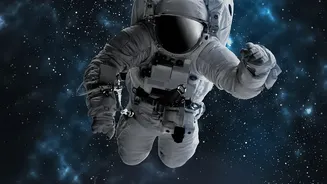
Fixing a complex piece of equipment in the vacuum of space is no simple task. The job fell to a two-person team: NASA astronaut Anil Menon and European Space Agency (ESA) astronaut Sophie Adenot. The repair was so complex it had to be split across two separate spacewalks, or Extravehicular Activities (EVAs). On August 18, the pair ventured outside for over six hours to disconnect and remove the faulty antenna. However, wrestling with stubborn bolts and electrical cables in bulky spacesuits took longer than planned, and they ran out of time to install the replacement. The mission highlighted the challenges of orbital maintenance and set the stage for a crucial follow-up. For Adenot, the first spacewalk was a historic moment, making her the first woman from France to perform an EVA.
The Six-and-a-Half-Hour Fix
On Tuesday, August 25, Menon and Adenot suited up and headed back outside to finish the job. Their movements were a carefully choreographed dance of human and machine. Menon, secured to the end of the station’s giant Canadarm2 robotic arm, was maneuvered across the station's exterior. Meanwhile, Adenot expertly traversed the truss structure using handrails. Working together, they retrieved the spare antenna from its external storage position. Menon, still attached to the arm, carried the new dish to the Z-1 truss section where the old unit had been. There, they meticulously mounted the new antenna and began the painstaking process of connecting the vital power and data cables, a task requiring precision and steady hands.
You Just Saved the Video Dish
After exactly six and a half hours of intense work, the final connections were made. As ground controllers confirmed the new antenna was powered up and functioning, a voice from Mission Control in Houston came over the radio with a celebratory message. Astronaut Anne McClain, parodying the 1979 song "Video Killed the Radio Star," sang, "You just saved the video dish!" The playful message underscored a serious achievement. The repair successfully re-established the station's primary Ku-band and S-band communications, the high-capacity channels used to send high-definition video, massive scientific datasets, and clear voice communications back to Earth. The vital link was not just strengthened; its critical redundancy was fully restored.
Why Redundancy Is Everything in Space
In the unforgiving environment of space, having a backup plan is not a luxury—it's a necessity. The concept of redundancy, having multiple systems that can perform the same critical function, is a cornerstone of safe spaceflight. By installing the new antenna, Menon and Adenot didn't just fix a broken part; they restored the ISS's resilience against future problems. With two fully operational Space-to-Ground antennas, the station can once again withstand a similar failure without compromising its mission. This ensures that the priceless scientific data generated aboard the station can flow uninterrupted to researchers on the ground and that astronauts maintain a robust connection to the teams supporting them. It's this continuous maintenance and upgrading that keeps the two-decade-old outpost a world-class laboratory.