



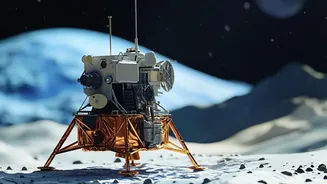
A Mission of Historic Ambition
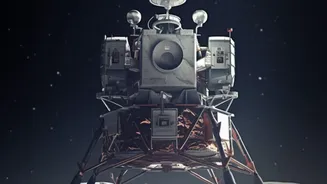
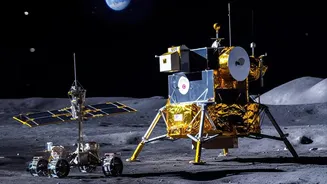
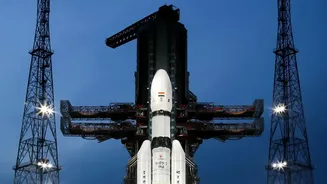
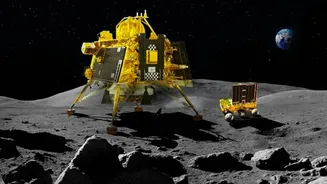
The primary goals of Chandrayaan-3 were monumental: to achieve a safe and soft landing on the lunar surface, demonstrate the Pragyan rover's ability to explore, and conduct a suite of on-site experiments. On August 23, 2023, India made history by becoming
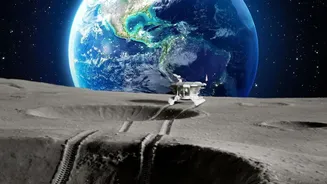
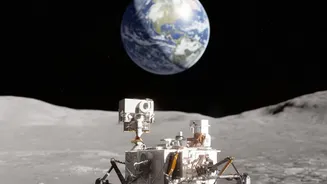
the fourth nation to soft-land on the Moon and the very first to do so in the challenging south polar region. Payloads on the Vikram lander and Pragyan rover immediately began their work, studying the Moon's thin plasma, thermal properties, and seismic activity. Yet, even as the world celebrated the lunar landing, one of the mission's most fascinating experiments was already underway, carried out by an instrument that had stayed with the Propulsion Module in lunar orbit.
Introducing the SHAPE Payload
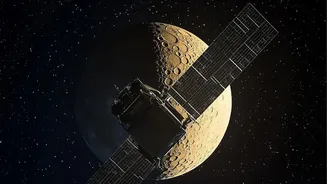
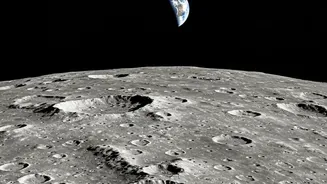
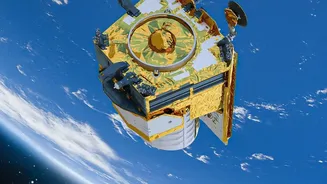
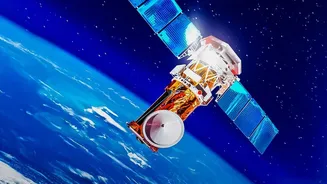
This unique instrument is called SHAPE, which stands for Spectro-polarimetry of HAbitable Planet Earth. It was the sole scientific payload on the Propulsion Module, the component of Chandrayaan-3 responsible for carrying the lander and rover to their 100 km lunar orbit before separating. SHAPE's job was to study the light reflected from Earth. Specifically, it looked at this light through the lens of spectro-polarimetry. In simple terms, this means it analysed the properties of light waves, including their colour spectrum and their orientation, or polarisation, as they bounced off our home planet. This seemingly simple observation from a unique vantage point holds the key to one of humanity's biggest questions.
Using Earth as a Scientific Model
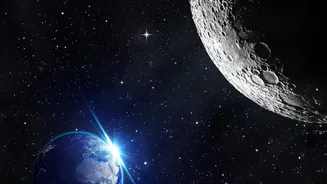
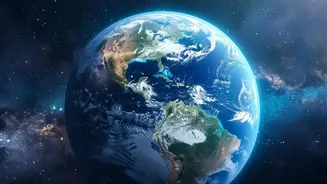
The true genius of the SHAPE experiment lies in its purpose: to look at Earth as if it were a distant exoplanet—a planet orbiting a star outside our solar system. Scientists cannot yet travel to these far-off worlds to see if they harbour life. Their best tool is to analyse the faint light reflected from them. The problem is, how do you know what to look for? By observing Earth from the Moon, SHAPE could capture the distinct spectro-polarimetric 'signature' of a known habitable planet. It gathered data on how light reflects off Earth's clouds, oceans, ice caps, and forests. This creates a detailed baseline, a template for what a life-sustaining planet looks like from afar.
Paving the Way for Future Discoveries
The data collected by SHAPE will be invaluable for future astronomical research. As next-generation telescopes come online, they will be tasked with scanning the skies for Earth-like exoplanets. The information from SHAPE will help scientists distinguish promising candidates from non-habitable ones. For instance, the specific way light polarises when it hits liquid water or is filtered through an atmosphere with clouds is a potential 'biosignature'. By having a detailed reference model of these signatures from our own planet, astronomers will be better equipped to interpret the limited data they can collect from a planet light-years away. It’s a clever method of using a known subject to understand the unknown.