





Why July Is a Danger Zone for Potted Plants
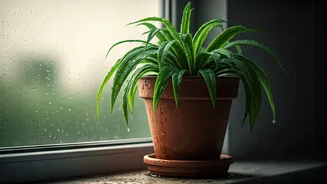
Unlike a regular watering can, the monsoon doesn't have an off switch. Days of continuous, heavy rain can saturate the soil in your pots far beyond what most plants can tolerate. This condition, often called waterlogging, is especially dangerous in container
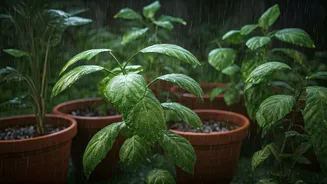
gardens. While plants in the ground have the entire earth to drain away excess moisture, a potted plant has only the soil within its container. If that soil becomes a dense, muddy swamp, the plant's roots are left sitting in water, a condition gardeners refer to as having "wet feet." This is the primary reason why July, the peak of the rainy season in many parts of India, turns into a critical month for plant care.
The Simple Science of Root Suffocation
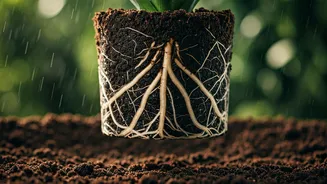
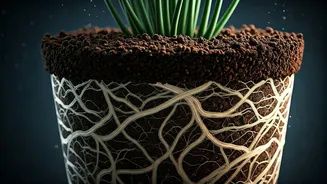
It might sound dramatic, but a waterlogged plant is essentially drowning. Healthy soil is not just dirt; it's a complex structure with tiny air pockets that allow roots to breathe. Roots need to exchange gases like oxygen and carbon dioxide to function. When excess water fills these air pockets for a prolonged period, it cuts off the oxygen supply. Without oxygen, the root cells begin to die, leading to a condition called root rot. This is a fungal disease that thrives in anaerobic (oxygen-free) environments. The rotting roots can no longer absorb water or nutrients, which is why, paradoxically, an overwatered plant often looks wilted, just like a thirsty one.
Warning Signs Your Plant Is in Trouble
Your plants will give you clues that they are struggling with too much water. The most common sign is yellowing leaves, often starting with the lower ones and progressing upwards. Unlike leaves that turn crispy from underwatering, these will feel soft and limp. You might also notice wilting even when the soil is visibly wet, stunted growth, or both old and new leaves falling off at an alarming rate. In advanced cases, you might see mould on the soil surface or even detect a musty, rotten smell coming from the pot, which is a clear indicator of root rot.
Your Essential Drainage Checklist
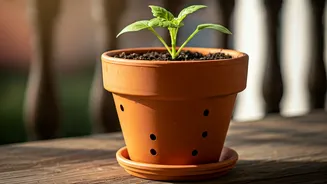
Prevention is always better than a cure. First, physically check your pots. Do they have drainage holes? If not, you must either drill some or use that pot as a decorative outer cover for a smaller pot that does have holes. If there are holes, ensure they are not blocked by compacted soil or roots. Elevating your pots is another crucial step. Use pot feet, bricks, or a simple stand to lift the container off the ground. This prevents the pot from sitting in a puddle and allows air to circulate underneath, aiding drainage. Finally, remove any saucers or trays that collect water; during the monsoon, these quickly become reservoirs that keep the soil constantly saturated.
Beyond the Hole: A Better Potting Mix
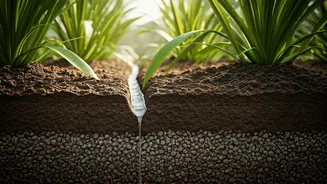
Even with good holes, a heavy, dense soil mix can retain too much water. The ideal potting mix for the monsoon should be light and porous. You can significantly improve your soil's drainage by amending it with materials that create air pockets. Consider mixing in perlite (lightweight volcanic glass), coarse sand, or small wood chips (pine bark). These materials prevent the soil from compacting and allow water to flow through more freely. Using a base of coco coir instead of heavy garden soil can also help create a lighter mix that drains well while still retaining enough moisture for the plant.
Emergency Rescue for a Waterlogged Plant
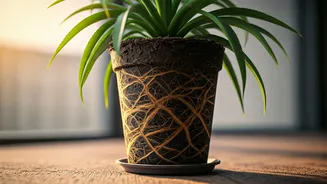
If you suspect a plant is already waterlogged, you need to act fast. Carefully remove the plant from its pot and inspect the roots. Healthy roots are typically firm and white, while rotting roots will be brown or black, mushy, and may smell foul. Using clean scissors, trim away all the damaged, rotting roots. If the soil is completely saturated, it's best to discard it and repot the plant in a fresh, well-draining potting mix. After repotting, place the plant in a spot with bright, indirect light and resist the urge to water it for a few days, allowing the roots to recover from the shock.