




A Digital 'Nutrition Label' for Images
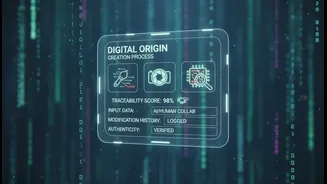
A major development in the battle for digital trust is the rise of Content Credentials, an open standard led by a group called the Coalition for Content Provenance and Authenticity (C2PA). Think of it as a tamper-evident digital 'nutrition label' for a photo,
video, or audio file. Backed by major tech and media companies like Adobe, Google, Microsoft, and the BBC, this technology embeds secure metadata into a file at the moment of its creation. This 'manifest' cryptographically signs information about the file's origin, including the device or software used, the creator, and a timestamp. As the file is edited, each change is added to the log, creating a verifiable chain of custody. The goal is to provide transparency, allowing anyone to inspect an image’s history and see, for example, if it was generated by AI or edited in Photoshop.
Provenance Is Not Proof
While promising, Content Credentials have a crucial limitation: they certify an image's history, not its truthfulness. The system can confirm that a specific camera captured a specific image at a specific time, but it cannot verify that the image represents reality faithfully. An independent security analysis noted that the C2PA system, while promising, should not yet be relied upon for high-stakes uses like legal evidence or journalism because of these limitations. The most effective forms of visual misinformation often don't rely on deepfakes or complex alterations. Instead, they use real, authentic images and manipulate their context to tell a false story. This is where traceable images fall short, as a cryptographically valid photo can become a powerful tool for deception.
The Timing Trap: Old Photos, New Lies
One of the most common disinformation tactics is the re-use of old imagery. A dramatic photo from a protest, natural disaster, or conflict years ago can be plucked from the archives and presented as breaking news, inflaming tensions and spreading panic. A traceable image would accurately report its original creation date, which is a helpful clue for a discerning viewer. However, in the fast-paced environment of social media, few users stop to check the metadata. The emotional impact of an image often outweighs the rational process of verification. Psychological research shows that people are more likely to believe statements, even false ones, when they are accompanied by a picture. The image lends an air of authenticity that is hard to shake, even if the context is completely wrong.
Framing and Location Deception
The camera's frame is a powerful editorial tool, deciding what the viewer sees and, just as importantly, what they do not see. A photo can be 100% authentic and traceable, yet completely misleading due to its framing. A tight crop can remove crucial context, turning a staged scene into apparent reality or presenting an aggressor as a victim. The choice of angle can make a crowd look massive or minuscule. None of these deceptions would be flagged by provenance technology. Similarly, the location can be misrepresented. A photo of a building damaged in a past event can be falsely captioned and located in a current conflict zone. The Content Credential might correctly identify the camera that took the picture, but it has no way of verifying the claims made in the caption that accompanies it. The image itself is real, but its use is a lie.
The Human Element Remains Key
Another significant challenge is that the digital credentials can be easily stripped from a file. Simply taking a screenshot or re-uploading an image to many social media platforms can erase all of its embedded C2PA data, leaving a perfectly valid-looking but untraceable image. Ultimately, technology like Content Credentials provides a valuable layer in the fight against misinformation, but it doesn't eliminate the threat. It empowers users who are willing to do the work of verification, but it cannot force a sceptical mindset. Experts agree that these tools are a supplement to, not a replacement for, media literacy and critical thinking. The most sophisticated tool we have for detecting misinformation remains an engaged and questioning human mind.