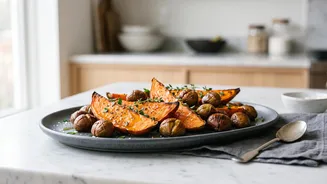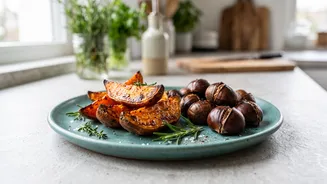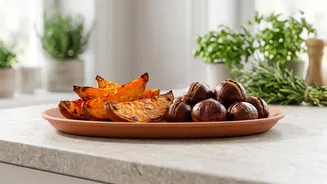


As the weather cools, two comforting foods often appear on our tables: the versatile sweet potato and the festive chestnut. Both are delicious, but which one packs a bigger nutritional punch, especially when it comes to the vital antioxidant, Vitamin
C?
The Vitamin C Showdown
When comparing them raw, chestnuts are the surprising winner in the Vitamin C department. A 100-gram serving of raw chestnuts can provide around 26-40 mg of Vitamin C, which is a significant portion of the daily recommended intake for adults. In contrast, a 100-gram serving of raw sweet potato contains much less, typically around 2.4 mg. This makes chestnuts a unique standout among nuts, which are not typically known for their high Vitamin C content.
How Cooking Changes the Game
The story shifts once heat is introduced. Vitamin C is notoriously fragile; it's water-soluble and breaks down with heat and prolonged cooking. When you boil or roast chestnuts, their Vitamin C content can decrease, though they still retain a respectable amount, offering around 15 to 20 percent of your daily needs in a half-cup serving. Sweet potatoes also lose some Vitamin C when cooked, but their overall profile remains robust. Studies show that cooking methods like steaming or microwaving tend to preserve more Vitamin C compared to boiling. To retain the most Vitamin C in chestnuts, roasting at lower temperatures is recommended.
Beyond Just One Vitamin
Focusing only on Vitamin C would be a disservice to the sweet potato. Its true claim to fame is its phenomenal Vitamin A content, delivered in the form of beta-carotene. A single medium sweet potato can provide well over 100% of your daily Vitamin A needs. This antioxidant is crucial for vision, immune function, and skin health. Chestnuts, on the other hand, do not contain significant amounts of Vitamin A. So, while chestnuts win on raw Vitamin C, sweet potatoes are the undisputed champion of Vitamin A.
Fibre, Carbs, and Minerals
Both foods are excellent sources of complex carbohydrates and dietary fibre, which aid in digestion and help you feel full. Chestnuts are higher in carbohydrates and fibre than most other nuts, giving them a nutritional profile that's somewhat closer to a starchy vegetable. Both are also good sources of essential minerals. Chestnuts are particularly rich in copper and manganese, while also providing significant potassium. Sweet potatoes are also a fantastic source of potassium, which is vital for regulating blood pressure, and offer a good amount of manganese and several B vitamins.
A Different Kind of Nut
It's important to remember that chestnuts are botanically different from nuts like almonds or walnuts. They are lower in fat and calories and have a higher water and carbohydrate content. Their fats are primarily the healthier monounsaturated and polyunsaturated types, and they are completely free of cholesterol. This unique composition makes them a lighter, yet still satisfying, option compared to their oilier counterparts.
The Verdict: Which Should You Choose?
There is no single winner here, as the 'better' choice depends entirely on your nutritional goals. If you are specifically looking to boost your Vitamin C intake from a whole food snack, roasted chestnuts are an excellent and somewhat unexpected choice. However, if you want a powerhouse of Vitamin A along with a healthy dose of fibre and potassium, the sweet potato is a clear winner.
Ultimately, both foods are incredibly healthy additions to a balanced diet. Sweet potatoes are a versatile root vegetable that can be a meal's centrepiece, while chestnuts make for a wonderful, nutrient-dense snack or addition to seasonal dishes. Enjoying both throughout the season is the best way to reap their distinct and complementary health benefits.