







From Sci-Fi Fantasy to Career Path
For many, a career in space exploration is an abstract concept, associated more with blockbuster films than practical job opportunities. The path to becoming an astronaut, or even a mission controller, seems impossibly remote. This perception poses a challenge
for space agencies like NASA, which need a steady pipeline of highly skilled engineers, scientists, and technicians to push the boundaries of exploration. To bridge this gap between inspiration and application, NASA has developed a series of analog missions—highly realistic simulations of space missions conducted here on Earth.
Welcome to Mars on Earth
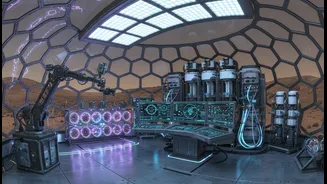
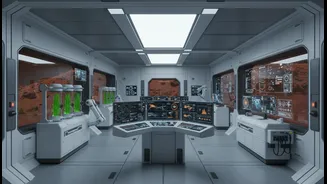
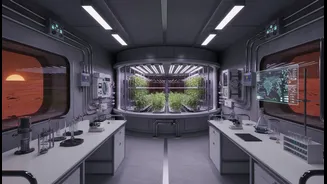
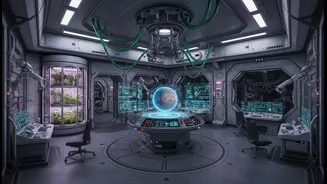
The most prominent of these is the Crew Health and Performance Exploration Analog, or CHAPEA. This ambitious project involves four-person volunteer crews living and working for a full year inside Mars Dune Alpha, a 1,700-square-foot habitat at NASA's Johnson Space Center in Houston. The structure itself is a marvel of modern technology: it was 3D-printed to simulate the kind of habitat that might one day be constructed on the Martian surface. Inside, the crew has private quarters, a kitchen, and dedicated areas for medical, recreational, and scientific work, all designed to mimic the isolation and confinement of a real Mars mission.
A Year of Martian Life
Life inside CHAPEA is meticulously designed to be as Mars-realistic as possible. Crews face the same challenges future astronauts will: resource limitations, equipment failures, and significant workloads. Their daily tasks include simulated spacewalks in a large sandbox filled with red soil, conducting scientific research, growing their own crops like tomatoes and peppers, and maintaining their habitat. One of the most significant challenges is the communication delay; messages to and from the outside world are delayed by up to 22 minutes, forcing the crew to become a highly autonomous and self-reliant team.
More Than Just Astronauts
Crucially, the participants aren't the test-pilot astronauts of the Apollo era. The selection criteria for CHAPEA targets a different profile: U.S. citizens aged 30-55 with a master's degree in a STEM field and several years of professional experience. The first crew, which completed its 378-day mission in July 2024, included a research scientist, a structural engineer, an emergency medicine physician, and a microbiologist. By selecting professionals from diverse scientific and technical backgrounds, NASA makes it clear that the future of space exploration depends on a wide array of experts, not just pilots. This approach makes careers in the space industry feel more attainable for a broader group of people.
The Data-Driven Future of Space
While offering a unique career development experience, CHAPEA's primary purpose is to gather critical data for NASA. Researchers meticulously study the crew's physical and psychological health, monitoring everything from their nutritional intake and sleep patterns to their stress levels and team dynamics. This information is invaluable for understanding and mitigating the risks of long-duration spaceflight. By studying how humans adapt to a year of isolation and confinement on Earth, NASA can develop better technologies, training protocols, and support systems to ensure the safety and success of the first human missions to Mars.