



Upgrade Your Towel Game
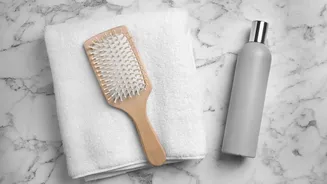
The first step to gentler drying starts the moment you step out of the shower. Regular terry cloth towels, while absorbent, have rough loops that can snag and roughen up your hair's cuticle, leading to frizz and breakage. During the high-humidity monsoon
season, this friction is your enemy. Make a simple switch to a microfibre towel or a soft, old cotton t-shirt. Both are made with smoother, more tightly woven fibres that absorb excess water without causing friction or stripping too much moisture, which your hair needs to stay smooth. This single change can significantly reduce frizz and damage.
Squeeze, Don't Rub
How you use your towel is just as important as the towel itself. The instinctive reaction is to vigorously rub your hair to dry it faster, but this is one of the most damaging things you can do. That aggressive motion lifts the hair's outer layer, the cuticle, making it prone to frizz and weakness, especially when it's already vulnerable from being wet. Instead, adopt a gentler approach. Gently squeeze or pat sections of your hair with your microfibre towel or t-shirt. This action blots away excess water effectively without roughing up the hair shaft, preserving your natural curl or wave pattern and keeping the cuticle smooth.
Master the 'Plopping' Method
For those with wavy or curly hair, 'plopping' is a game-changing technique for the monsoon. It's a heat-free method that enhances curl definition while drastically cutting down on frizz. After washing and applying your leave-in products, you lay a cotton t-shirt or microfibre towel on a flat surface, flip your hair forward onto the centre of the fabric, and then wrap it into a turban. This technique allows your hair to dry in its natural curl pattern, scrunched and undisturbed, rather than being weighed down or stretched out. You can plop for just 10-20 minutes to absorb excess water before air-drying or diffusing.
Use a Blow Dryer Wisely
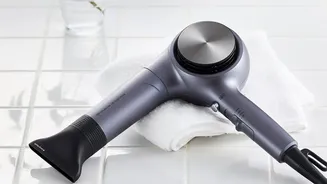
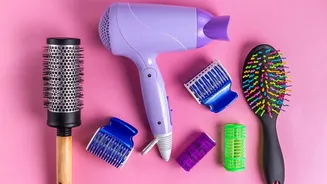
While air-drying seems like the gentlest option, it may not be practical during the monsoon when the air is already saturated with moisture and hair takes forever to dry. If you use a blow dryer, do it smartly to minimise damage. First, always apply a heat protectant spray; this is non-negotiable. It creates a barrier against heat damage and helps to seal the cuticle against humidity. Let your hair air-dry to about 70-80% before you start blow-drying. Use a low-heat and low-speed setting, and always point the nozzle downwards along the hair shaft. This helps keep the cuticles flat and smooth, resulting in a sleeker finish. A final blast of cool air can help to lock in your style and add shine.
Embrace Anti-Frizz Serums
An anti-frizz serum is an essential tool in your monsoon hair arsenal. Hair becomes frizzy in humid weather because dry, porous strands absorb moisture from the air, causing the shaft to swell. Applying a good serum to damp, towel-dried hair can create a protective, humidity-blocking barrier. Look for lightweight, silicone-based or argan oil-infused serums that smooth the cuticle without weighing your hair down. The key is to apply it correctly: use a small amount, focus on the mid-lengths and ends, and avoid the roots to prevent greasiness. This final step seals in your styling efforts and provides all-day frizz control.
Don't Tie Up Wet Hair
It can be tempting to tie your hair up and forget about it, but trapping damp hair in a tight bun or ponytail is a recipe for disaster. Hair is at its most fragile when wet, making it highly susceptible to breakage from the tension of a hair tie. Furthermore, a damp scalp trapped without air circulation can become a breeding ground for fungal infections and dandruff, which are more common during the monsoon. Always ensure your hair, especially the scalp, is completely dry before tying it up. Opt for loose hairstyles like braids or low ponytails to minimise stress on the roots.