



The Challenge of a Restless Star
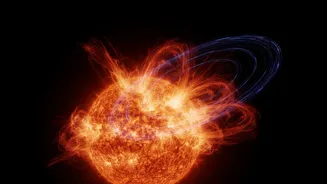
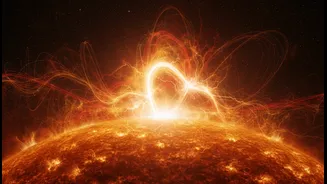
For decades, predicting the Sun's behaviour has been a monumental challenge for scientists. Our star operates on a roughly 11-year cycle, swinging from quiet periods to phases of intense activity marked by sunspots—dark, magnetically charged regions on its
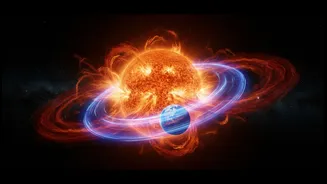
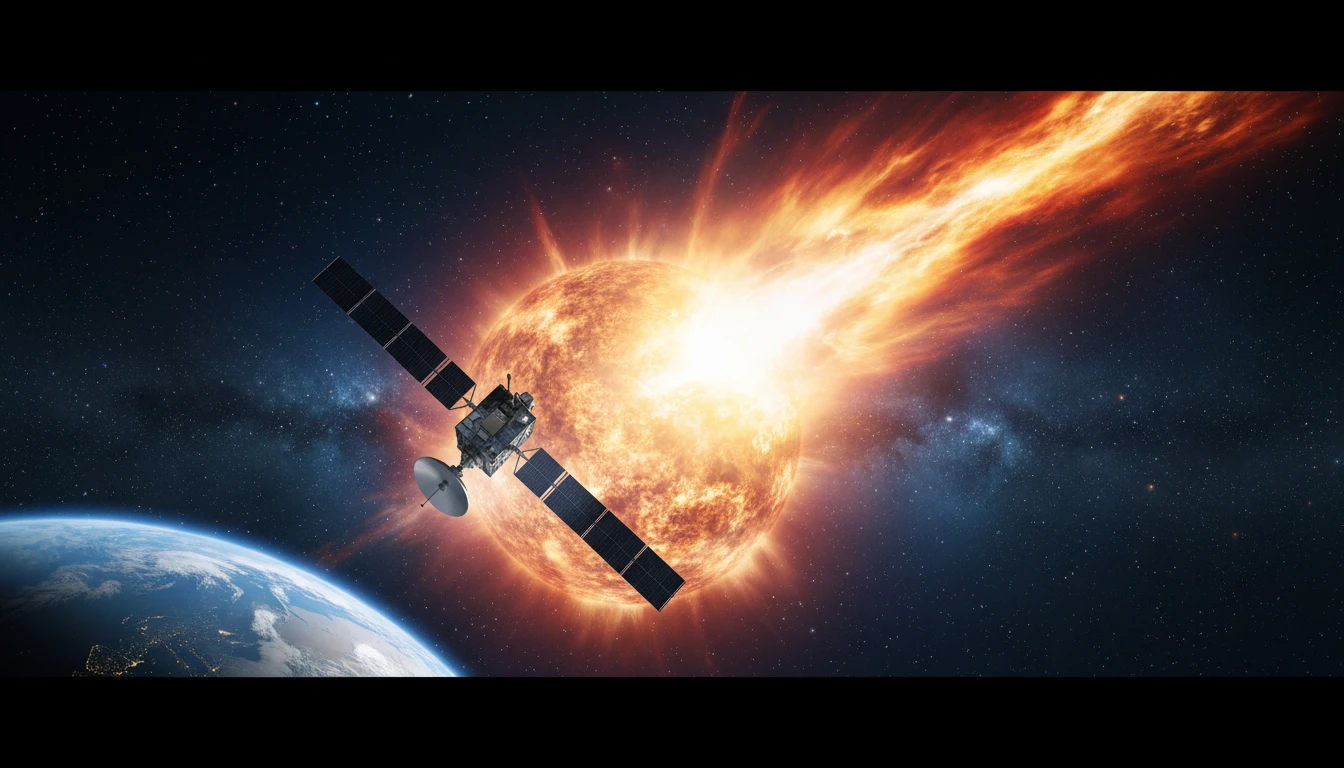
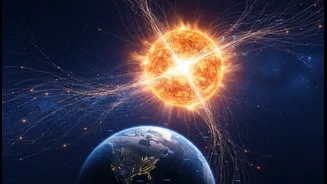
surface. These sunspots can unleash powerful solar flares and coronal mass ejections (CMEs), sending billions of tonnes of charged particles hurtling towards Earth. When these solar storms strike, they can have devastating effects, disrupting GPS navigation, frying satellite electronics, and even knocking out entire power grids. The problem is that no two solar cycles are identical in length or intensity, making long-term forecasts notoriously difficult. This unpredictability leaves our increasingly digital infrastructure, including India's 50-plus operational satellites, exposed to significant risk.
A New 'Switch-Off' Signal
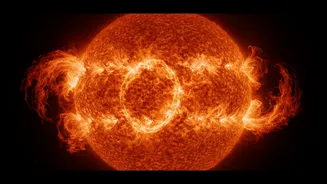
A recent breakthrough from researchers at the University of Warwick is changing the game. Instead of a gradual winding down, they discovered that the most extreme solar weather 'switches off' quite suddenly at a specific point in each cycle. This 'switch-off' point occurs when the majority of active sunspot regions migrate towards the sun's equator. The team found a direct link between the number of sunspots present at this exact moment and the strength of the next solar cycle. By identifying this cutoff point, scientists can make a forecast for the next cycle's peak intensity up to seven years in advance—a far longer lead time than previous methods allowed. This new technique successfully predicted that the current Solar Cycle 25 would be stronger than many had anticipated, which was confirmed by the powerful geomagnetic storms and widespread auroras seen in 2024.
The Power of Artificial Intelligence
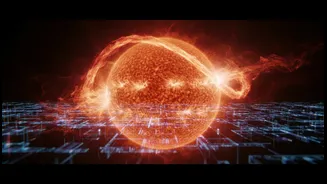
Alongside this new understanding of solar cycles, scientists are also harnessing the power of Artificial Intelligence (AI) to improve short-term forecasting. Researchers are training AI models on vast amounts of satellite imagery and data from solar observations. One such model, developed at NYU Abu Dhabi, analyzes images of the Sun to spot patterns that precede changes in solar wind, forecasting its speed up to four days in advance with significantly improved accuracy. Other projects use machine learning to automatically detect solar storms in real-time from NASA satellite data, providing crucial characteristics like their direction and shape. In Austria, AI is being used to predict the orientation of a storm's magnetic field as it travels toward Earth, a key factor in determining its potential damage. These AI-driven tools are essential for turning raw data into actionable warnings.
What This Means for India
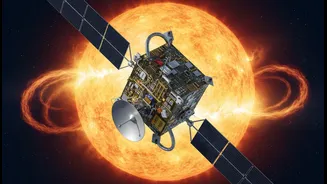
For a nation as digitally dependent as India, better space weather forecasting is a matter of economic and national security. A severe solar storm could disrupt everything from online banking and mobile communications to air traffic control and military navigation. India's own solar observatory, Aditya-L1, plays a critical role by providing real-time data on solar activity, giving ISRO a frontline view of impending storms. The new long-range prediction methods, combined with AI-powered short-term alerts, can give authorities and industries the lead time needed to protect critical infrastructure. This could involve putting satellites into a protective 'safe mode', rerouting flights away from polar regions where radiation is higher, and preparing power grid operators for potential surges. It also informs the construction of more resilient infrastructure, such as durable solar panel frames capable of withstanding extreme weather on Earth.