



Gajar ka Halwa
This iconic winter dessert relies on the natural sweetness of red 'Delhi' carrots, which are only available during the colder months. The magic of Gajar ka Halwa lies in its simplicity: grated carrots are slow-cooked in milk until they soften and absorb
the creamy liquid. The only 'spice' often used is a touch of cardamom, which complements rather than overpowers the earthy sweetness of the carrots. Finished with ghee and a scattering of nuts, each spoonful is a celebration of the carrot itself, proving that the best ingredients need little adornment.
Sarson ka Saag
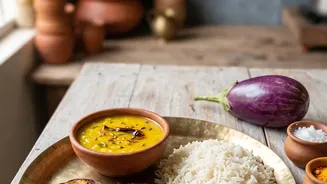
A quintessential Punjabi winter classic, Sarson ka Saag is a testament to the robust flavours of fresh, seasonal greens. The dish is built on a foundation of mustard leaves (sarson), whose natural peppery bitterness is balanced by the milder notes of spinach (palak) and sometimes bathua (chenopodium). The greens are cooked down with little more than ginger, garlic, and green chillies until they meld into a creamy, hearty saag. The complex flavour profile comes directly from the vegetables, thickened with maize flour and finished with a dollop of white butter, showcasing the power of farm-fresh produce.
Nolen Gurer Payesh
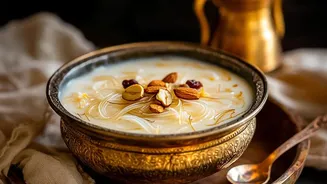
In Bengal, winter announces its arrival with Nolen Gur, or fresh date palm jaggery. This seasonal ingredient is the undisputed star of Nolen Gurer Payesh, a fragrant rice pudding. Unlike other payesh or kheer that might use an array of spices, this version is intentionally minimalist. Fragrant Gobindobhog rice is gently simmered in full-fat milk until tender. The Nolen Gur, with its unique smoky and caramel-like aroma, is stirred in at the very end, off the heat, to preserve its delicate flavour. It is a dessert where the jaggery does all the talking, offering a profound sweetness that no spice could replicate.
Til ke Laddu
Made across India to celebrate winter festivals like Makar Sankranti, Til ke Laddu (sesame seed balls) are a perfect example of minimalist cooking. The recipe requires just two primary ingredients: sesame seeds (til) and jaggery (gur). The sesame seeds are lightly roasted to bring out their nutty aroma and flavour. Melted jaggery acts as the binding agent, providing a deep, molasses-like sweetness. The focus is entirely on the harmony between the earthy, slightly bitter taste of sesame and the rich sweetness of jaggery, creating a warming, energy-boosting treat for cold days.
Gond ke Laddu
A traditional winter food known for its warming properties, Gond ke Laddu is not about a complex spice blend but about texture and nutrition. The main ingredient, 'gond', is an edible gum that is fried in ghee until it puffs up into a crunchy, light crystal. This is then mixed with whole wheat flour roasted in ghee, nuts, and sweetened with jaggery. While some recipes include warming notes like dry ginger or cardamom, the primary experience is the satisfying crunch of the gond and nuts, combined with the wholesome richness of ghee and atta.
Shakarkandi Chaat
During Indian winters, street corners and markets are often filled with the sweet, smoky aroma of roasting sweet potatoes (shakarkandi). This humble tuber is naturally sweet and has a creamy texture, making it a perfect base for a simple chaat. Once roasted, the sweet potato is peeled, cubed, and tossed with a minimal set of flavourings: a squeeze of lemon juice for brightness, rock salt, and perhaps a pinch of black pepper or roasted cumin powder. The deliciousness comes from the contrast between the sweet, smoky flesh of the shakarkandi and the tangy, salty seasonings.
Undhiyu
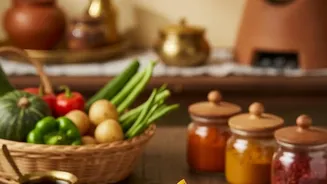
While a full-fledged Undhiyu can be elaborate, the soul of this Gujarati winter specialty lies in its celebration of seasonal vegetables. The dish traditionally brings together winter produce like surti papdi (hyacinth beans), purple yam (kand), sweet potatoes, and small brinjals. In simpler, home-style versions, these vegetables are slow-cooked in their own juices. The 'masala' is often a fresh, green paste made from coriander, coconut, and green garlic, which enhances the vegetables' natural flavours rather than masking them with heavy, powdered spices. The result is a medley where each vegetable retains its identity.