







The Truth About Tea Bags
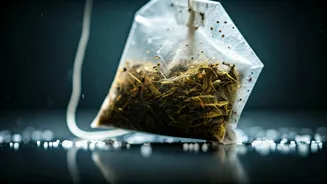
The short answer is yes, many tea bags do contain plastic. It’s often found in the form of polypropylene, a type of plastic used as a heat sealant to keep paper tea bags from falling apart in hot water. While it's a small amount, studies have shown that
when steeped in hot water, these bags can release billions of microplastic and even smaller nanoplastic particles into your cup. Fancy pyramid-shaped or 'silken' tea bags are not necessarily better; in fact, many are made entirely of plastics like nylon or PET, which also break down when heated. A 2019 study from McGill University found a single plastic tea bag steeped at brewing temperature released around 11.6 billion microplastics and 3.1 billion nanoplastics.
The Problem with Salt
Plastic's reach extends to our salt shakers as well. Microplastics have been found in commercial table salt around the globe, from China to Europe and the US. The primary source of this contamination is the widespread pollution of our oceans. As plastic waste breaks down into smaller pieces, these particles end up in the seawater that is evaporated to produce sea salt. Studies have found that sea salts generally exhibit higher levels of microplastics compared to rock salt or lake salt, as they are derived directly from polluted marine environments. One analysis suggested an average person could be ingesting thousands of microplastic particles per year through salt alone.
What Are These Microplastics?
Microplastics are tiny plastic fragments less than 5 millimetres in size. Nanoplastics are even smaller, measuring less than 1 micrometre. They come from various sources, including the breakdown of larger plastic items like bottles and bags, fibres shed from synthetic clothing, and microbeads from cosmetics. Because they are so small and persistent, they have infiltrated virtually every corner of our environment, from the deepest oceans to the air we breathe and the food we eat. Once released into the environment, they are practically impossible to remove and can move through the food chain.
Should You Be Worried About Your Health?
This is the critical question, and the answer is still emerging. Scientists have confirmed that microplastics are present in human organs, blood, and even breastmilk. Laboratory and animal studies have linked exposure to inflammation, immune system impairment, and endocrine disruption, which can affect hormones. However, there is not yet definitive evidence on the long-term effects of ingesting these particles at the levels found in food. Researchers are actively studying the topic, but it's difficult to conduct human trials because it's impossible to find a control group of people who haven't been exposed to plastic. While the exact risk is not fully understood, the widespread contamination is a cause for concern among many medical professionals.
How to Reduce Your Exposure
While it may be impossible to eliminate exposure completely, you can take simple steps to significantly reduce it. For tea, the best option is to switch to loose-leaf tea and use a metal or glass infuser. If you prefer bags, look for brands that explicitly state they are 100% plastic-free, often using stitched or folded paper instead of plastic sealants. Some Indian brands are now offering biodegradable and plastic-free options, including those made from cotton or wood pulp. For salt, some research suggests that rock salt or lake salt may contain fewer microplastics than sea salt, though contamination can still occur during processing. Choosing salt packaged in non-plastic materials like glass or cardboard can also help avoid additional contamination.