





A New Space Race Begins at Home
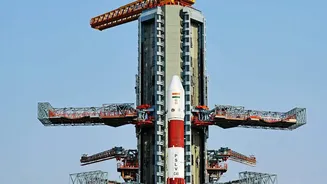
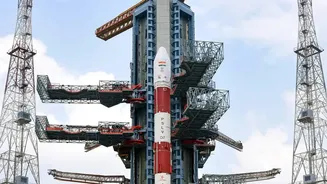
India's journey in space, once solely navigated by the Indian Space Research Organisation (ISRO), is undergoing a monumental transformation. The government's landmark decision in 2020 to open the sector to private participation has ignited a domestic
space race. This strategic pivot was formalised with the Indian Space Policy 2023, designed to create a vibrant, commercial ecosystem. The policy established the Indian National Space Promotion and Authorisation Centre (IN-SPACe) as a single-window agency to guide and authorise private space activities, effectively rolling out the welcome mat for entrepreneurs. This shift allows ISRO to transition its focus from routine operations to pioneering research and development, deep space exploration, and complex missions like human spaceflight. The goal is to replicate ISRO’s culture of frugal innovation within the private sector, leveraging its decades of expertise to build a robust industrial base.
The Trailblazers on the Launchpad
Leading this new charge are a host of ambitious startups, many founded by former ISRO scientists. Skyroot Aerospace made history by launching Vikram-1, India's first privately developed orbital-class rocket. This milestone established India as a country with private orbital launch capability and demonstrated the sector's potential. Another key player, Agnikul Cosmos, is known for its advanced 3D-printed rocket engines and its own launch vehicle, Agnibaan. These companies are focused on the burgeoning market for small satellite launches, offering faster and more cost-effective services than traditional global players. The emergence of these firms signals a crucial change: private Indian companies are no longer just supplying components; they are building and launching entire missions.
More Than Just Launch Vehicles
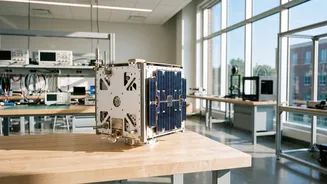
The opportunity in India's space economy extends far beyond rockets. The entire value chain is buzzing with private activity. Companies like Bengaluru-based Pixxel are building constellations of hyperspectral imaging satellites, providing valuable data for agriculture, mining, and environmental monitoring to a global clientele. Others, such as Dhruva Space, provide comprehensive solutions for building and operating satellites. This diversification is crucial, as it creates a self-sustaining ecosystem. Downstream applications, which involve using satellite data to create services for sectors like finance, insurance, and logistics, represent another massive growth area. The liberalised policy allows private firms to own and operate satellites and sell data and services directly, opening up revenue streams that were previously non-existent.
The $44 Billion Horizon
The numbers paint a compelling picture. India's space economy, currently valued at around $9 billion, is projected to soar to over $44 billion by the next decade. The government aims to increase India's share of the global space market from the current 2-3% to a more significant figure. This growth is being fuelled by a surge in private investment, which has climbed significantly in recent years. To further accelerate this, the government has liberalised Foreign Direct Investment (FDI) norms and introduced a Venture Capital Fund to provide crucial growth capital to startups. This influx of capital and policy support is creating a high-growth environment, attracting both domestic and global attention.
Navigating the Challenges Ahead
Despite the immense potential, the path ahead is not without its obstacles. The space industry is capital-intensive and carries high technological risks. Indian startups face stiff competition from established global giants like SpaceX, which have a significant head start and deeper pockets. While policy reforms have been transformative, ensuring regulatory agility and providing quick access to testing facilities remain critical for maintaining momentum. Furthermore, building a robust domestic supply chain for high-quality components is essential to scale up production and reduce reliance on imports. Sustaining the current trajectory will require not just continued policy support but also patient capital and a relentless focus on innovation to stay competitive on the world stage.