


The Rise of 'Cat-itecture'
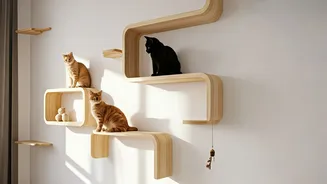
Step inside the home of a modern cat owner, and you might notice something new scaling the walls. We’re talking about multi-tier floating wood scaffolds—a series of interconnected shelves, perches, bridges, and steps mounted directly onto the wall. Often
crafted from materials like solid pine, oak, or birch, this trend has been dubbed 'cat-itecture' or 'wall furniture'. Unlike bulky, traditional cat condos that can dominate a room, these minimalist setups are designed to be both a feline playground and a piece of modern art. They offer cats a 'vertical highway' to explore their domain, transforming a blank wall into a dynamic, interactive feature that blends seamlessly with contemporary interior design styles like Scandinavian, minimalist, and biophilic decor.
Why Your Cat Craves Vertical Space
This trend is about much more than just looks. For cats, vertical territory is not a luxury; it’s a biological necessity. In the wild, their ancestors used high vantage points to survey their surroundings, spot prey, and avoid predators. This instinct remains deeply ingrained in domestic cats. Providing vertical space helps satisfy this need, reducing stress and anxiety, especially in multi-pet households where it allows cats to establish hierarchy and avoid conflict. A wall-mounted scaffold gives them a safe, dog-free, and toddler-free zone to retreat to. It’s their personal space to rest, watch over their kingdom (your living room), and feel secure. The climbing and jumping required to navigate the shelves also provides crucial physical exercise and mental stimulation, preventing boredom-related behaviours.
Planning Your Wall-Mounted Wonderland
Before you start drilling holes, a little planning goes a long way. Start by observing your cat. Are they a bold leaper or a cautious climber? This will help you determine the ideal spacing between shelves. A good rule of thumb is to keep vertical jumps between 30 to 45 centimetres and horizontal gaps small enough for a confident hop. Consider the flow. You want to create an intuitive path that leads to a desirable destination, like a cosy hammock perch near a window or a high shelf in a quiet corner. Use painter's tape to map out your proposed design on the wall. This allows you to visualise the layout and make adjustments before committing. Also, think about the wall itself. The system must be mounted securely into wall studs to support the weight of a jumping, playing cat. A stud finder is an essential tool for this project.
Choosing the Right Materials and Style
The aesthetic appeal of these scaffolds comes from their clean lines and natural materials. Solid wood is the preferred choice for its durability and beauty. Avoid flimsy particleboard, which can sag or break over time. Look for shelves that have a non-slip surface. Some come with inlaid carpet, cork, or sisal rope, which gives your cat extra grip and doubles as a scratching surface. This is key for safety, especially on higher perches. The beauty of these systems is their modularity. You can start with a few basic steps and shelves and add more components over time, like rope bridges, enclosed hiding boxes, or feeding stations. This allows you to customise the setup to your cat's evolving needs and your budget.
Installation: DIY or Hire a Pro?
Many companies offer stylish, ready-to-install kits with all the necessary hardware and instructions. If you're comfortable with basic tools like a drill and a level, a DIY installation is very achievable. The most critical step is ensuring every anchor point is secured firmly into a wall stud. If you're unsure, don't guess. A poorly installed shelf can be a serious safety hazard for your pet and your family. For those who aren't confident in their handiwork or are renting and need to be extra careful with walls, hiring a local handyman is a worthwhile investment for peace of mind. They can ensure the entire structure is stable, level, and ready for your cat’s adventures.