



The Science of Cosmic Fingerprints
At its heart, spectroscopy is the science of analyzing how light and matter interact. Think of a prism splitting white light into a rainbow. A spectrograph, the instrument astronomers use, does something similar but far more precisely. Every element and molecule
absorbs and emits light at specific, unique wavelengths. This creates a distinct pattern of bright or dark lines in the spectrum, much like a barcode or a fingerprint. By capturing light from a celestial object and splitting it, astronomers can read these 'fingerprints' to determine its chemical composition, temperature, and even its motion, all from millions of kilometres away.
Reading an Asteroid's Life Story
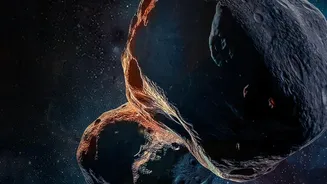
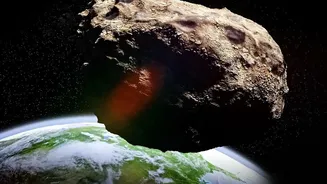
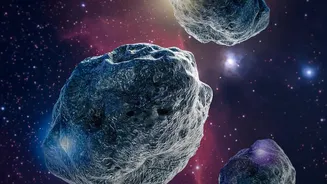
Asteroids don't produce their own light; they reflect sunlight. When a telescope is pointed at an asteroid, its spectrograph captures this reflected light. As the sunlight bounces off the asteroid's surface, certain wavelengths are absorbed by the minerals and elements present. The resulting spectrum is missing the light corresponding to those absorbed wavelengths. This allows scientists to identify materials like silicates, iron, nickel, and even water ice or organic compounds. These compositional clues help classify asteroids into different types, such as the silicate-rich S-complex or the carbon-rich C-complex asteroids, each telling a different story about where and how it was formed.
Why Asteroid Composition Matters
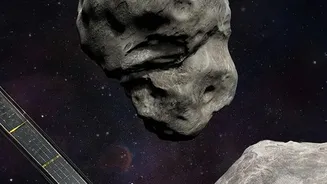
Understanding what asteroids are made of is crucial for several reasons. These space rocks are pristine remnants from the formation of our solar system, about 4.6 billion years ago. Analyzing them is like geological time travel, offering clues about the ingredients that formed Earth and the other planets. On a more practical level, identifying the composition of near-Earth objects helps in planetary defense. Knowing whether an incoming asteroid is a solid chunk of iron or a loosely packed pile of rubble is critical for planning a potential deflection mission. Furthermore, some asteroids are rich in valuable metals and water, making them potential targets for future resource mining operations to support exploration deeper into space.
The Elusive Cosmic Ray Connection
The headline's second point, about tracking cosmic rays, involves a more indirect use of spectroscopy. Cosmic rays are not light; they are highly energetic particles, mostly protons and atomic nuclei, zipping through space at nearly the speed of light. You can't analyze them with a traditional spectroscope directly. However, when these powerful particles slam into the surface of an asteroid, the Moon, or a planet's atmosphere, they trigger a cascade of secondary particles and high-energy radiation, including gamma rays. A gamma-ray spectrometer can then analyze these emissions. The specific energy signatures of the gamma rays reveal which elements were excited by the cosmic ray impact, providing information about both the surface composition and the properties of the incoming cosmic rays.
From Faint Light to Big Discoveries
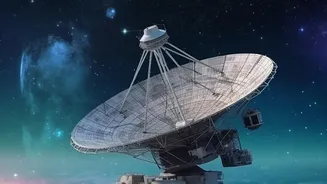
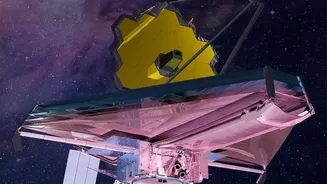
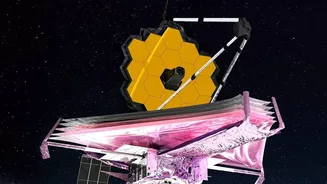
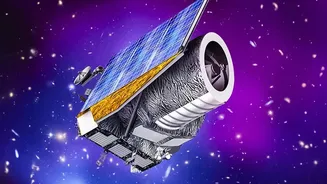
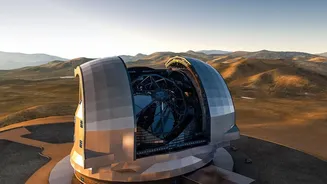
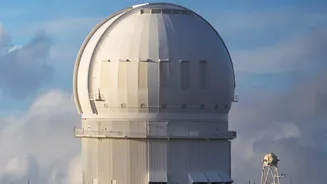
From ground-based observatories to space telescopes like Hubble and the James Webb Space Telescope, spectroscopy is a workhorse of modern astronomy. It’s a versatile technique that transforms light, whether reflected off a nearby rock or emitted from a violent cosmic ray interaction, into tangible data. By decoding these light-based messages, astronomers can piece together the history of our solar system, assess potential threats and opportunities from asteroids, and probe the nature of some of the most mysterious and powerful events happening across the universe. It shows how even the faintest glimmer of light can hold the key to immense knowledge.